In this article
- 1. Design Around Your Actual Daily Routine
- 2. Test the Sofa’s Full Footprint Before Buying
- 3. Choose a Sofa Shape for Your Room’s Proportions
- 4. Protect the Main Route Between Rooms
- 5. Keep Extra Seating Movable
- 6. Decide Whether a Coffee Table Earns Its Place
- 7. Use Nesting Tables for Occasional Surface Space
- 8. Add a Dining Spot Only When It Solves a Real Need
- 9. Position the TV Around How You Watch It
- 10. Layer Lighting Around Specific Activities
- 11. Make Window Treatments Work With the Furniture
- 12. Size Wall Art in Relation to the Furniture
- 13. Give Everyday Belongings a Specific Home
- 14. Use a Rug to Define the Seating Area
- 15. Choose Plants for the Light and Space Available
- 16. Choose Multifunctional Furniture Only When Both Uses Matter
- 17. Build a Cohesive Look Without Filling Every Surface
- How to Improve Your Living Room Without Replacing Everything
- Frequently Asked Questions
- How do I decide which furniture to keep in a small apartment living room?
- Can a small apartment living room have both a dining area and a sofa?
- What should renters check before changing their living room?
- Final Thoughts
17 Small Apartment Living Room Ideas That Make a Small Space Work Better
A small apartment living room can be comfortable without having room for every piece of furniture you like. The challenge is deciding what deserves space, what can serve more than one purpose, and what makes everyday movement unnecessarily difficult.
A room that looks spacious in a staged photograph may work poorly in real life. You might need to walk through it to reach the kitchen, open a balcony door, make room for visitors, or fit a dining spot beside the sofa. Those practical details matter as much as the furniture itself.
These small apartment living room ideas focus on solving specific problems before you spend money. Some involve furniture choices, while others help you use the room you already have more effectively.
1. Design Around Your Actual Daily Routine
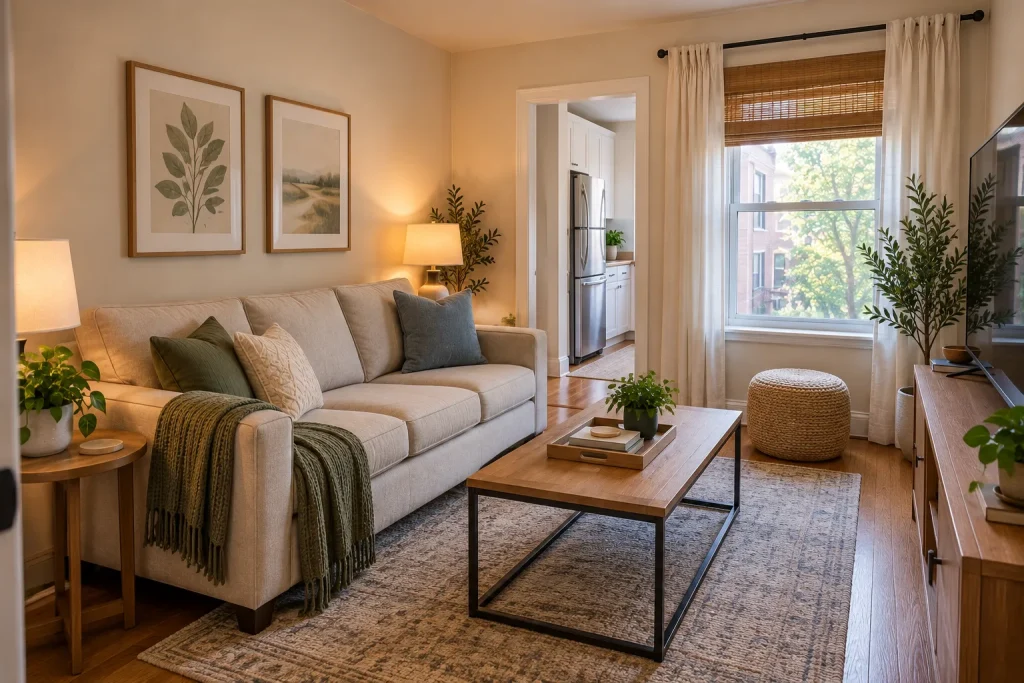
Before moving furniture, think about what happens in your living room on an ordinary weekday.
If you watch television most evenings, comfortable seating and a sensible viewing position deserve priority. If you work from home occasionally, you may need a surface that can accommodate a laptop. If you eat at the kitchen counter, a separate dining table in the living room might be unnecessary.
Write down the activities that genuinely happen in the room, then rank them by importance. This gives you a practical way to evaluate furniture: does each piece support one of those activities, or is it occupying space mainly because a living room is expected to have it?
For example, someone who rarely hosts guests may benefit more from an open floor area than from keeping two extra chairs permanently in place.
The goal is not to make the room do everything. It is to make the room work well for the people who actually live there.
2. Test the Sofa’s Full Footprint Before Buying
A sofa can fit along a wall and still leave the rest of the room awkward to use. Its depth, armrests, reclining mechanism, and distance from nearby furniture all affect how much usable space remains.
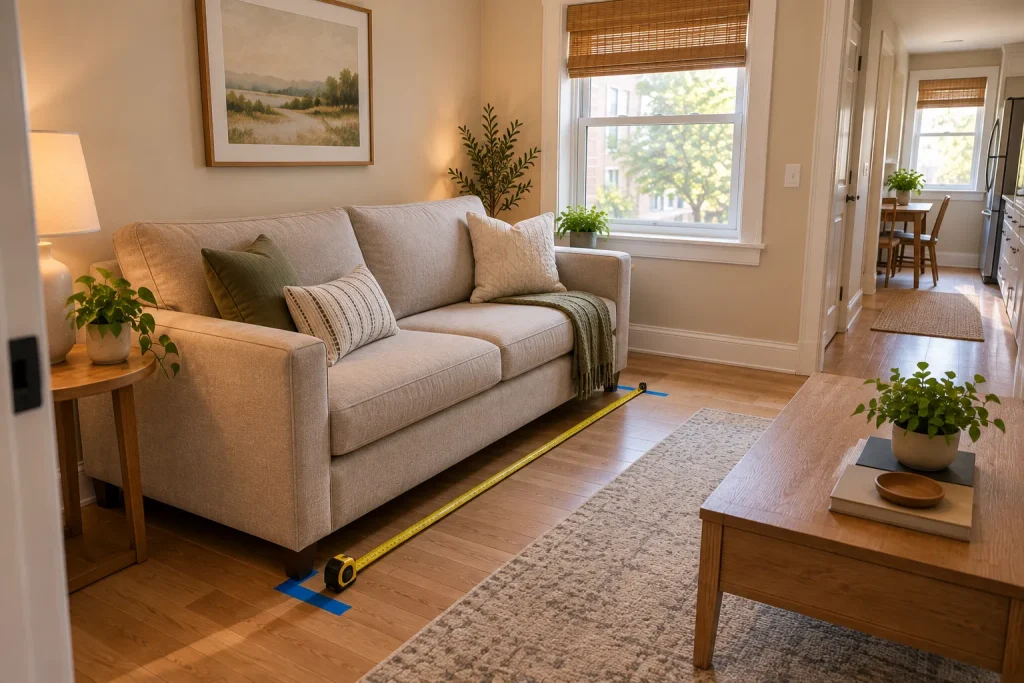
Measure the sofa’s complete dimensions rather than relying on its product photograph. Then mark its footprint on the floor with painter’s tape. Include the space required for any reclining seats or pull-out sections.
Try walking through the marked area, sitting where the sofa would go, and approaching nearby doors or furniture. If the outline blocks a route you use several times a day, the sofa is probably too large for that position.
This is particularly useful when ordering furniture online. A few minutes with a tape measure can reveal a problem that would be expensive and inconvenient to discover after delivery.
A useful test: Do not ask only whether the sofa fits. Ask whether the room still works after the sofa is in place.
3. Choose a Sofa Shape for Your Room’s Proportions
Two sofas with similar widths can occupy a room very differently.
A deep sofa may project farther into a narrow living room, while bulky arms can reduce the usable seating width. A straight sofa may suit a long, rectangular room, whereas an L-shaped sectional can make sense when a corner provides a natural place for it.
Consider the room’s shape before choosing a style. In a narrow layout, a shallower sofa may leave more usable floor area. In a wider room, a sectional might create a comfortable seating zone without interfering with the entrance.
Also consider how many people usually sit there. A large sectional is difficult to justify if most of its seats are rarely used, but it may be practical for a household that regularly relaxes together.
Do not choose furniture simply because it is marketed for small spaces. Compare actual dimensions, seat comfort, and the shape of your room before deciding.
4. Protect the Main Route Between Rooms
In many apartments, the living room is also a passage between the front door, kitchen, hallway, or balcony. Furniture that looks balanced on a floor plan can become frustrating when people repeatedly walk around it.
Observe the paths you use most often. Imagine entering with shopping bags, carrying a drink from the kitchen, or walking past someone who is sitting on the sofa.
Keep the most frequently used route as direct as the room allows. Pay particular attention to corners where table edges, lamp bases, or chair legs can become obstacles.
There is no single clearance measurement that suits every apartment. The room’s dimensions, door swings, furniture depth, and household needs all affect what feels comfortable.
If someone regularly has to move a chair to get through, treat that as evidence that the layout needs adjustment. Adding more decor will not solve a circulation problem.
5. Keep Extra Seating Movable
Permanent seating for every possible visitor can make a small living room feel crowded during the rest of the week.
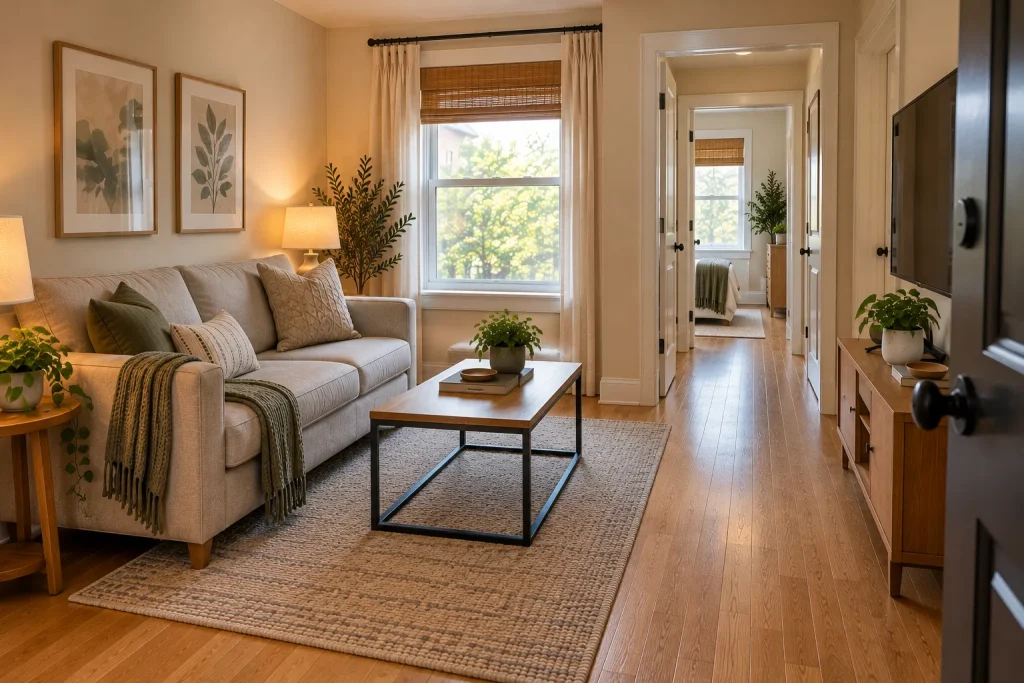
Instead, consider one movable stool, a compact accent chair, or a suitable ottoman if you occasionally need another place to sit. Choose something stable and comfortable enough for its intended use rather than buying the smallest item available.
The important question is where the extra seat will go when nobody needs it. A lightweight stool that fits beside a wall may be practical. A chair that must remain in the middle of the walking route is not.
You may discover that your existing seating is sufficient most of the time. If there is no convenient place for an additional seat, leave it off your shopping list until a real need arises.
This approach keeps the everyday arrangement comfortable without preventing you from accommodating visitors when necessary.
6. Decide Whether a Coffee Table Earns Its Place
A coffee table is familiar living room furniture, but it is not essential in every small apartment.
Think about how you use the seating area. If you regularly put down drinks, play games, or keep books within reach, a central surface may be useful. If the table mostly collects mail and objects that belong elsewhere, its footprint may not justify its presence.
Before buying one, test its dimensions with painter’s tape. Sit on the sofa, imagine reaching for a drink, and walk around the marked area. Consider whether people can get into and out of their seats without repeatedly navigating around the table.
A round or oval design may be easier to move around in some layouts. A narrow rectangular table may suit a longer seating arrangement. Neither shape is automatically best.
If a central table makes the room uncomfortable, try living without one for a few days. You may find that an existing side table provides enough surface space.
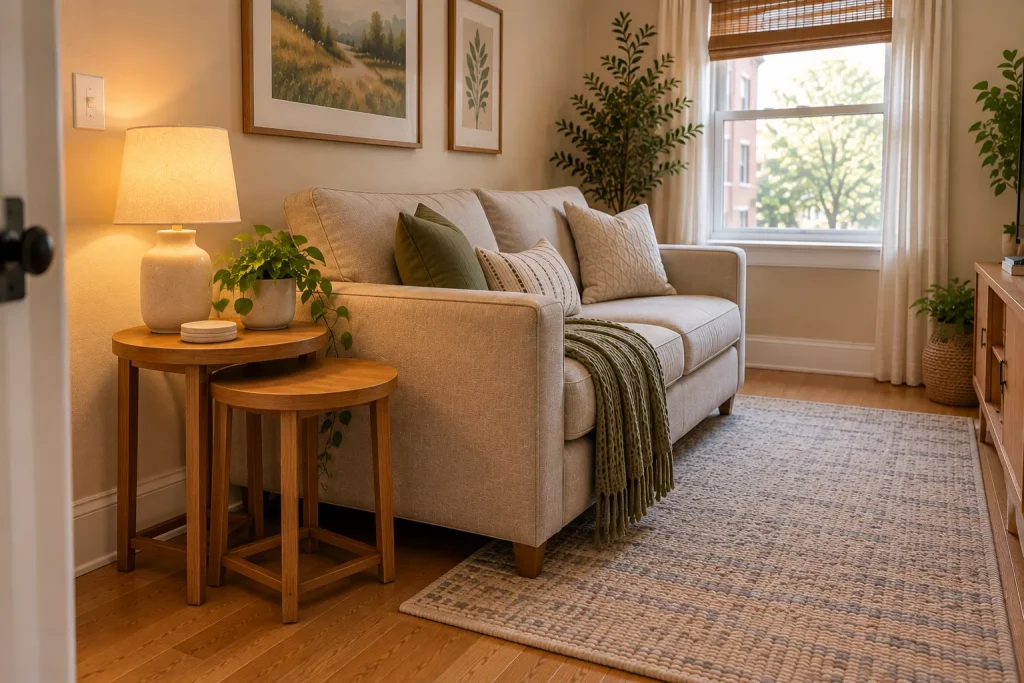
7. Use Nesting Tables for Occasional Surface Space
Nesting tables solve a different problem from choosing a coffee table: they provide extra surfaces only when you need them.
A set can remain grouped together during everyday use, then separate when visitors need additional places for drinks or snacks. This may be useful when the room is used by one or two people most days but occasionally hosts a larger group.
Check the dimensions of the entire set, not just the smallest table. The tables still need a sensible home when stacked, and each one should remain stable when used separately.
Nesting tables are less useful if you need several permanent surfaces throughout the day. In that situation, one well-positioned side table may be easier to live with.
Choose this option because your routine varies—not simply because the tables are compact or look versatile in a product photograph.
8. Add a Dining Spot Only When It Solves a Real Need
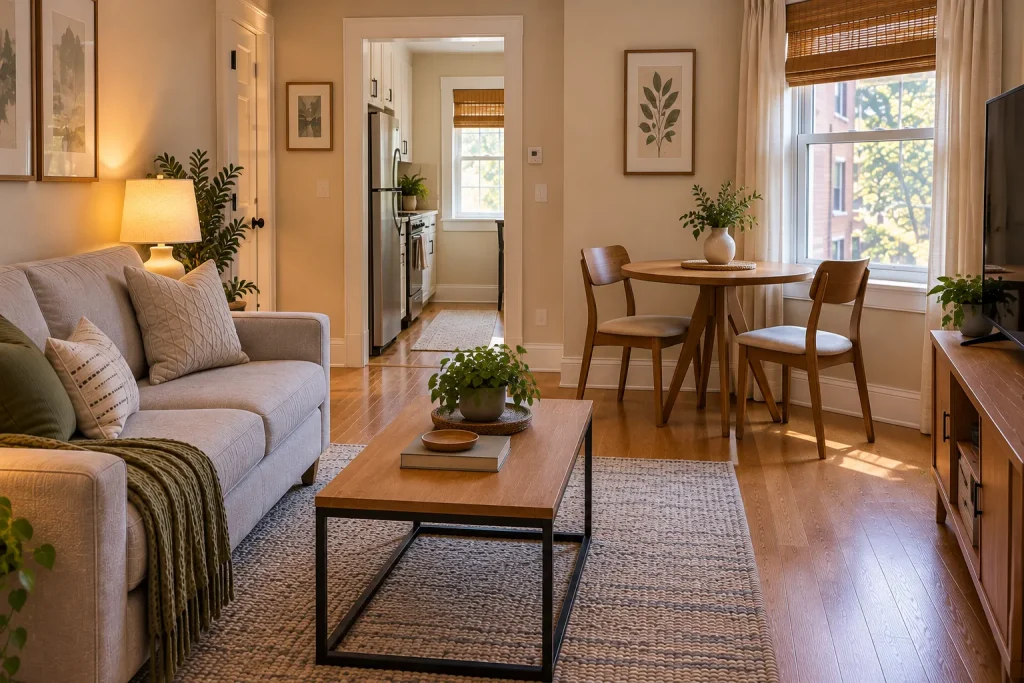
Some apartments do not have a separate dining area. Others have a kitchen counter or table that already handles everyday meals.
If you genuinely need dining space in the living room, start by measuring the area required for the table and occupied chairs. The table’s dimensions alone do not reveal how much room people need to sit down, stand up, and move past one another.
A narrow table may suit a particular wall, while a compact round table may work better where people approach it from several directions. The right choice depends on the shape of the room and how many people usually eat there.
Think about meal frequency, too. A table used three times a day has a stronger claim on permanent space than one used for occasional dinners.
If the dining setup repeatedly blocks the main route or makes the sofa uncomfortable to use, reconsider its position before buying smaller accessories to compensate.
9. Position the TV Around How You Watch It
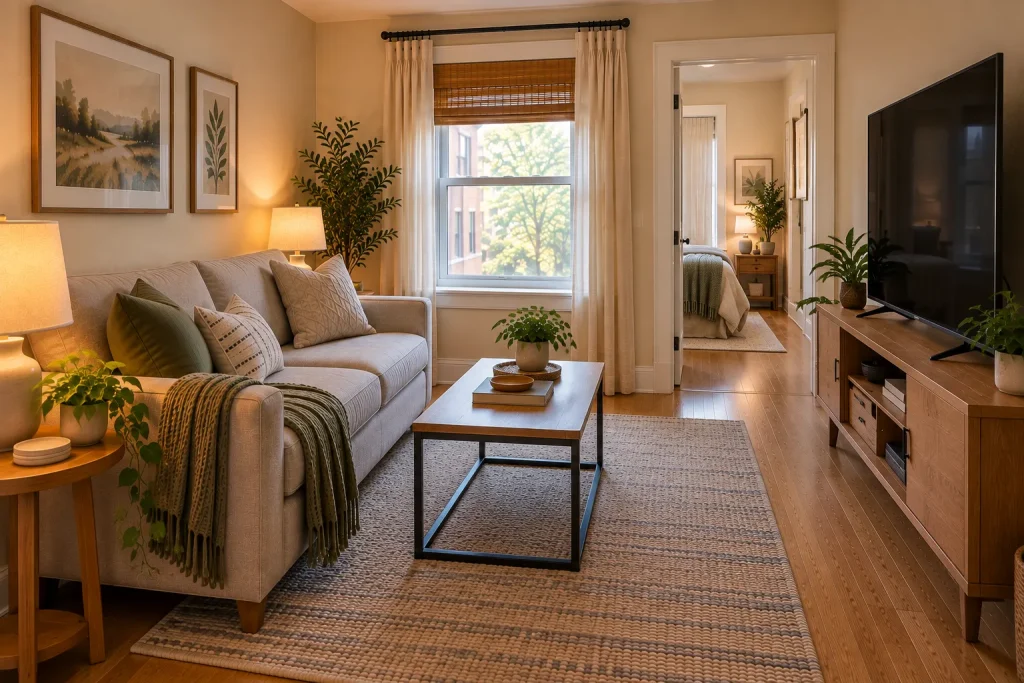
A television should support the seating arrangement rather than dictate every other decision in the room.
Start by identifying the main viewing position. Then consider window glare, comfortable viewing, available outlets, cable management, and the routes people use to move through the space.
A screen placed opposite a bright window may be difficult to watch at certain times of day. Moving the viewing angle or adjusting the window treatment may help, depending on the layout.
Wall mounting can free up floor space, but it is not automatically the best choice. Renters may face restrictions, and some walls require specific mounting hardware. A compact media console may be more practical if you need a movable setup or space for devices.
Whichever option you choose, keep cords away from walking paths and use an appropriate mounting method if you attach the screen to a wall.
10. Layer Lighting Around Specific Activities
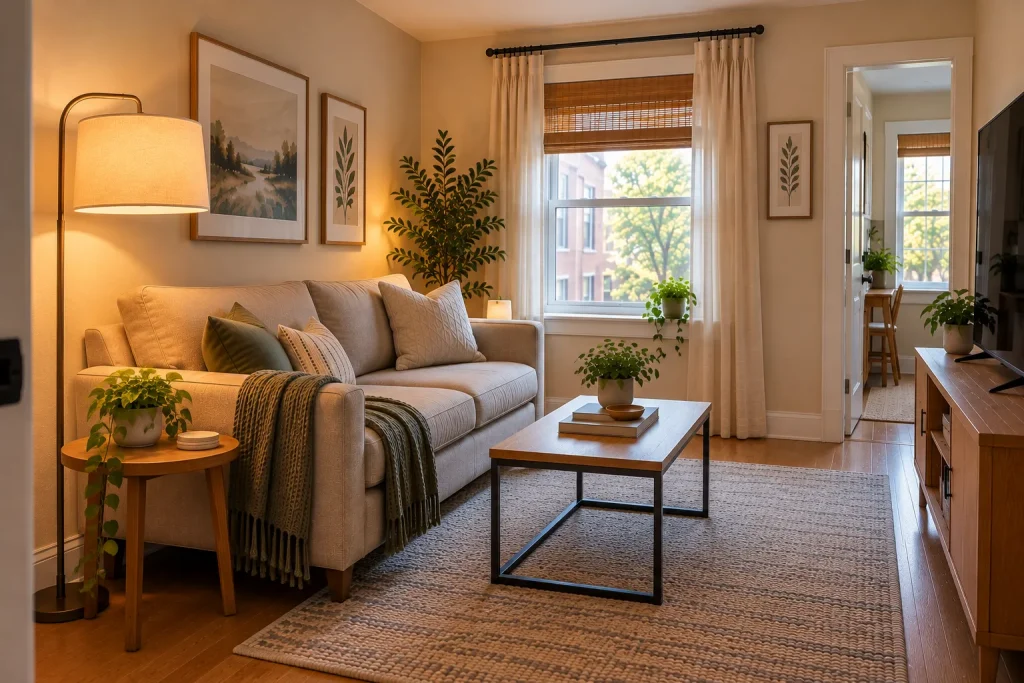
One overhead light may illuminate the whole room without making every activity comfortable. Reading, relaxing in the evening, and entertaining can call for different lighting.
Start by identifying where additional light would genuinely help. A table lamp may work on an existing side table. A suitable wall light can preserve floor space where installation is permitted. A floor lamp may be useful beside a reading chair if its base does not obstruct movement.
Pay attention to outlets and cords before choosing a fixture. A lamp that requires an extension cord across a frequently used route may create a new problem while solving the lighting issue.
You do not need several new fixtures to make a difference. If the ceiling light is adequate for general use, one carefully positioned lamp may provide the additional light you need.
Choose lighting based on how you use the room, not simply to fill an empty corner.
11. Make Window Treatments Work With the Furniture
Curtains affect privacy, daylight, and the way the room feels, but they also need to function properly around nearby furniture.
Measure the window and the available wall space before choosing panels. Check whether the curtains can open and close without catching on the sofa, interfering with a balcony door, or covering a radiator where that could affect its operation.
If the sofa sits close to the window, consider where the fabric will fall. Thick panels may be inconvenient if they become trapped behind the furniture or are difficult to adjust every day.
Renters should check property rules before drilling or replacing existing hardware. If permanent changes are not permitted, investigate an appropriate reversible option instead.
The best window treatment is not necessarily the most decorative one. It should provide the privacy or light control you need without making an already tight arrangement harder to use.
12. Size Wall Art in Relation to the Furniture
Wall art can introduce personality without taking up floor space. The challenge is choosing a scale and arrangement that works with the furniture below it.
For art above a sofa or console, consider the combined width of the artwork and the furniture. A tiny frame may look disconnected above a wide sofa, while an oversized arrangement can dominate a narrow seating area.
If you are creating a gallery wall, arrange the frames on the floor first. This gives you an opportunity to compare spacing and visual balance before making holes in the wall.
You do not need to fill every empty section. Leaving some wall space undecorated can make the selected pieces easier to appreciate.
If drilling is restricted in your rental, look into suitable removable hanging products and follow their weight limits and surface instructions.
The aim is to make the art feel connected to the room, not to cover every available wall.
13. Give Everyday Belongings a Specific Home
Remotes, charging cables, mail, keys, and small personal items can gradually take over the surfaces in a living room.
Rather than buying another storage unit immediately, look at what already exists. An unused drawer may hold cables and remotes. A small tray can gather items that are used together. A shelf may provide a natural place for a few regularly used belongings.
Match the system to the way you live. If you always charge your phone beside the sofa, its cable should have a convenient home nearby. If mail tends to collect on the coffee table, decide where it should go when it enters the apartment.
Avoid creating a complicated arrangement that requires several steps to maintain. A storage system that is inconvenient to use will often be ignored.
If the room still lacks suitable storage after you have reviewed existing furniture, consider adding a piece that fits a clearly identified need. More storage furniture should be a considered decision, not the automatic response to every clutter problem.
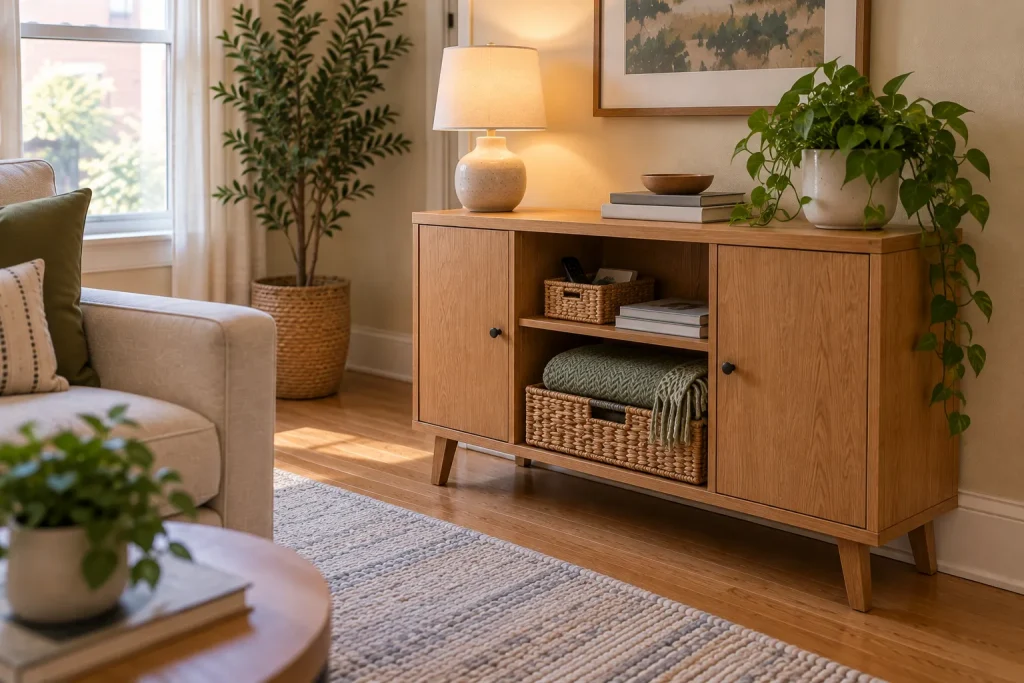
14. Use a Rug to Define the Seating Area
A rug can help a living room feel visually organized, especially when the space shares an open area with a kitchen or dining zone.
The key is to choose a size that relates to the seating arrangement. A rug that is too small may look disconnected from the sofa and chairs, while one that extends into a doorway or interferes with furniture movement can become inconvenient.
Before purchasing, measure the area you want to define. Consider where the sofa and any accompanying chairs sit, as well as the route between the seating area and nearby rooms.
A rug does not have to cover most of the floor to be useful. Its purpose is to connect the seating visually and provide the finish you want without making movement awkward.
Also consider maintenance, the floor surface, and whether the rug needs a suitable non-slip pad. In a compact apartment, an attractive rug that continually shifts underfoot is not a practical improvement.
15. Choose Plants for the Light and Space Available
Plants can add color and texture, but their placement should suit both the room and the plant’s needs.
Before bringing one home, consider the light available in the intended location. A plant that needs brighter conditions than the room provides may struggle even if it looks perfect beside the sofa.
An existing shelf or side table may accommodate a small plant without using additional floor space. A larger planter needs a position where people will not bump into it and where watering will not damage the floor or nearby furniture.
Think about the care routine as well. If reaching the plant requires moving a chair every time you water it, another location may be more practical.
One or two suitable plants can contribute enough greenery. You do not need a collection of pots to make a living room feel finished.
16. Choose Multifunctional Furniture Only When Both Uses Matter
Multifunctional furniture is useful when it replaces something you genuinely need—not merely because the product advertises several features.
A storage ottoman, for example, can provide a footrest and hold a limited number of items. A console with drawers may combine a display surface with a place for everyday belongings. Either could be helpful if it fits your routine and the room.
Consider the trade-offs before buying. If you must remove everything from an ottoman to reach its contents, the storage may become inconvenient. If a convertible piece requires more room to open than your layout provides, its second function may be unusable.
Check the product’s full dimensions and how it operates. Ask yourself whether you would choose the piece even without its extra feature.
The most useful multifunctional furniture solves a specific problem without creating another one.
17. Build a Cohesive Look Without Filling Every Surface
A room can feel unfinished when its elements seem unrelated, but adding more accessories is not the only way to create cohesion.
Look at the colors and materials already present in the sofa, rug, curtains, and larger furniture. Repeating one or two existing tones in a cushion, throw, or artwork can help the room feel connected without introducing a completely new palette.
For example, if the rug already includes a muted blue, a cushion in a similar tone may link the seating area together. If the room has several warm wood finishes, a frame or small accessory in a compatible finish may help the arrangement feel more deliberate.
You do not need everything to match exactly. Focus on a few relationships between colors, shapes, or materials instead of buying a coordinated set of accessories.
Before adding something new, try removing one item that competes for attention. Sometimes the room feels more considered after editing than after decorating.
How to Improve Your Living Room Without Replacing Everything
You can make progress without buying all new furniture. Work through these steps in order:
- Identify the problem. Decide whether the room feels difficult to use because of furniture placement, insufficient seating, poor lighting, or another specific issue.
- Measure the relevant area. Check the furniture, doors, windows, and routes affected by that problem.
- Test a change before spending money. Use painter’s tape to mark a proposed furniture footprint, or temporarily move an existing piece.
- Live with the adjustment. Use the room normally for several days. Notice whether the change makes everyday activities easier.
- Buy only what is still missing. Choose a new piece when the existing furniture and layout cannot reasonably meet the need.
This order helps separate genuine problems from the temptation to buy something simply because it looks good online.
Frequently Asked Questions
How do I decide which furniture to keep in a small apartment living room?
Start with the activities the room must support every day. Keep furniture that serves those activities comfortably, then evaluate occasional-use pieces separately. If an item blocks movement or rarely gets used, test the room without it before deciding whether it needs to stay.
Can a small apartment living room have both a dining area and a sofa?
Yes, if the room’s dimensions and your furniture choices allow both areas to function comfortably. Measure the dining table with chairs pulled out, account for the routes between rooms, and consider how often you use the dining area. A layout that technically fits everything may still be inconvenient in daily use.
What should renters check before changing their living room?
Review the lease and property rules before drilling, mounting a television, replacing window hardware, or making other permanent changes. Furniture rearrangement, textiles, freestanding lamps, and removable decor may offer alternatives, but suitability depends on the property and the products used.
Final Thoughts
A small apartment living room works best when its furniture reflects the way people actually use it. A better sofa shape, a more useful seating arrangement, or one less unnecessary table can make a greater difference than filling the room with space-saving products.
Start with the problem you notice most often. Test a practical change, keep what improves the room, and add new furniture only when there is a clear reason for it.
The goal is not to make a small living room look like a large one. It is to make the space you have more comfortable, functional, and personal.
2 comments