In this article
- 1. Start With the Room’s Natural Light
- 2. Use More Than One Light Source
- 3. Choose Bedside Lamps That Fit the Nightstand
- 4. Add a Warm Ceiling Light
- 5. Use Wall Sconces When Nightstand Space Is Tight
- 6. Consider Plug-In Sconces for Renters
- 7. Put Reading Light Where You Actually Need It
- 8. Use Curtains to Control Daylight
- 9. Add a Small Floor Lamp Only When Space Allows
- 10. Use Under-Bed or Low-Level Lighting Carefully
- 11. Avoid One Harsh Overhead Light
- 12. Match the Light to Your Bedroom’s Color Palette
- 13. Keep Bulbs Comfortable for Evening Use
- 14. Use Mirrors to Help Bounce Available Light
- 15. Light the Corners That Usually Get Ignored
- 16. Keep Nighttime Lighting Simple
- 17. Finish by Adjusting the Room at Night
- Using only the ceiling light
- Choosing oversized lamps
- Adding a floor lamp without checking clearance
- Making every light equally bright
- Adding lights without considering the room’s style
- Ignoring nighttime testing
17 Small Bedroom Lighting Ideas That Make the Space Feel Better
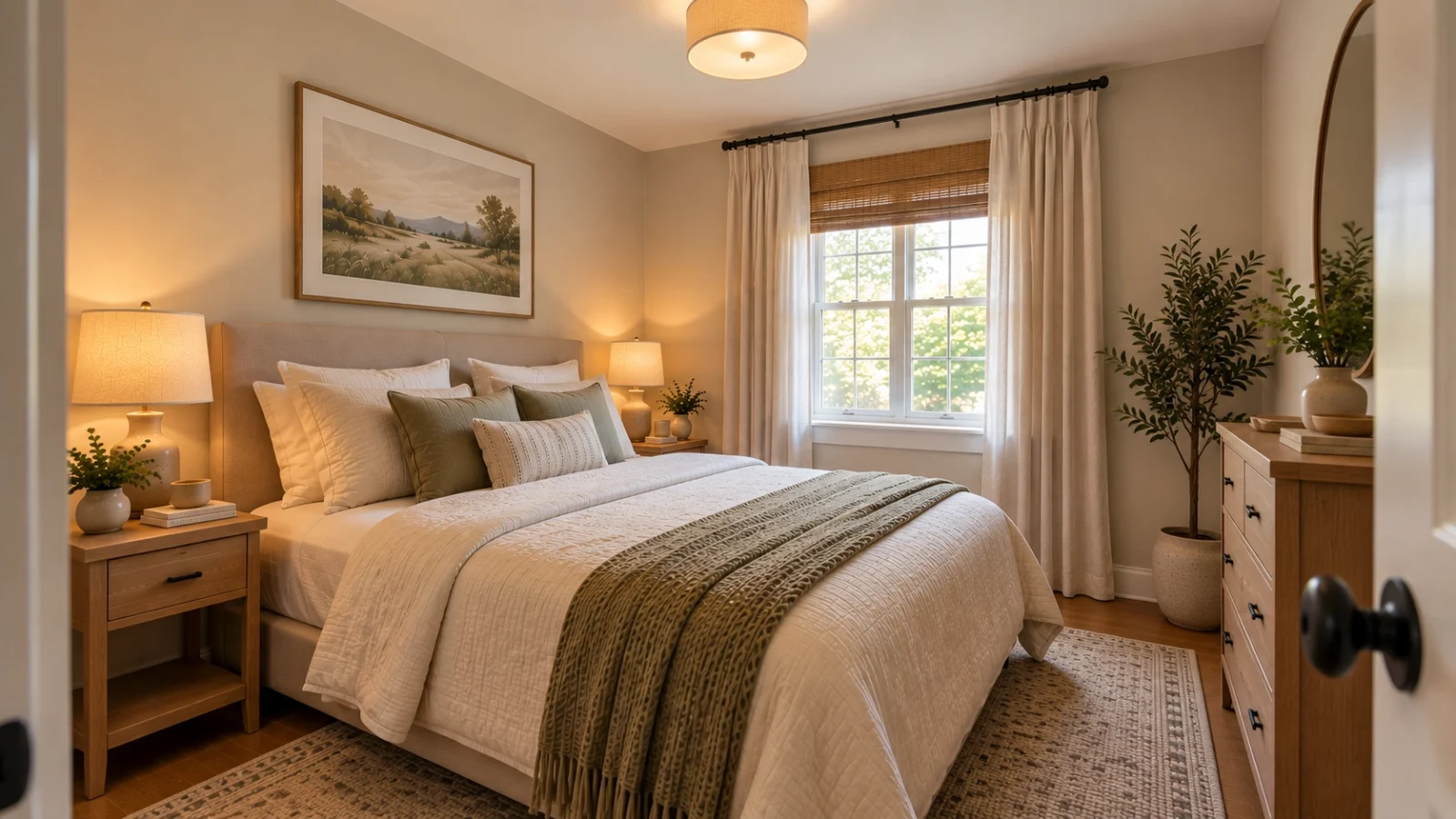
A small bedroom can have good furniture, attractive bedding, and thoughtful decor and still feel a little off at night. Often, the problem isn’t the room itself. It’s the lighting.
One ceiling light rarely does everything well. It may be bright enough for cleaning or getting dressed, but too harsh for winding down or reading in bed. A better approach is to use a few smaller sources of light, each serving a different purpose.
In a small bedroom, lighting also has to work with limited floor and surface space. The goal isn’t to add as many lamps as possible. It’s to put light where you actually need it while keeping the room comfortable and uncluttered.
Here are 17 small bedroom lighting ideas that can make the room feel warmer, more functional, and easier to live in.
1. Start With the Room’s Natural Light
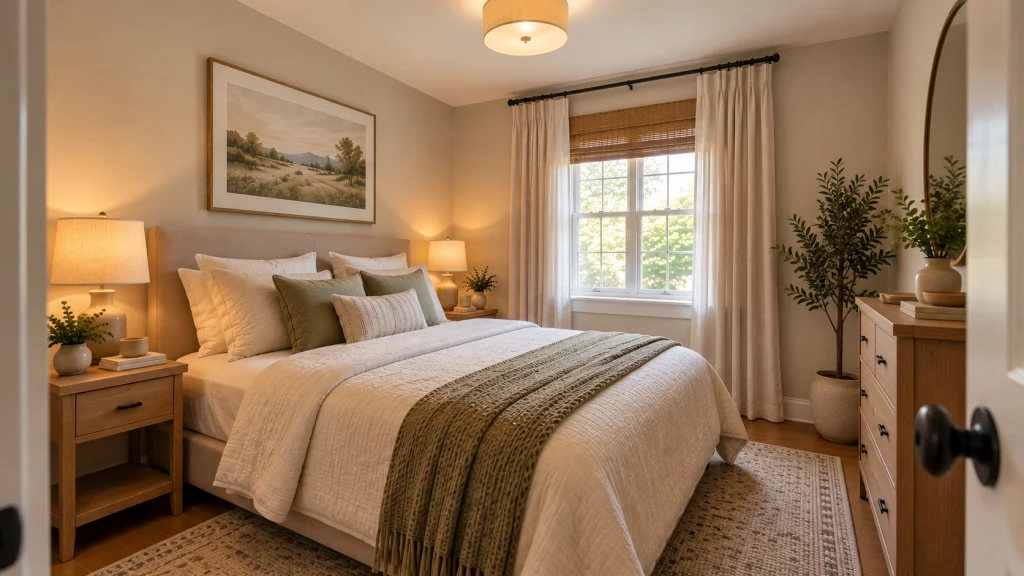
Before adding lamps, pay attention to the daylight your bedroom already gets.
A room with one medium-sized window may have plenty of natural light during the day but become noticeably darker in the evening. Notice which areas receive the most daylight and which corners stay darker.
This can help you decide where additional lighting will actually make a difference instead of automatically adding another lamp.
If your bedroom gets good morning light, for example, you may want to prioritize comfortable evening lighting rather than trying to brighten the room throughout the entire day.
2. Use More Than One Light Source
A small bedroom usually feels more comfortable when light comes from several places instead of one strong source.
Think in simple layers:
- Ceiling light for general visibility
- Bedside lighting for reading and nighttime routines
- Accent or corner lighting for softer illumination
You don’t necessarily need all three in a tiny room. Even two different sources can make the space feel more balanced.
The important part is avoiding the situation where one ceiling fixture has to handle every lighting job.
3. Choose Bedside Lamps That Fit the Nightstand
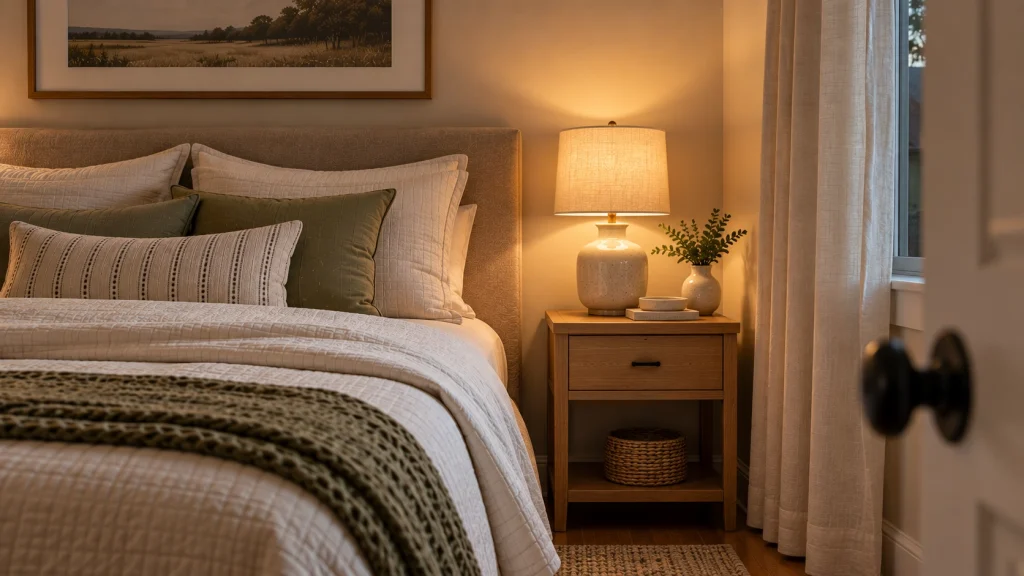
A bedside lamp should work with the size of the nightstand rather than overwhelm it.
If your nightstand is narrow, look for a lamp with a compact base and a shade that doesn’t extend far beyond the table. The lamp should leave enough room for the things you actually use at night.
A simple setup of one lamp, a book, and perhaps a small tray can look more intentional than a large lamp surrounded by decorative objects.
If you’re looking for a compact bedside lamp, this 3-way touch bedside lamp on Amazon is one option to consider. It offers multiple brightness settings and comes with an LED bulb, which can be useful when you want different levels of light for reading, relaxing, or winding down.
Paid link.
And if you’re already working with limited bedside space, our small bedroom organization ideas can help you decide what really needs to stay within reach.
4. Add a Warm Ceiling Light
The ceiling fixture is still useful in a small bedroom, especially when you need even general lighting.
The key is choosing a fixture that suits the room’s scale and doesn’t dominate the ceiling.
A simple flush-mount or low-profile fixture can provide useful overhead illumination without making the ceiling feel visually heavy.
For evenings, pair the ceiling light with softer bedside lighting rather than relying on the overhead fixture alone.
5. Use Wall Sconces When Nightstand Space Is Tight
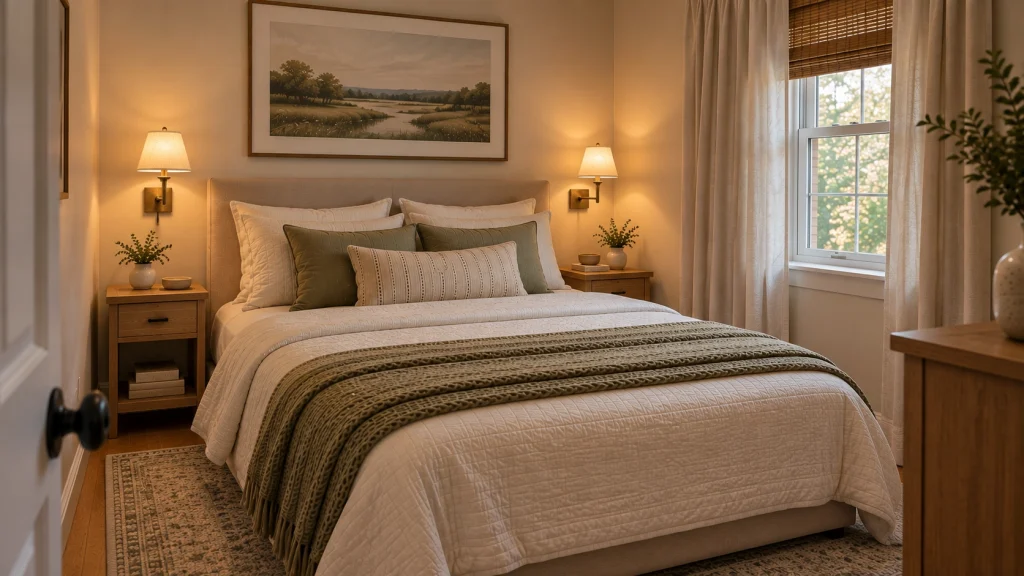
Wall-mounted sconces can be especially useful when there isn’t enough room on the bedside table for a traditional lamp.
Mounting the light beside the bed keeps the nightstand surface open while still giving you dedicated reading or bedside illumination.
This can work particularly well in a small bedroom where every few inches of usable surface matters.
Just make sure the placement works with the bed height and your normal sitting or reading position.
6. Consider Plug-In Sconces for Renters
You don’t always need hardwired lighting to get the look and function of a wall sconce.
Plug-in sconces can provide similar benefits while giving renters more flexibility. Depending on the fixture and the room, the cord can often be managed neatly along the wall.
Before installing anything, check your lease and use an installation method appropriate for your walls.
The goal is simple: get the lighting closer to where you need it without sacrificing valuable nightstand space.
7. Put Reading Light Where You Actually Need It
A reading light doesn’t have to illuminate the entire bedroom.
If you regularly read in bed, focus the light around the head of the bed instead. A compact bedside lamp, adjustable wall light, or directional fixture can give you enough illumination without flooding the rest of the room.
This also creates a more comfortable evening atmosphere because the whole bedroom doesn’t need to be equally bright.
8. Use Curtains to Control Daylight
Curtains aren’t technically a light fixture, but they have a major effect on how lighting works in a small bedroom.
Light-filtering curtains can soften strong daylight while still allowing some natural light through. If you need a darker room for sleeping, consider a combination of curtains that provides more control.
Mounting curtains properly can also help the window feel larger and more finished.
For more decorating ideas that work with limited space, see our guide to small bedroom decor ideas.

9. Add a Small Floor Lamp Only When Space Allows
A floor lamp can add useful light to a bedroom, but it isn’t automatically a good choice for a small room.
Before adding one, look at the actual floor area around the bed, dresser, and doorway. If the lamp makes the walking path narrower or creates another obstacle, it’s probably not worth the space.
A slim floor lamp can work beside a dresser or in an otherwise unused corner when there is enough clearance.
In a very tight bedroom, a wall-mounted or tabletop option may make more sense.
10. Use Under-Bed or Low-Level Lighting Carefully
Low-level lighting can create a subtle glow around the bottom of the bed, but it should be used sparingly.
The purpose isn’t to turn the bedroom into a brightly illuminated space. A very soft light can simply help you move around at night without switching on the main ceiling fixture.
This can be particularly useful if you frequently get up during the night.
Keep the light discreet and avoid visible strips or wires that make the setup look unfinished.
11. Avoid One Harsh Overhead Light
One of the easiest ways to make a small bedroom feel less comfortable is to depend entirely on a bright overhead fixture.
It can create strong shadows and make the room feel flat when you’re trying to relax.
Instead, use the ceiling light when you need general visibility and rely on smaller lights when you’re reading, getting ready for bed, or winding down.
This simple change can make the same bedroom feel noticeably different at different times of day.
12. Match the Light to Your Bedroom’s Color Palette
Lighting and color work together.
Warm neutral bedrooms can look especially comfortable under warm, softer lighting. Cooler lighting can change the appearance of beige, cream, wood, and other warm materials.
You don’t need to obsess over technical lighting specifications. The practical goal is to choose lighting that makes the colors and materials in your room feel comfortable rather than stark.
This is another reason to test a bulb or lamp in the actual room before buying several of the same type.
13. Keep Bulbs Comfortable for Evening Use
The bedroom is one place where lighting comfort matters more than simply making everything as bright as possible.
For evening routines, many people prefer a softer, warmer quality of light. Your ideal choice will depend on the fixture, room colors, and how you use the bedroom.
If a bulb feels harsh when you’re sitting in bed, it probably isn’t the right light for that particular location.
Think about the task first: reading, getting dressed, finding something in a drawer, or simply relaxing all require different amounts of light.
14. Use Mirrors to Help Bounce Available Light
A strategically placed mirror can help make a small bedroom feel brighter by reflecting available daylight or nearby light sources.
You don’t need a huge mirror.
A medium-sized mirror positioned where it can catch light from a window or lamp can provide the effect without taking over the room.
Just avoid placing it where the reflection creates glare or makes the room feel visually busy.
15. Light the Corners That Usually Get Ignored
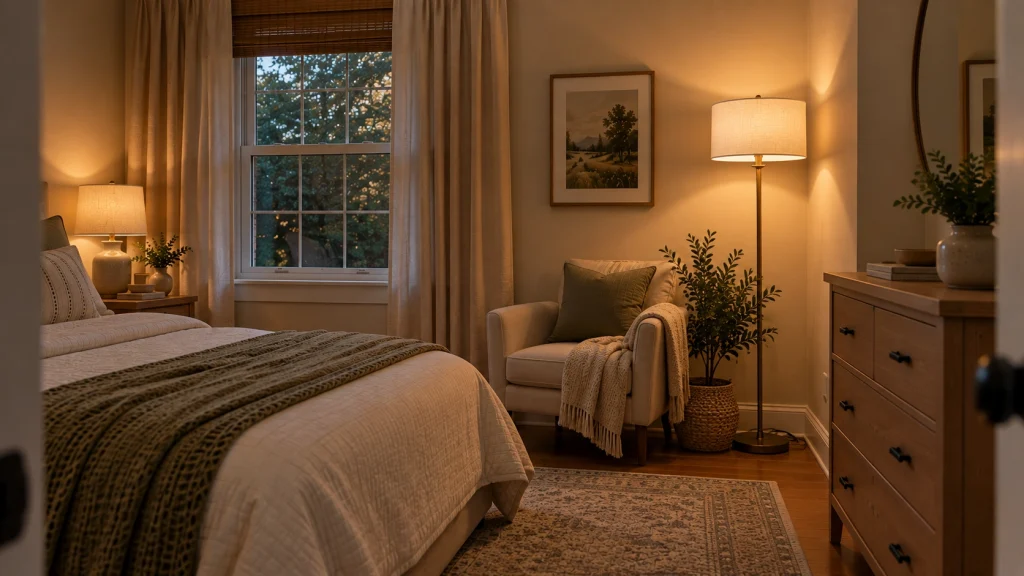
Look around your bedroom at night and notice where the shadows collect.
A dark corner beside a dresser, closet, or chair can sometimes make the entire room feel darker than it actually is.
Instead of adding a bright light to the middle of the room, consider whether a small lamp or carefully positioned light source could soften one of those darker areas.
The effect can be subtle, but distributing light more evenly can make a small room feel more comfortable.
16. Keep Nighttime Lighting Simple
Your bedroom doesn’t need to look like a showroom at night.
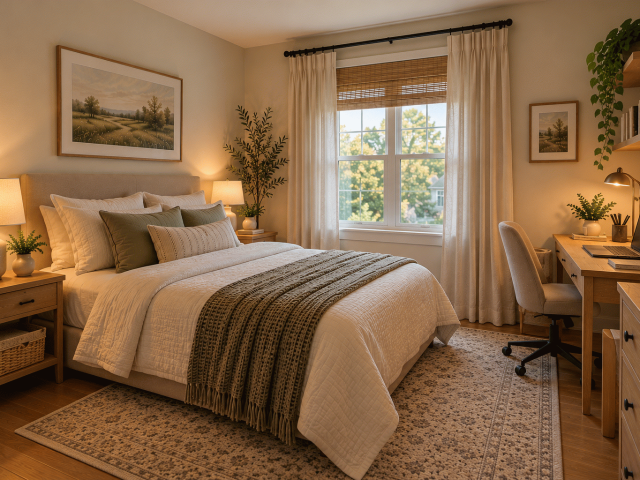
A simple combination of two bedside lights and a ceiling fixture may be enough for many small bedrooms.
The goal is to create different options depending on what you’re doing:
- Ceiling light for cleaning or getting dressed
- Bedside light for reading
- Softer lighting for relaxing
Once the basic layers work, resist adding more lights simply because another corner is available.
A little restraint usually looks better in a small room.
17. Finish by Adjusting the Room at Night
A bedroom can look completely different after sunset.
Before deciding that you need another fixture, turn off the main light and use the lamps you already have. Sit on the bed. Walk toward the closet. Look at the room from the doorway.
Ask yourself:
Where is the room too dark? Where is the light too harsh? What do I actually need to see?
Those observations are more useful than simply buying another lamp.
You may find that moving a lamp a few inches, changing its direction, or replacing one bulb solves the problem without adding anything else.
How to Layer Lighting in a Small Bedroom
You don’t need a complicated lighting plan.
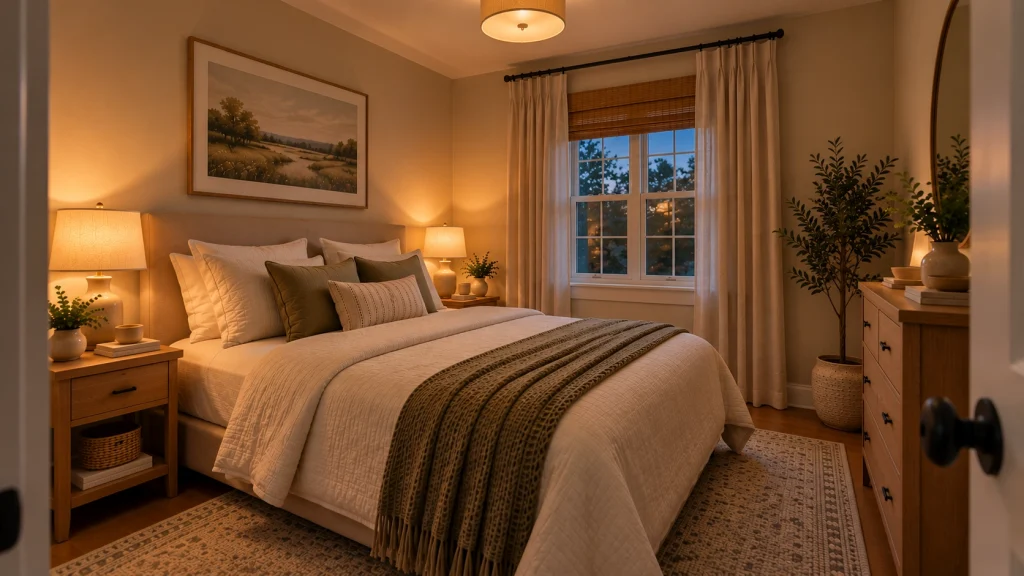
A practical small-bedroom setup could look like this:
For general lighting:
One modest ceiling fixture.
For the bedside:
Two compact lamps or two wall-mounted lights.
For softer evening light:
Use the bedside lights while leaving the ceiling fixture off.
For darker corners:
Add one small additional lamp only if the space genuinely needs it.
For daytime:
Let natural window light do most of the work.
This keeps the lighting functional without filling the bedroom with fixtures.
If you’re still working on furniture placement, our guide to small bedroom layout ideas can help you think about lighting placement alongside the rest of the room.
Small Bedroom Lighting Mistakes to Avoid
A few common mistakes can make a small bedroom harder to use.
Using only the ceiling light
One fixture rarely creates the most comfortable atmosphere for every activity.
Choosing oversized lamps
A lamp that takes up most of a small nightstand leaves little usable space.
Adding a floor lamp without checking clearance
The fixture may look good but make an already-tight walking path worse.
Making every light equally bright
Different activities need different levels of illumination.
Adding lights without considering the room’s style
A collection of unrelated fixtures can make a small room feel visually disconnected.
Ignoring nighttime testing
A setup that looks great during the day may not work well after dark.
Final Thoughts
Good small bedroom lighting isn’t about making the room brighter everywhere.
It’s about putting light in the right places.
A comfortable ceiling fixture, useful bedside lighting, controlled window light, and one or two carefully chosen supporting lights can be enough to make a small bedroom feel much more functional after dark.
Start with the lighting problems you actually notice. Then solve them one at a time.
You may find that the room doesn’t need more lighting at all—it simply needs better-placed lighting.

1 comment