In this article
- 1. Start With Removable Changes First
- 2. Use Peel-and-Stick Wallpaper Carefully
- 3. Make the Bed Wall the Main Focal Point
- 4. Use Damage-Free Wall Decor
- 5. Add a Rug to Define the Room
- 6. Choose Lighting You Can Take With You
- 7. Use Plug-In Wall Sconces Where Appropriate
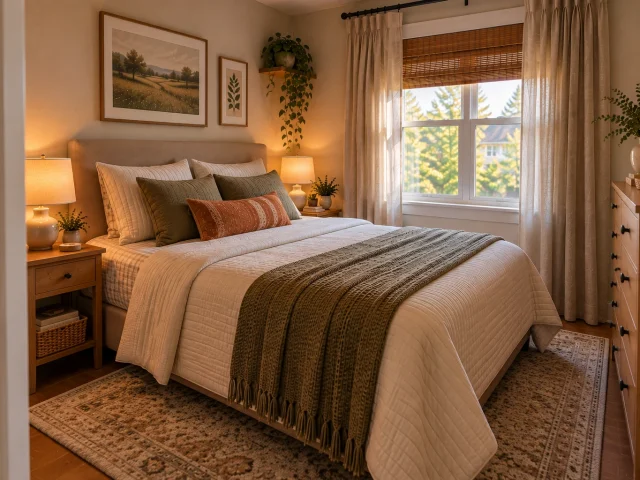
- 8. Bring in Color Through Bedding Instead of Paint
- 9. Use Freestanding Storage Instead of Built-Ins
- 10. Make the Closet Work Harder
- 11. Use Tension-Based Solutions Where They Actually Fit
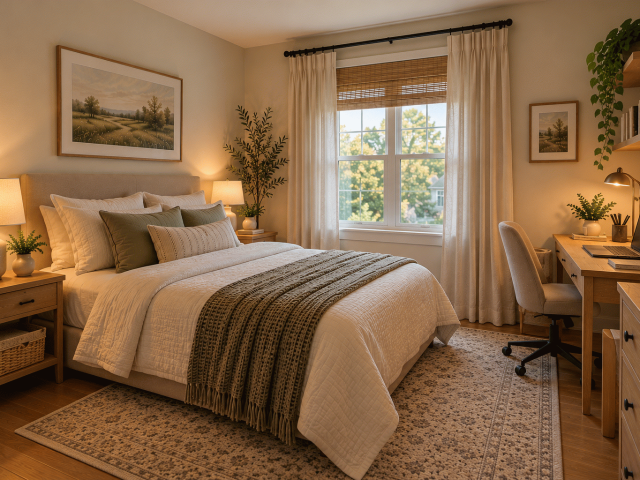
- 12. Choose Furniture That Can Move With You
- 13. Hide Temporary Clutter With Baskets
- 14. Improve Privacy Without Permanent Changes
- 15. Make Plain Rental Windows Feel Finished
- 16. Create a Bedroom Reset That Doesn’t Depend on Renovation
- 17. Choose Upgrades You’ll Still Want in Your Next Home
- Buying furniture before measuring
- Assuming “removable” means damage-free
- Filling every empty wall
- Solving clutter with more storage
- Choosing pieces that only work in one room
- Making the room feel temporary
17 Renter-Friendly Small Bedroom Ideas That Don’t Require Permanent Changes
Renting a small bedroom can make decorating feel like a series of compromises. You may not be able to paint the walls, drill into them freely, replace built-in fixtures, or add custom storage—and the room may already feel short on floor space.
That doesn’t mean you have to leave it looking temporary.
The most useful small bedroom ideas for renters focus on changes you can remove, move, reuse, or take with you. Instead of changing the room’s permanent features, work with bedding, lighting, rugs, freestanding furniture, removable decor, and better use of the space you already have.
The goal isn’t simply to avoid damage. It’s to make the bedroom feel intentional while keeping it practical for your current lease and your next home.
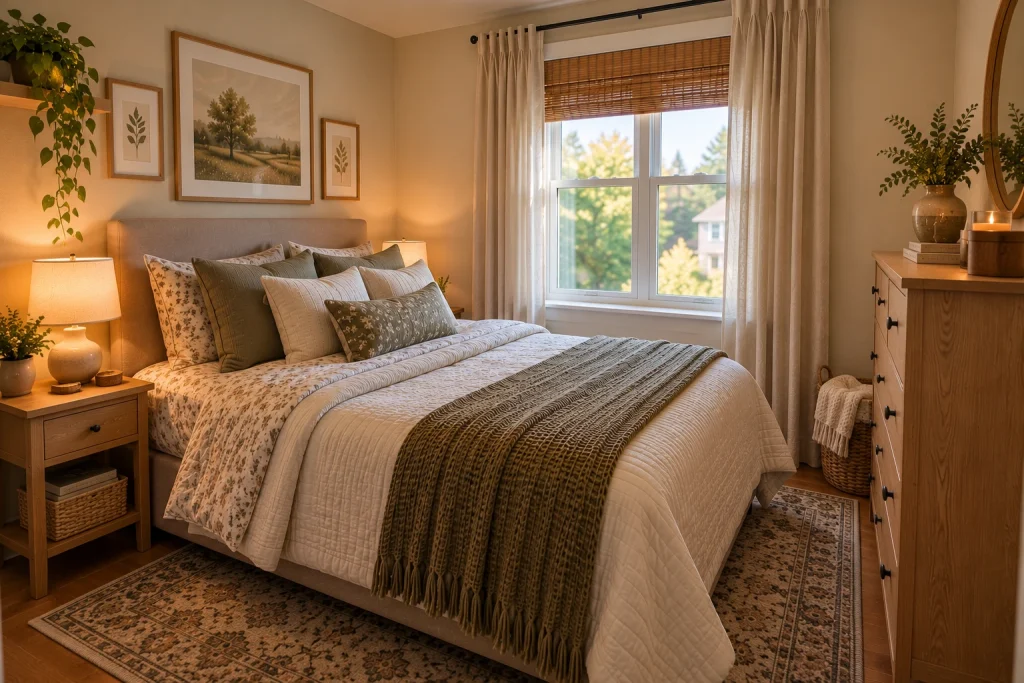
1. Start With Removable Changes First
Before buying anything, separate the room into two categories: things you can’t change and things you can.
The wall color, flooring, doors, built-in closet, and electrical fixtures may be outside your control. Your bedding, rug, curtains, lamps, storage furniture, artwork, and accessories usually give you much more freedom.
Starting with these removable elements keeps your makeover focused.
It also prevents a common small-bedroom problem: buying something large simply because the room feels unfinished.
Try this: Choose two or three areas that bother you most—such as the empty bed wall, poor bedside lighting, or lack of storage—and solve those before adding anything else.
2. Use Peel-and-Stick Wallpaper Carefully
Plain rental walls can make a bedroom feel generic, but a removable wallpaper treatment can give one area much more personality.
In a small bedroom, you usually don’t need to cover every wall. A single section behind the bed can create a focal point while keeping the rest of the room visually quiet.
Choose a pattern that works with furniture and bedding you already own rather than designing the entire room around a temporary wall treatment.
Before applying anything, check the product instructions and your lease. Different wall finishes and paints can react differently to adhesive products, and “removable” does not mean damage is impossible.
Try this: Test a small hidden section first if the product allows it, then use one wall or defined area rather than turning the entire room into a pattern.
3. Make the Bed Wall the Main Focal Point
A small rental bedroom doesn’t need decoration on every wall.
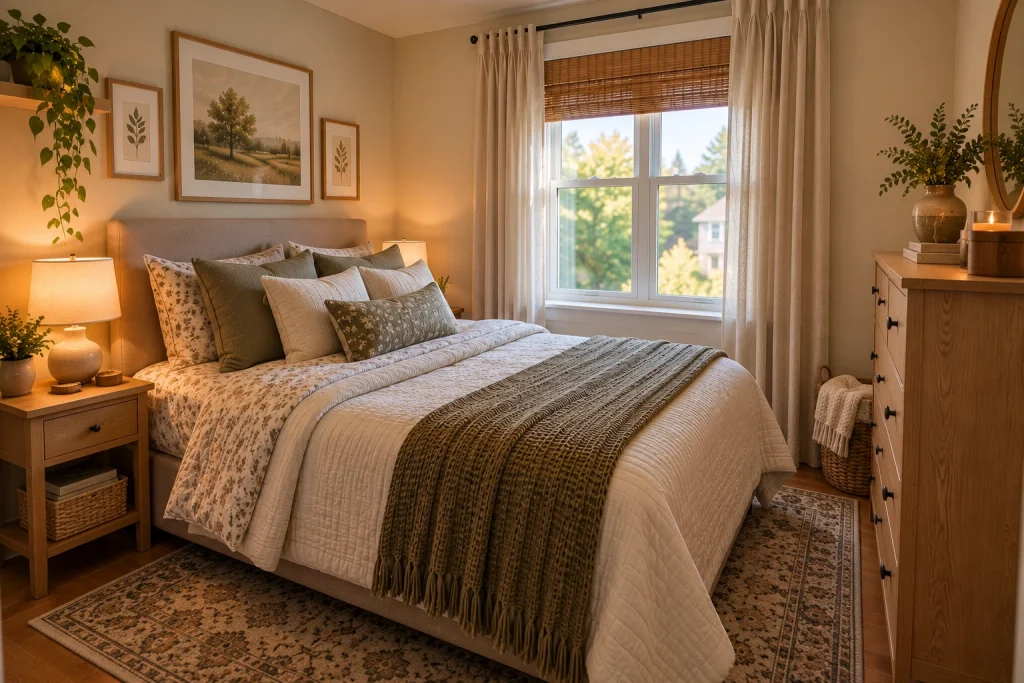
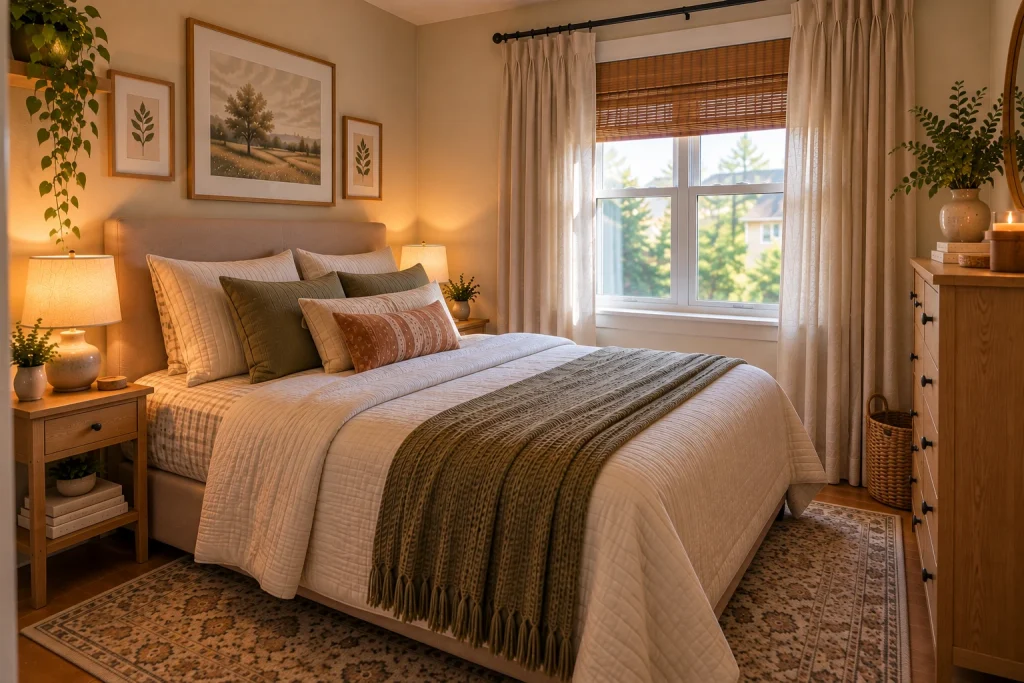
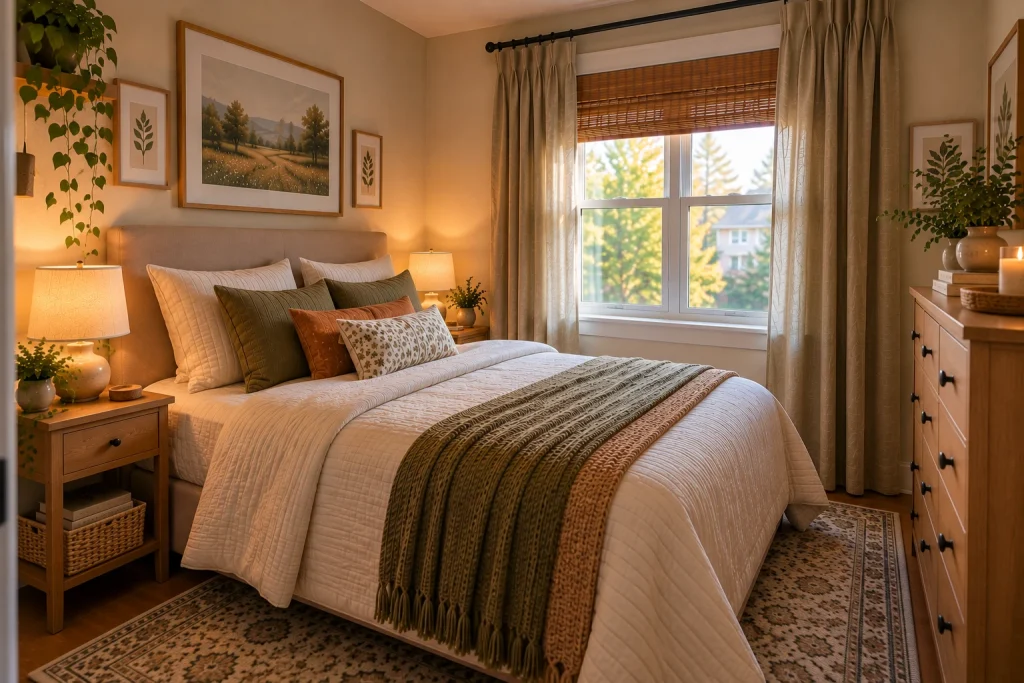
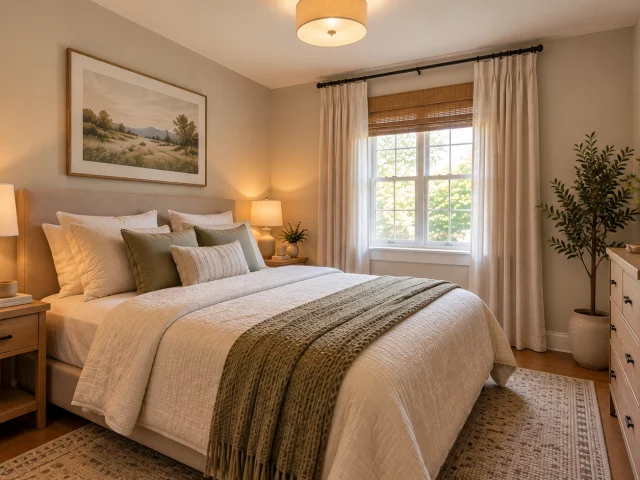
The bed is already the largest visual element, so use the wall behind it as the room’s main focal point. A freestanding headboard, removable artwork, a simple textile, or carefully chosen wallpaper can give the bed area more presence without adding furniture around the room.
This approach also helps keep the rest of the bedroom visually quieter.
Instead of asking, “What can I put in this empty corner?” ask, “What one area deserves the most attention?”
Try this: Keep the bed wall intentional and leave at least some other walls relatively quiet.
4. Use Damage-Free Wall Decor
If your lease limits nails or screws, you still have options for bringing art and personality into the room.
Depending on the wall surface and product instructions, removable hanging strips, lightweight hooks, or leaning artwork can help you display prints without committing to permanent installation.
A leaning full-length mirror can also add function without occupying wall space.
The important part is matching the hanging method to the weight of the item. Don’t assume a removable product is suitable simply because the packaging says it is removable.
Try this: Start with one larger piece or a small, controlled grouping rather than filling every available section of wall.
5. Add a Rug to Define the Room
A rug is one of the easiest rental-friendly ways to change how a small bedroom feels because it doesn’t require changing the floor underneath it.
Beyond adding color and texture, a rug can visually connect the bed, nightstands, and surrounding furniture into one area.
Choose the size carefully. A rug that’s too small can look disconnected from the bed and make the room feel visually fragmented.
For a small bedroom, don’t automatically choose the smallest rug available just because the room is small. Think about how much of the bed and surrounding floor you want the rug to visually anchor.
Try this: Lay out the approximate rug dimensions with tape or newspaper before buying so you can see how much floor will remain around it.
6. Choose Lighting You Can Take With You
Lighting is especially useful in a rental because you can improve the atmosphere without changing the room’s permanent fixtures.
A small bedside lamp, portable lamp, floor lamp, or other plug-in option can create a more comfortable evening setup while remaining useful after you move.
This also gives you more control than relying entirely on the existing ceiling light.
For more ideas specifically about lighting a compact bedroom, see our small bedroom lighting ideas.
Try this: Think about lighting in layers—general light for the room, focused light for reading or getting ready, and softer light for the evening.
7. Use Plug-In Wall Sconces Where Appropriate
If bedside tables are taking up too much room, a plug-in wall sconce can provide some of the benefits of a wall-mounted light without requiring electrical rewiring.
This can be particularly useful when the nightstand is narrow or when you want to keep the surface clear.
However, installation still depends on the product, wall surface, cord routing, and your rental rules. If attaching something to the wall isn’t allowed, choose a freestanding alternative instead.
Try this: Before buying one, check where the nearest outlet is and imagine the cord path. A good-looking light can become visual clutter if its cable crosses an awkward part of the room.
8. Bring in Color Through Bedding Instead of Paint
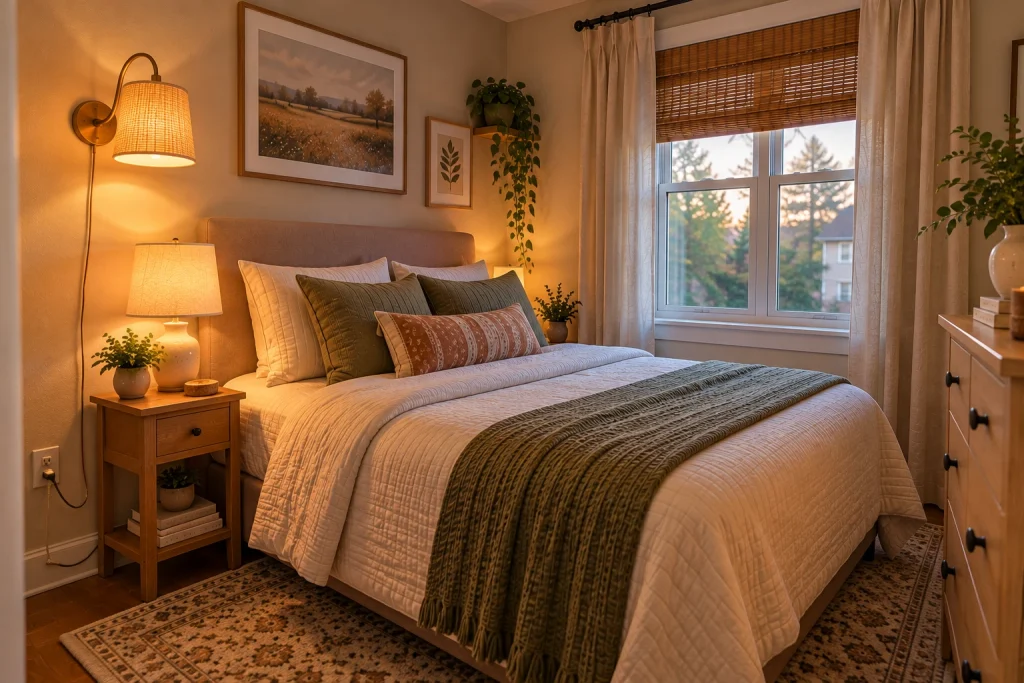
If you can’t repaint the bedroom, use textiles to introduce the colors you want.
Bedding is especially useful because it covers a large visual area and can be changed without modifying the room itself.
You could use neutral walls as a background for muted green, warm terracotta, soft blue, cream, or another color that fits your style.
Curtains, pillows, throws, and rugs can repeat that color without requiring a permanent change.
Try this: Choose one main accent color and repeat it in two or three places rather than introducing a different color into every corner.
9. Use Freestanding Storage Instead of Built-Ins
Built-in storage can be useful, but it’s usually not a realistic solution for a renter who can’t modify the room.
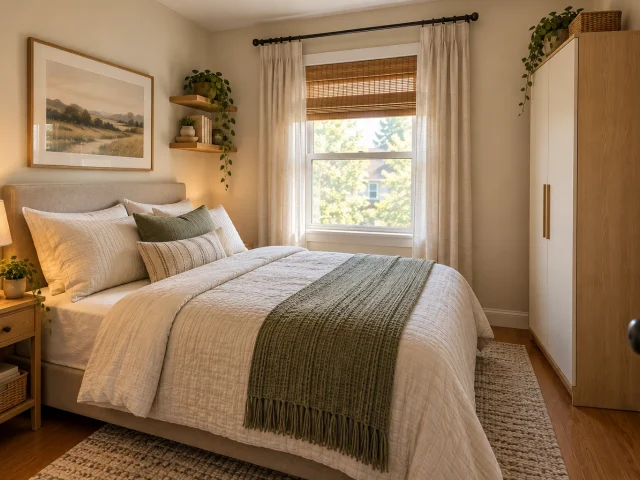
Instead, look for freestanding pieces that can move with you: a slim dresser, narrow shelving unit, rolling cart, storage bench, or compact cabinet.
The key in a small bedroom is choosing storage that solves a specific problem.
Don’t add a large cabinet just because you have “more stuff.” First identify what needs to be stored and where the existing storage is failing.
If you need more ideas specifically around making storage work in a compact room, see our small bedroom storage ideas.
Try this: Measure the available footprint before shopping and leave enough clearance for doors, drawers, and normal movement around the furniture.
10. Make the Closet Work Harder
A small bedroom can feel crowded when the closet isn’t being used efficiently.
Instead of adding another large storage unit to the bedroom, look for ways to make the existing closet easier to use.
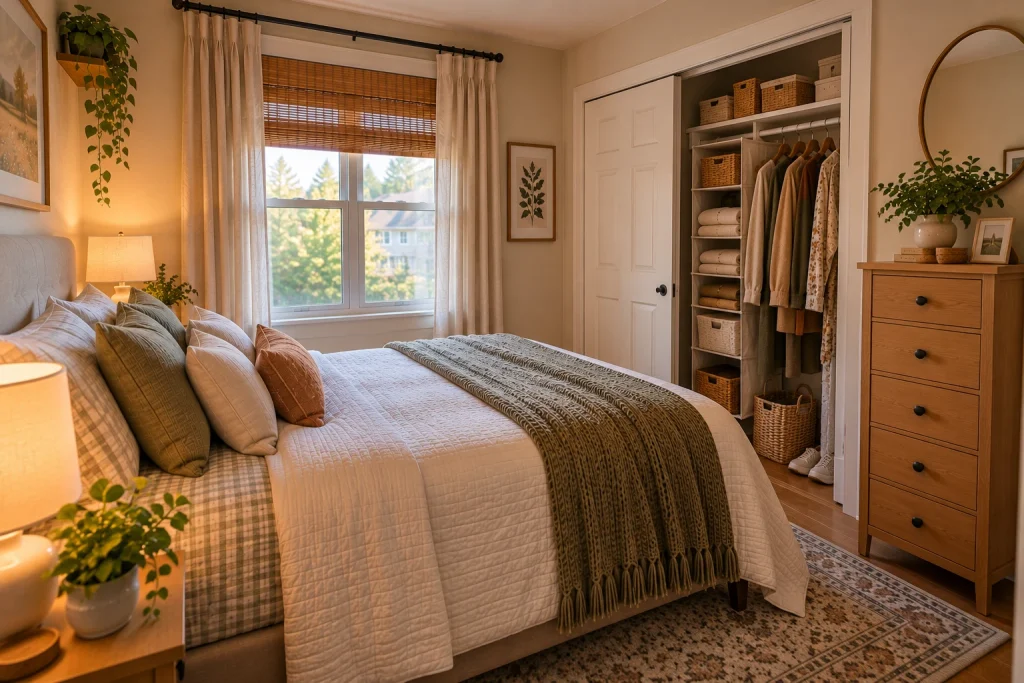
Depending on the closet design, this could mean adding a suitable hanging organizer, using shelf dividers, organizing shoes vertically, or separating frequently used clothes from seasonal items.
Keep the system removable and avoid drilling into the closet unless your lease specifically permits it.
For a deeper look at organizing belongings in a compact bedroom, see our small bedroom organization ideas.
Try this: Put the things you use most often at the easiest-to-reach height and move seasonal items farther back or higher up.
11. Use Tension-Based Solutions Where They Actually Fit
Tension rods can be useful in certain rental situations because they can create temporary hanging or curtain solutions without conventional wall fasteners.
For example, a properly sized tension rod may work inside a suitable closet opening or recessed area.
But don’t treat tension rods as a universal replacement for secure mounting. Their suitability depends on the opening, surface, load, and product.
Try this: Measure the opening carefully and check the rod’s load and installation requirements before using it.
12. Choose Furniture That Can Move With You
One of the smartest rental purchases is furniture that works in more than one home.
A compact nightstand can move to your next bedroom. A narrow dresser can work in another room. A simple desk can become a console later.
This matters even more in a small bedroom because oversized furniture is difficult to rearrange and expensive to replace.
Before buying, think beyond the current room.
Try this: Ask, “Would I still want this piece if my next bedroom had a different layout?”
If the answer is yes, it’s more likely to be a useful long-term purchase.
13. Hide Temporary Clutter With Baskets
Rental bedrooms can quickly become cluttered with things that don’t have a permanent home.
Baskets are useful because they can hide visually messy items while remaining easy to move.
Use them for blankets, accessories, laundry, extra bedding, or other belongings that tend to collect around the room.
The goal isn’t to hide everything. It’s to give loose items a defined place so the room can be reset quickly.
Try this: Give each basket one clear purpose. A basket labeled mentally as “everything” usually becomes a new clutter pile.
14. Improve Privacy Without Permanent Changes
If the bedroom has an awkwardly exposed window, shared apartment arrangement, or open studio-style layout, privacy can be improved without changing the structure.
Curtains are the obvious starting point, but the best solution depends on the window and room.
For some setups, a suitable tension rod can work. For others, a freestanding screen or strategically placed piece of furniture may make more sense.
If the room is extremely small, avoid creating a divider that blocks too much light or makes the floor plan harder to use.
Try this: Solve the privacy problem with the smallest physical change that gives you the amount of separation you actually need.
15. Make Plain Rental Windows Feel Finished
Windows can occupy a surprisingly large amount of visual space, especially in a small bedroom.
If the existing blinds or shades are functional but plain, add removable or freestanding layers that soften the area without permanently changing the window.
Curtains can also introduce texture and color while helping the window feel connected to the rest of the room.
Just make sure the installation method is appropriate for your window and permitted by your lease.
Try this: Repeat a color or texture from the bedding or rug so the window treatment feels like part of the room rather than a separate decoration.
16. Create a Bedroom Reset That Doesn’t Depend on Renovation
A good rental bedroom shouldn’t only look nice immediately after decorating. It should also be easy to put back together.
Create a simple reset routine:
- Clear the nightstand.
- Put clothes back where they belong.
- Return loose items to baskets or storage.
- Keep the bed relatively clear.
- Put work or hobby items away if the bedroom serves another purpose.
This matters because a small room shows clutter quickly.
If you already have practical furniture placement and organization systems, maintaining them becomes much easier. Our small bedroom layout ideas can help if the current arrangement is making everyday movement difficult.
17. Choose Upgrades You’ll Still Want in Your Next Home
The best renter-friendly improvement is one that doesn’t become useless when the lease ends.
Instead of spending heavily on temporary cosmetic changes, prioritize things you can take with you:
- quality bedding
- a useful rug
- a versatile lamp
- movable storage
- curtains
- artwork
- a compact nightstand
- practical organization tools
This changes the way you think about decorating.
You’re not simply “fixing a rental.” You’re building a collection of things that can make future bedrooms feel like home too.
How to Put These Renter-Friendly Ideas Together
You don’t need all 17 ideas to transform a small rental bedroom.
Start with the biggest problems.
If the room feels plain, work on the bed wall, bedding, rug, and artwork.
If it feels cluttered, improve storage and organization before adding more decoration.
If it feels uncomfortable at night, start with portable or layered lighting.
If you have almost no floor space, prioritize wall-friendly solutions, vertical storage, and furniture with a small footprint.
The strongest result usually comes from combining a few changes that solve different problems rather than adding something to every empty space.
And before making any change that touches a wall, window, floor, or fixture, check your lease and the product instructions first.
Common Renter-Friendly Bedroom Mistakes to Avoid
Buying furniture before measuring
A piece can look compact online and still overwhelm a small bedroom. Measure the available space and the furniture itself before buying.
Assuming “removable” means damage-free
Adhesive products can behave differently depending on paint, plaster, texture, humidity, and other conditions. Follow the manufacturer’s instructions and test where appropriate.
Filling every empty wall
A small room doesn’t need every surface decorated. Leaving some visual breathing room can make the finished space feel calmer.
Solving clutter with more storage
More storage isn’t automatically better. First work out what you’re actually storing and whether the existing storage can be organized more effectively.
Choosing pieces that only work in one room
If you’re renting, movable and adaptable furniture can be a better long-term investment than something designed around one exact floor plan.
Making the room feel temporary
Renter-friendly doesn’t have to mean unfinished. Repeat colors, textures, lighting, and materials so the room feels intentionally designed rather than assembled from random temporary fixes.
Final Thoughts
A small rental bedroom may come with restrictions, but those restrictions don’t have to dictate how the room feels.
The most useful approach is to focus on changes that are reversible, practical, movable, and worth taking with you.
Use the walls carefully. Let bedding and rugs bring in color. Improve lighting without rewiring. Choose freestanding storage. Keep clutter contained. And most importantly, make every addition earn its place in the room.
A rental can still feel like your bedroom—not just a room you’re temporarily sleeping in.
1 comment