In this article
- 1. Measure the Room Before Moving the Queen Bed
- 2. Place the Queen Bed Before Choosing Other Furniture
- 3. Center the Bed When the Room Allows It
- 4. Push the Bed Into a Corner When One-Sided Access Works
- 5. Use the Longest Uninterrupted Wall
- 6. Protect the Main Walking Path
- 7. Replace Bulky Nightstands With Narrow or Floating Options
- 8. Choose a Low-Profile Bed Frame
- 9. Use Under-Bed Storage Without Blocking the Room
- 10. Scale the Dresser to the Queen Bed’s Footprint
- 11. Keep the Foot of the Bed Functional
- 12. Let the Closet Influence the Bed Position
- 13. Use Wall Space for Bedside Functions
- 14. Use a Rug to Anchor the Bed Without Losing Floor Space
- 15. Keep the Window and Natural Light Path Clear
- 16. Choose Furniture That Serves More Than One Purpose
- 17. Test the Layout Before You Buy Anything
- Buying furniture before measuring the room
- Forgetting door and closet movement
- Choosing nightstands that are too large
- Filling every available corner
- Prioritizing symmetry over function
- Adding storage without planning access
- Making the room match the bed instead of the other way around
17 Small Bedroom Ideas With a Queen Bed That Still Leave Room to Move
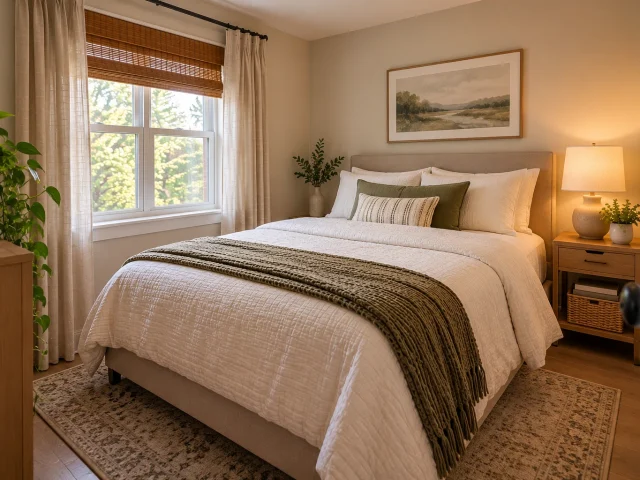
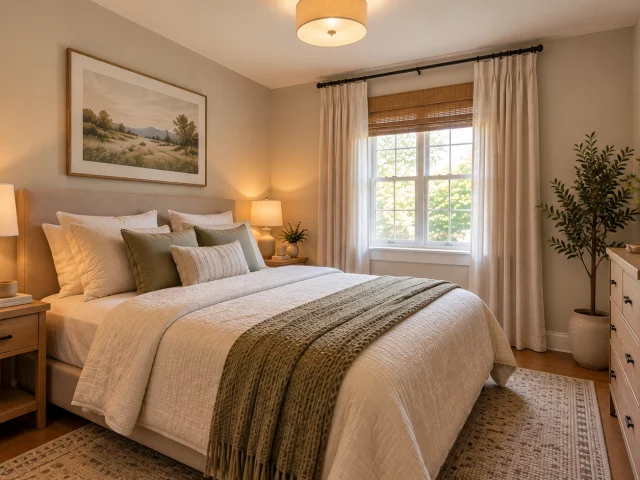
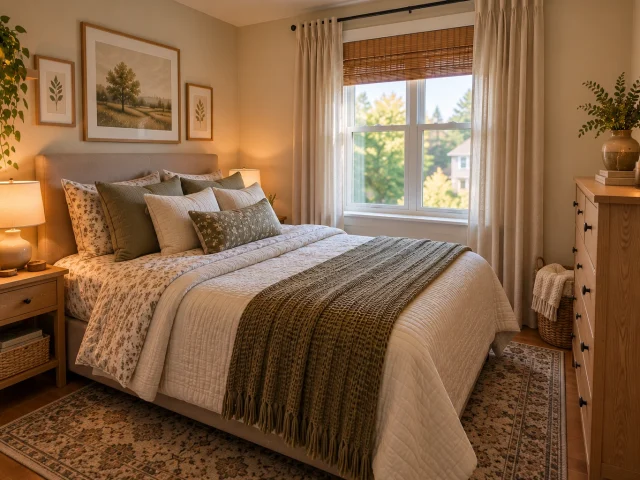
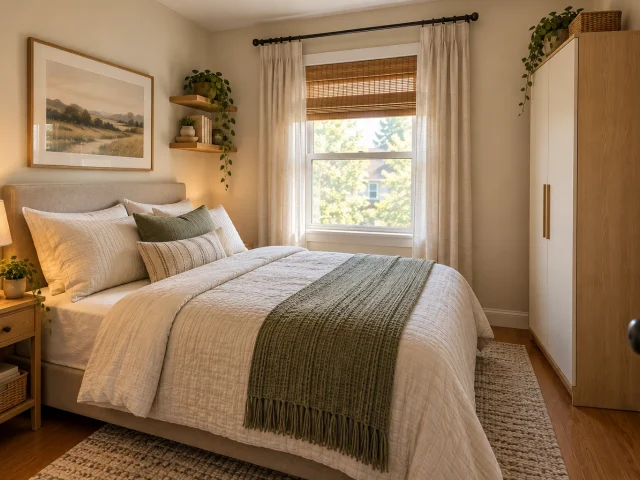
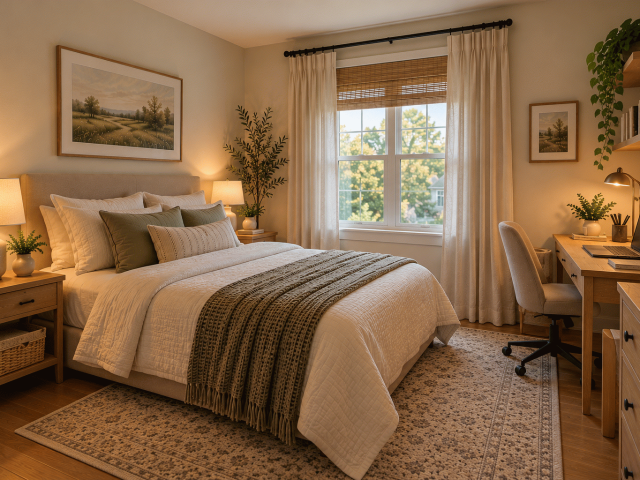
A queen bed can take up a surprising amount of visual and physical space in a small bedroom. Once you add nightstands, a dresser, a closet, and enough room to actually walk around, the layout can start feeling crowded quickly.
But having a small bedroom doesn’t necessarily mean you have to give up the queen bed you want.
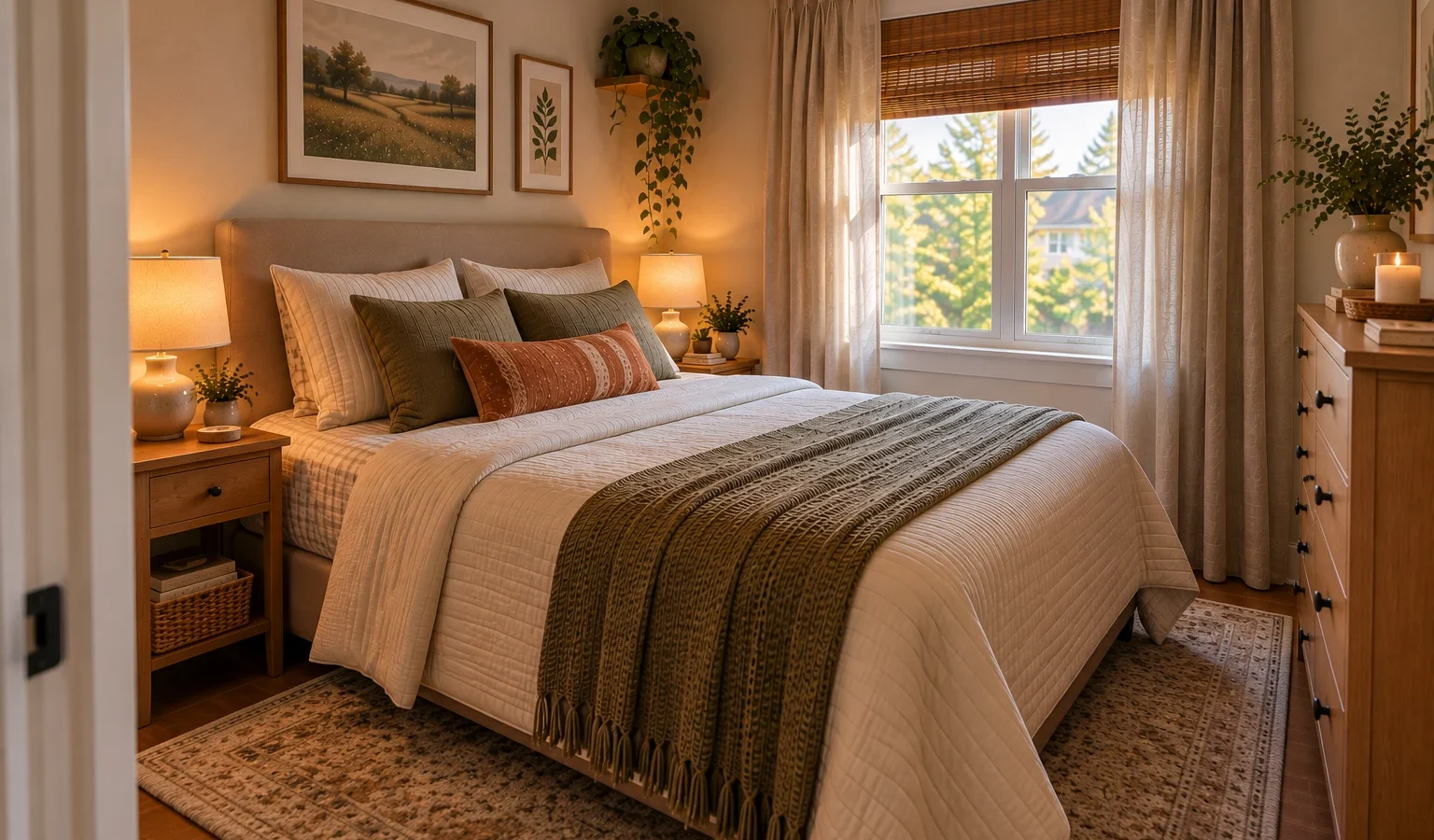
The key is to plan around the bed’s footprint instead of trying to squeeze everything into the room afterward. The position of the bed, the depth of nearby furniture, the way the closet opens, and even the size of your nightstand can make a noticeable difference in how comfortable the room feels.
These small bedroom ideas with a queen bed focus on practical ways to keep the room usable without making it feel like every inch has been filled.
1. Measure the Room Before Moving the Queen Bed
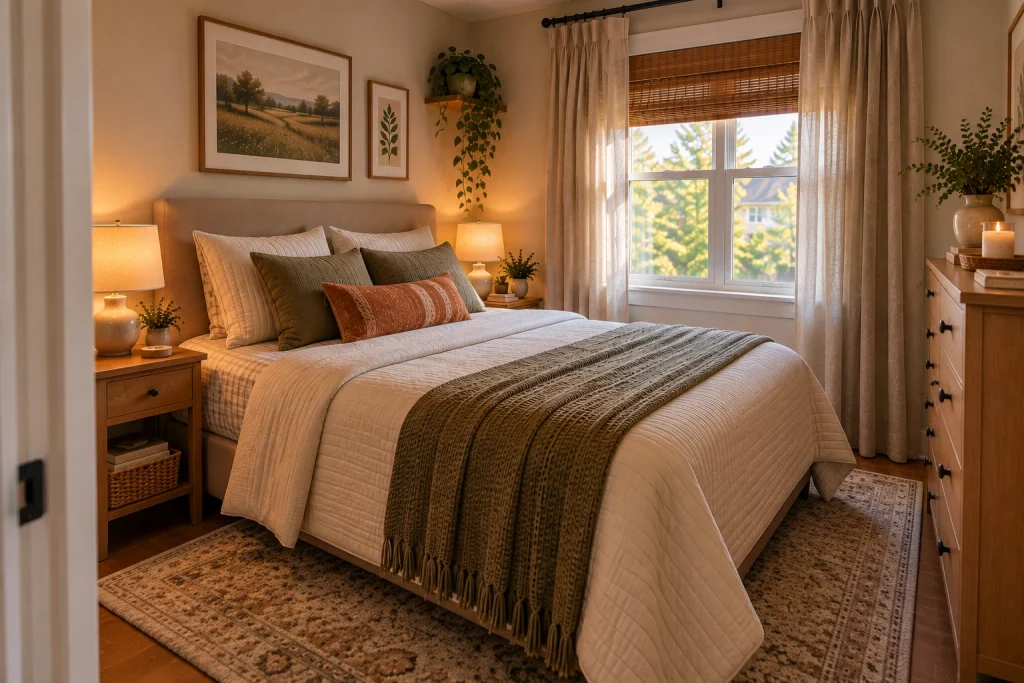
Before experimenting with different layouts, measure the room itself.
Record the wall lengths, but also note where the door, closet, windows, outlets, vents, and other fixed features are located. A layout that looks perfect on an empty floor plan may become impractical once you account for a closet door that needs to open or a bedroom door that swings into the room.
Measure the queen bed and its frame separately too. The mattress dimensions don’t always represent the entire footprint once the frame, headboard, or other components are included.
A simple sketch with these measurements can save you from buying furniture that later turns out to be too large.
The goal isn’t just to make the queen bed fit. It’s to understand what usable space remains after it does.
2. Place the Queen Bed Before Choosing Other Furniture
When a queen bed is the largest piece in a small bedroom, it should usually be one of the first things you plan around.
Try possible bed positions before deciding where the dresser, nightstands, bench, or other furniture will go. Once the bed is positioned, you’ll have a much clearer picture of the remaining floor area.
This approach also helps prevent a common small-bedroom problem: buying several smaller pieces that individually seem reasonable but collectively leave very little usable space.
Start with the largest footprint and work outward.
3. Center the Bed When the Room Allows It
A centered bed can create a balanced, intentional look and give both sides of the room a similar amount of usable space.
That doesn’t mean every small bedroom should have a perfectly centered queen bed. If centering it blocks a closet, creates an awkward walkway, or wastes valuable floor space, another arrangement may work better.
Think of symmetry as an option rather than a rule.
If the room naturally allows the queen bed to sit between two usable side areas, even relatively narrow nightstands can make the setup feel finished without requiring much additional furniture.
4. Push the Bed Into a Corner When One-Sided Access Works
Sometimes moving the queen bed toward a corner creates enough space for another important function elsewhere in the room.
This can be especially useful in a bedroom used primarily by one person, a guest room, or a space where having equal access to both sides of the bed isn’t important.
The trade-off is convenience. A corner placement can make one side of the bed harder to access and may not be comfortable for two people using the room every day.
So don’t choose a corner arrangement simply because it creates more visible floor space. Consider who uses the bedroom and how the bed is actually used.
5. Use the Longest Uninterrupted Wall
A long, relatively uninterrupted wall can often give a queen bed the most predictable placement.
Look for a wall without a doorway cutting through it or a large window occupying the center. This can make it easier to position the bed while leaving a clearer path elsewhere.
However, don’t assume the longest wall is automatically the best wall.
Closet access, door swings, heating or cooling vents, and furniture depth still matter. The best wall is the one that creates a workable overall room—not simply the one with the most linear footage.
6. Protect the Main Walking Path
A small bedroom can feel surprisingly comfortable when its main walking path is clear.
Before adding furniture, identify how you’ll naturally move between the door, bed, closet, window, and other frequently used areas.
Then avoid filling that path with furniture simply because a particular corner is available.
This is one reason a smaller nightstand or shallower dresser can sometimes be more useful than a larger piece with more storage. You’re not only buying furniture—you are also deciding how much floor space that furniture permanently occupies.
7. Replace Bulky Nightstands With Narrow or Floating Options
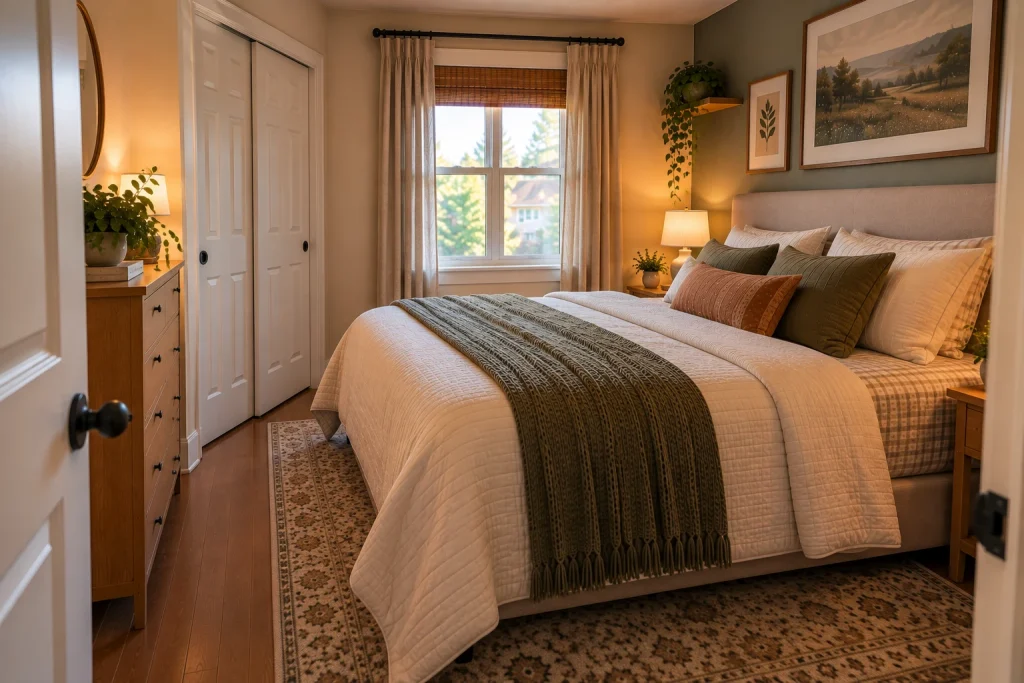
Traditional nightstands can take up more space than expected beside a queen bed.
If the bedside area is tight, look for a narrower piece that still holds the essentials you actually use. A compact nightstand can be enough for a lamp, phone, book, and a few everyday items.
In some layouts, a floating shelf or wall-mounted bedside surface can also reduce the amount of floor furniture.
The important part is not choosing the smallest possible nightstand. It’s choosing one that provides what you need without unnecessarily competing with the bed for floor space.
If bedside lighting is also taking up valuable surface area, see our guide to small bedroom lighting ideas for more ways to keep the bedside area functional.
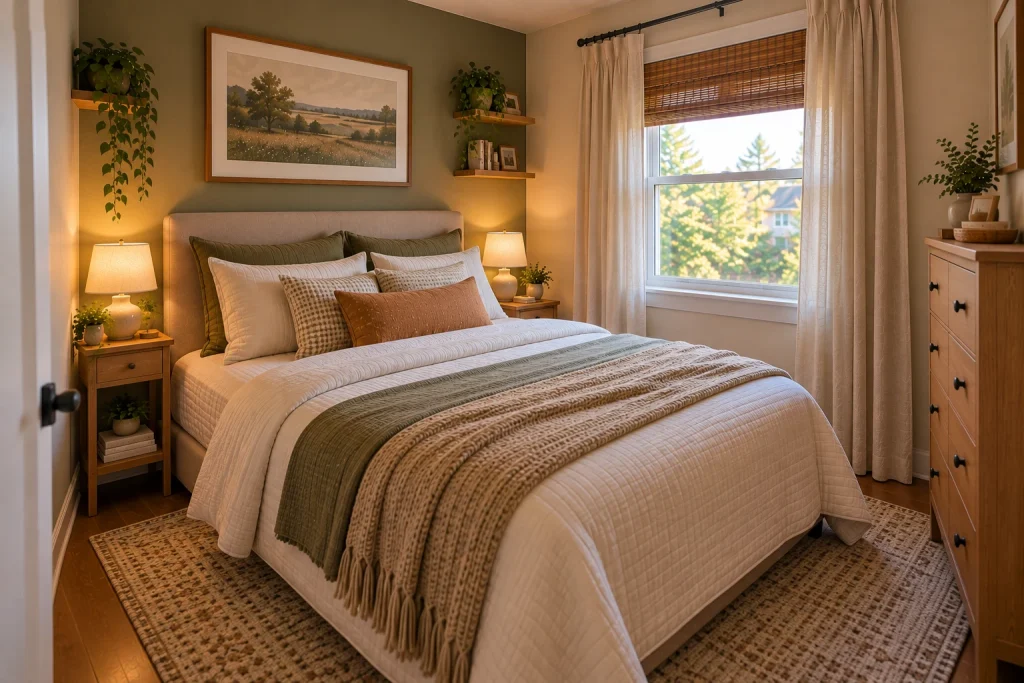
8. Choose a Low-Profile Bed Frame
A queen bed already has a substantial physical presence in a small room. A very tall or visually heavy frame can make that footprint feel even more dominant.
A simpler, lower-profile frame can help the room feel less visually crowded.
This doesn’t mean you need to choose a particular style or eliminate a headboard altogether. Instead, consider how much visual weight the frame adds relative to the rest of the room.
A simpler frame paired with appropriately scaled bedding can keep attention on the overall room rather than making the bed feel like a wall of furniture.
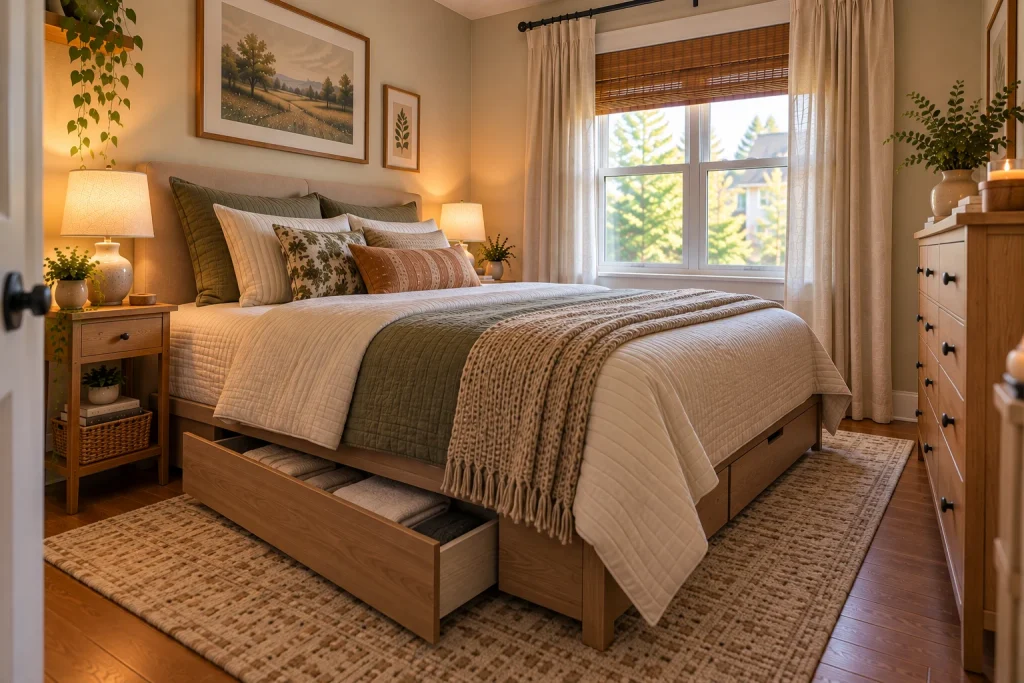
9. Use Under-Bed Storage Without Blocking the Room
When the queen bed occupies valuable floor space, the area underneath it can become useful storage.
But under-bed storage works best when you can actually access it.
Before filling the space with bins or drawers, consider which side of the bed you’ll use to reach them. A container that technically fits underneath the bed isn’t very useful if accessing it requires moving furniture or climbing across the mattress.
Use under-bed storage for belongings you don’t need constantly, while keeping frequently used items easier to reach.
For more ways to make limited bedroom storage work, you can also explore our guide to small bedroom storage ideas.
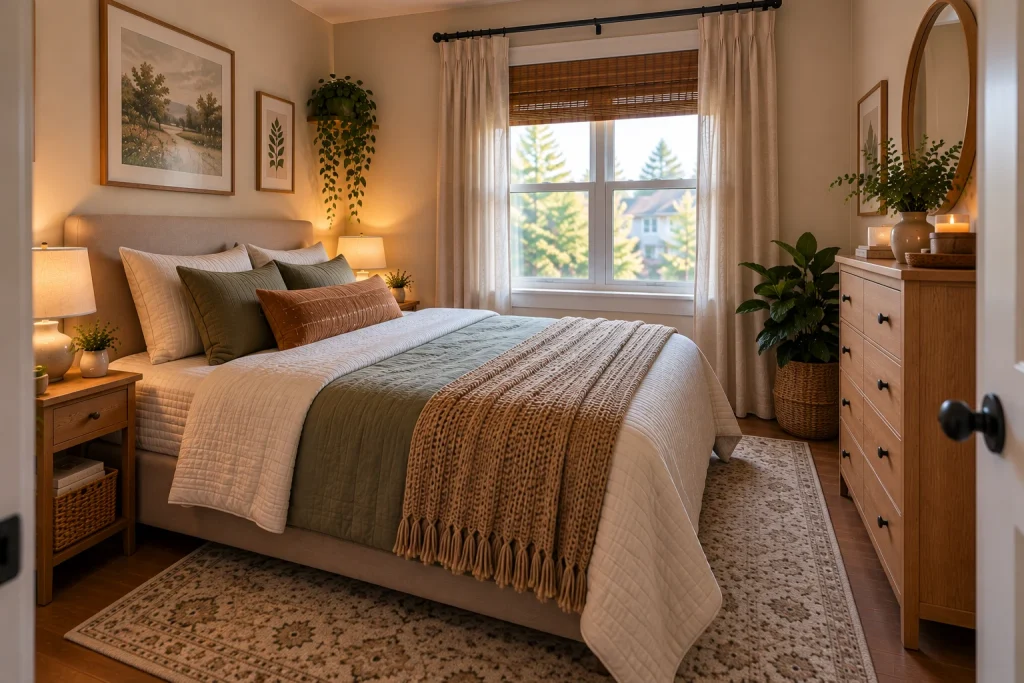
10. Scale the Dresser to the Queen Bed’s Footprint
A common mistake is solving the queen-bed problem by adding another oversized piece of furniture.
A deep dresser can make the area around the foot or side of the bed feel much tighter than expected. Before choosing one, measure both its width and its depth—and think about how far the drawers need to extend when open.
A narrower dresser may provide slightly less storage per piece but leave substantially more usable floor space.
In a small bedroom, that trade-off can be worthwhile.
11. Keep the Foot of the Bed Functional
The space at the foot of a queen bed is easy to underestimate.
A bench, dresser, storage cabinet, or other piece can work there, but only if the remaining space still supports comfortable movement and access to nearby furniture.
If you place a dresser at the foot of the bed, for example, think about both the walkway and the distance needed to open the drawers.
Sometimes the best choice is to leave this area mostly open.
Empty floor space isn’t wasted space when it allows you to move through the room comfortably.
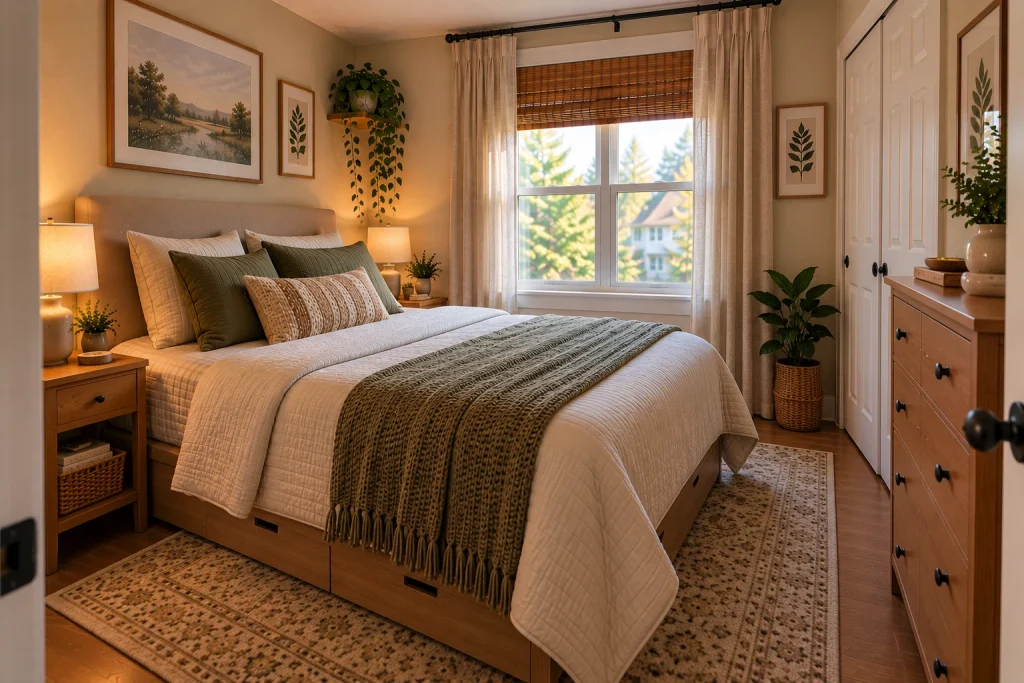
12. Let the Closet Influence the Bed Position
Your closet should be part of the layout from the beginning—not an afterthought.
A queen bed may technically fit along a particular wall while making the closet difficult to access.
Open the closet door fully when testing your layout. If it’s a sliding door, consider the area that needs to remain accessible in front of it.
The same principle applies to wardrobes or other storage furniture. A bedroom works better when doors, drawers, and closets can all be used without constantly navigating around the bed.
13. Use Wall Space for Bedside Functions
When floor space is limited, some bedroom functions can move upward.
A small shelf can hold a few bedside essentials. Wall-mounted lighting can free the top of a narrow nightstand. Artwork can add personality without requiring another piece of furniture.
The goal isn’t to cover every available wall with shelves.
Too many wall-mounted elements can make a small bedroom feel visually busy. Instead, choose one or two functions that genuinely benefit from moving off the floor.
This is particularly useful around the queen bed, where every additional floor-based piece competes with the room’s walking space.
14. Use a Rug to Anchor the Bed Without Losing Floor Space
A rug can help visually connect the queen bed with the rest of the room, but the size and placement matter.
Instead of automatically choosing the largest rug that fits, consider how much floor you actually want to cover.
A rug positioned appropriately around the bed can define the sleeping area while leaving some useful floor visible around it.
In a small bedroom, that balance can make the room feel finished without visually turning the entire floor into one large block beneath the furniture.
15. Keep the Window and Natural Light Path Clear
A window can be one of the most valuable features in a small bedroom, so avoid treating it as leftover space.
If possible, keep furniture from unnecessarily blocking the window or making curtains difficult to open.
Natural light can help the room feel more open during the day, while accessible windows make ventilation and everyday use easier.
If the queen bed has to sit near a window, pay attention to how the headboard, curtains, and nearby furniture interact rather than focusing only on whether the mattress physically fits.
16. Choose Furniture That Serves More Than One Purpose
When space is limited, each piece of furniture has to earn its footprint.
A storage ottoman can provide seating and concealed storage. A nightstand can hold bedside essentials while providing a drawer. A compact dresser can combine clothing storage with a surface for a lamp or decor.
But multifunctional furniture isn’t automatically better.
A complicated piece that is difficult to use can create more problems than it solves. Choose dual-purpose furniture when the second function genuinely replaces another item you would otherwise need.
17. Test the Layout Before You Buy Anything
This may be the most useful step of all.
Before ordering a bed frame, dresser, rug, or nightstand, mark the approximate furniture footprints on the floor using painter’s tape, paper, or other temporary markers.
Mark the queen bed first.
Then add the major furniture pieces one at a time.
Walk through the room as you normally would. Open the closet. Imagine pulling out dresser drawers. Stand beside the bed. Walk from the door to the closet.
If the taped layout already feels cramped, adding real furniture won’t solve the problem.
Testing first lets you change the arrangement while the decisions are still free.
How to Tell If a Queen Bed Is Too Much for Your Room
The question isn’t simply whether a queen mattress can physically fit.
Ask yourself:
- Can you get in and out of bed comfortably?
- Can the closet open normally?
- Can bedroom and furniture doors open without collisions?
- Is there a usable path from the entrance to the main areas?
- Can you reach the things you use every day?
- Does the room still have enough open floor to function?
- Are you relying on oversized furniture to compensate for limited storage?
If several answers are no, changing the bed position may not be enough.
You may need to reduce the size or number of other furniture pieces instead.
And remember that comfortable clearance is highly dependent on the specific room, furniture, and how the space is used. Don’t treat one universal measurement as a guarantee that a layout will feel comfortable.
Common Queen-Bed Small Bedroom Mistakes to Avoid
Buying furniture before measuring the room
A piece that looks compact online can have a surprisingly deep footprint.
Forgetting door and closet movement
Furniture placement needs to account for how doors and drawers actually open.
Choosing nightstands that are too large
A few extra inches on each side can add up quickly.
Filling every available corner
Some empty floor space is necessary for movement and everyday use.
Prioritizing symmetry over function
A perfectly centered bed isn’t helpful if it makes the closet inaccessible.
Adding storage without planning access
Under-bed bins and drawers only help if you can reach them easily.
Making the room match the bed instead of the other way around
The queen bed is important, but every other piece still needs to work around the room’s actual constraints.
How to Put These Ideas Together
Start with the queen bed footprint.
Then identify:
- the main walking path
- closet and door access
- window position
- bedside requirements
- storage requirements
- furniture that can be reduced, narrowed, or removed
Only after those decisions should you start adding decorative pieces.
The best small bedroom with a queen bed isn’t necessarily the one with the most furniture or the most elaborate styling. It’s the one where the bed, storage, lighting, and movement all work together without making the room unnecessarily difficult to use.
Final Thoughts
A queen bed can absolutely work in a small bedroom, but it requires more deliberate planning than simply placing the mattress against the largest wall.
Measure first. Protect the walking path. Keep furniture appropriately scaled. Pay attention to closets and doors. And don’t be afraid to leave some floor space unused when that space makes the room easier to live in.
The goal isn’t to make a small bedroom hold everything. It’s to make the things you keep work well together.