In this article
- 17 Small Guest Bedroom Ideas That Make Visitors Feel Welcome
- 1. Plan for the Length of the Stay
- 2. Make the Bed the Room’s Main Priority
- 3. Leave a Real Place for a Suitcase
- 4. Give Guests One Clear Personal Surface
- 5. Make Phone Charging Possible From the Bed
- 6. Offer a Simple Bedside Light
- 7. Leave a Little Space for Hanging Clothes
- 8. Provide a Place for Used Towels
- 9. Keep Fresh Towels Easy to Find
- 10. Make Window Privacy Easy to Manage
- 11. Keep the Nighttime Route Clear
- 12. Make the Room’s Temperature Controls Easy to Understand
- 13. Make Shared Storage Clearly Available
- 14. Store Extra Bedding Where It Can Be Found
- 15. Make a Multipurpose Room Easy to Convert
- 16. Add a Welcome Touch That Is Actually Useful
- 17. Do a Final Guest-Ready Walk-Through
- How to Prepare a Small Guest Bedroom Without Overfilling It
- Final Thoughts
17 Small Guest Bedroom Ideas That Make Visitors Feel Welcome
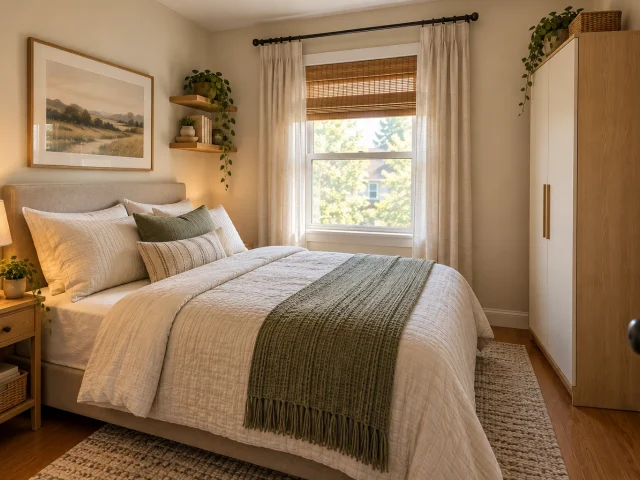
A small guest bedroom does not need a long list of furniture or decorative extras to feel welcoming. What matters most is whether visitors can settle in, sleep comfortably, find what they need, and keep their belongings out of the way.
That can be harder when a guest room doubles as an office, a hobby room, or a place to store household items. There may be space for a bed, but not much room left for a dresser, luggage rack, extra seating, and all the little conveniences that make an overnight stay easier.
The better approach is to prepare the room around how someone will actually use it. Think about where a suitcase will go, how a guest will charge a phone, where clean towels will be found, and whether the path to the door stays clear at night.
These small guest bedroom ideas focus on those practical details. You can adapt them to a spare bedroom, a compact apartment, or a multipurpose room without trying to make the space look larger than it is.
17 Small Guest Bedroom Ideas That Make Visitors Feel Welcome
1. Plan for the Length of the Stay
A guest staying for one night may need little more than a comfortable bed, a place for a bag, a light, and access to a few essentials. Someone staying for a week will probably appreciate more room for clothing, personal items, and daily routines.
Before rearranging the bedroom, consider the kind of visits you usually host. For occasional overnight guests, a simple setup may be enough. For longer stays, make more of the room’s existing storage available and think about where a suitcase can remain open without blocking movement.
This helps you prepare for actual needs instead of filling a small room with furniture that may rarely be used.
2. Make the Bed the Room’s Main Priority
The bed is usually the most important part of a guest bedroom, so start by making it comfortable rather than adding more furniture around it.
Use clean, fresh bedding, pillows that suit the bed, and an extra blanket that guests can reach without asking. If you keep several pillow options, store the extras neatly until they are needed rather than stacking everything on the bed.
Check the mattress and bedding before guests arrive. A room can look attractive in photographs yet feel uncomfortable when the bedding is awkward, the blanket is too light for the room, or there is nowhere to put an extra pillow.
For a small room, a simple bed setup with a little clear space around it is often more useful than decorative layers that need to be moved before sleeping.
3. Leave a Real Place for a Suitcase
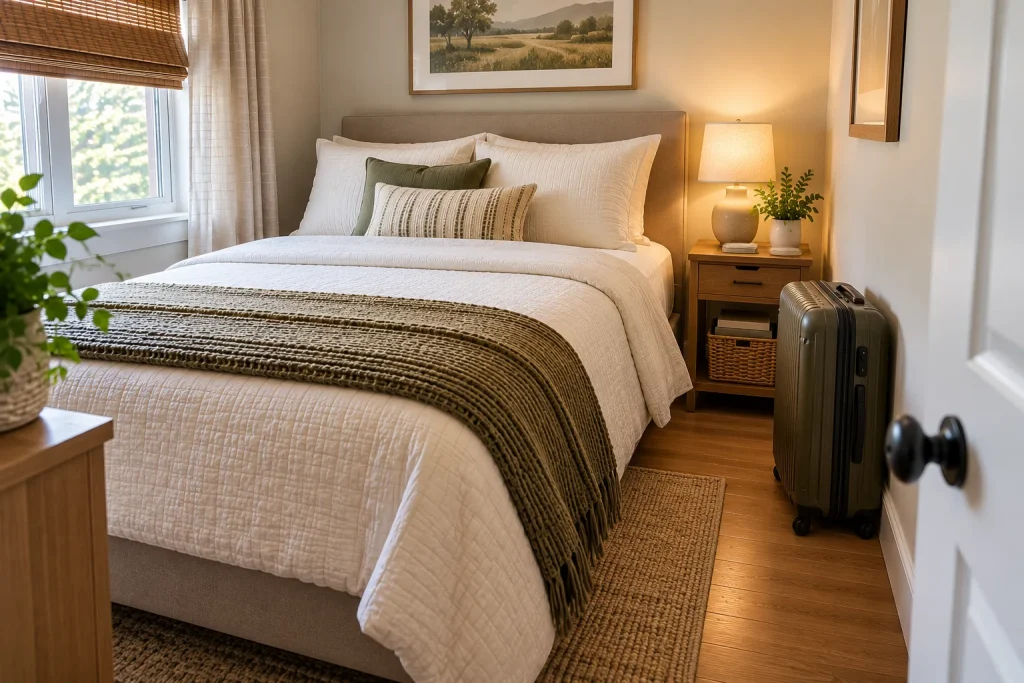
A suitcase needs more than a small patch of floor. Guests may need to open it, reach inside, and repack it without moving half the room.
Look for a practical location near the bed or along a wall where an open suitcase will not block the door or the main walking route. Depending on the room, that might be a clear floor area, a luggage rack that folds away, or a sturdy surface designed to support a suitcase.
Do not assume that the space at the foot of the bed will work. Measure the available area and consider how far the suitcase opens.
If the room is too small to leave luggage open, make sure there is at least a convenient place to set a bag down. A guest should not have to use the bed as the only available unpacking surface.
4. Give Guests One Clear Personal Surface
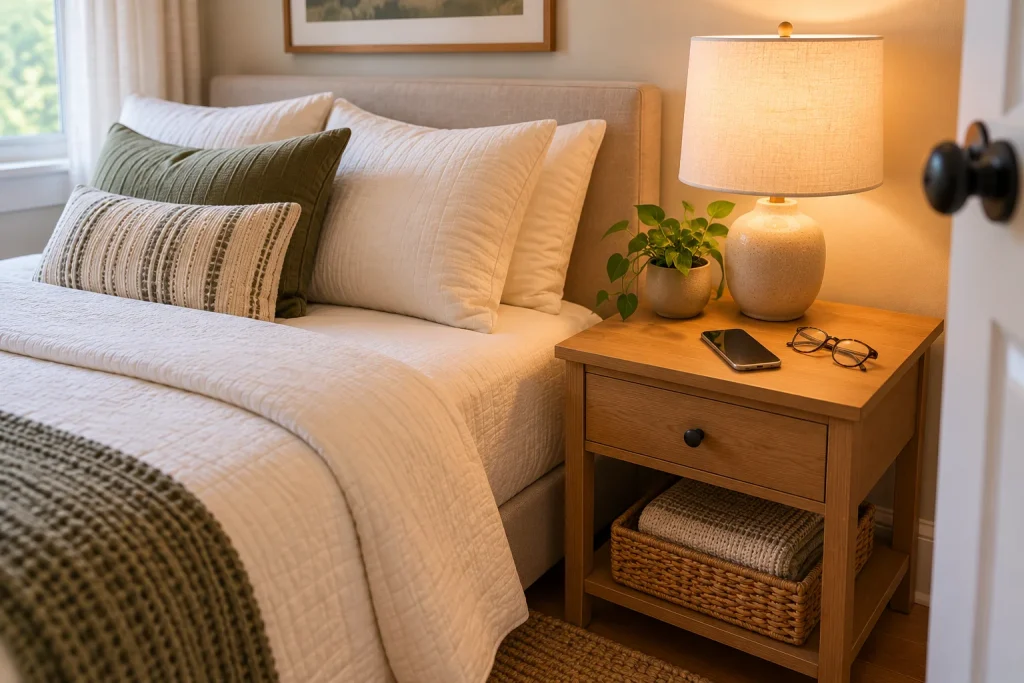
Visitors need somewhere to put everyday items such as glasses, a phone, a book, a watch, or a small bag. If every surface is occupied by decor, lamps, and storage boxes, the room may feel finished but not especially usable.
A compact nightstand is one option, but it is not the only one. A narrow side table or a clear section of an existing dresser may be enough.
Keep the surface mostly empty before guests arrive. A lamp and one or two useful items can stay, but leave room for the guest’s belongings.
The goal is not to create another elaborate organization system. It is to make it obvious where someone can put personal items without worrying about moving your things.
5. Make Phone Charging Possible From the Bed
Many guests will want to charge a phone overnight, check an alarm, or keep a device nearby. Think about this before deciding where the bed and bedside furniture should go.
If a suitable outlet is already near the bed, leave it accessible. If the outlet is farther away, consider whether a properly rated charger with an appropriate cable length can reach without crossing a walking path or creating a trip hazard.
Avoid running cords under rugs, across doorways, or where feet may catch them. Do not overload outlets or use damaged charging equipment.
If there is no practical and safe way to charge a device beside the bed, make another accessible charging location clear. A small bedroom does not need a complicated charging station; it needs a safe, obvious option.
6. Offer a Simple Bedside Light
Guests may wake during the night or want to read without lighting the entire room. A bedside lamp or another accessible light source can make the room easier to use.
Choose lighting that can be switched on and off from a convenient position. If a lamp sits on a narrow surface, make sure its base is stable and that the cord does not hang into the walking path.
If the room has only a ceiling light, check whether the switch is easy to reach from the entrance. A small plug-in lamp may help if there is a suitable outlet and the cable can be arranged safely.
You do not need to redesign the room’s lighting. The practical question is whether a guest can find and operate the light without searching in the dark.
7. Leave a Little Space for Hanging Clothes
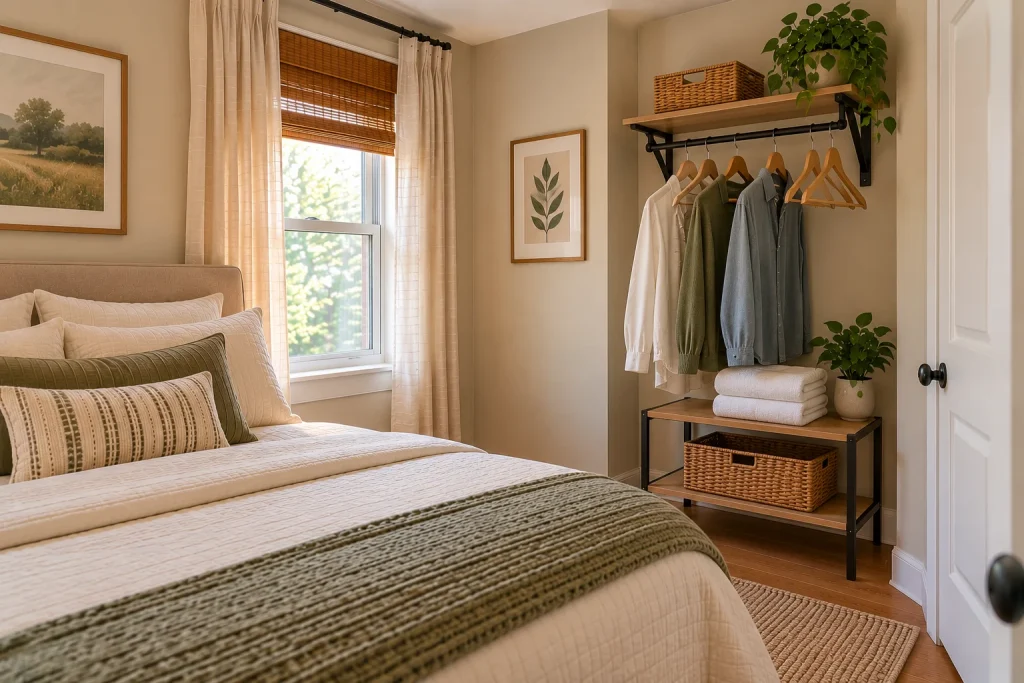
Some visitors will live out of a suitcase; others may prefer to hang a few shirts, dresses, or jackets. If the room has a closet, make a small portion available rather than leaving every hanger and shelf full.
When there is no closet, a few hangers on an existing rail or a compact freestanding rack may be enough. Avoid installing a large clothing system solely for occasional guests unless longer stays make it worthwhile.
Keep the arrangement simple and leave enough room for garments to hang without being crushed. A few empty hangers are more useful than a crowded rail that technically offers hanging space but is difficult to use.
For more extensive clothing-storage planning in a bedroom without a built-in closet, see these small bedroom ideas without a closet. For a guest room, though, the aim is usually to provide a modest amount of temporary space—not to build a complete replacement closet.
8. Provide a Place for Used Towels
Fresh towels are helpful, but guests may also wonder where to put a towel after using it. Without an obvious destination, a damp towel can end up on the bed, over a chair, or on top of a suitcase.
If the bathroom has suitable hooks or a towel bar, let guests know they can use them. If the guest bedroom has its own bathroom or enough space for a suitable hook, that can work too.
Choose a location where a towel can dry appropriately rather than hanging against delicate bedding or covering a walkway. Avoid adding a large freestanding towel rack if it takes up space needed for luggage or movement.
This small detail makes the room easier to maintain during a longer visit and removes one minor uncertainty from the guest’s routine.
9. Keep Fresh Towels Easy to Find
Clean towels should be easy to identify without guests needing to open several cabinets or ask where they are stored.
Place a folded set on a clear shelf, in an available bathroom area, or in a small basket that is clean and intended for linens. If you provide separate washcloths or hand towels, keep them together so the arrangement is self-explanatory.
Only leave out what guests are likely to need. A large stack can consume valuable space and make a compact room feel crowded.
If extra towels are stored elsewhere, tell guests where they can find them. A simple, clear arrangement is more useful than a decorative display that looks abundant but leaves people unsure which items they may use.
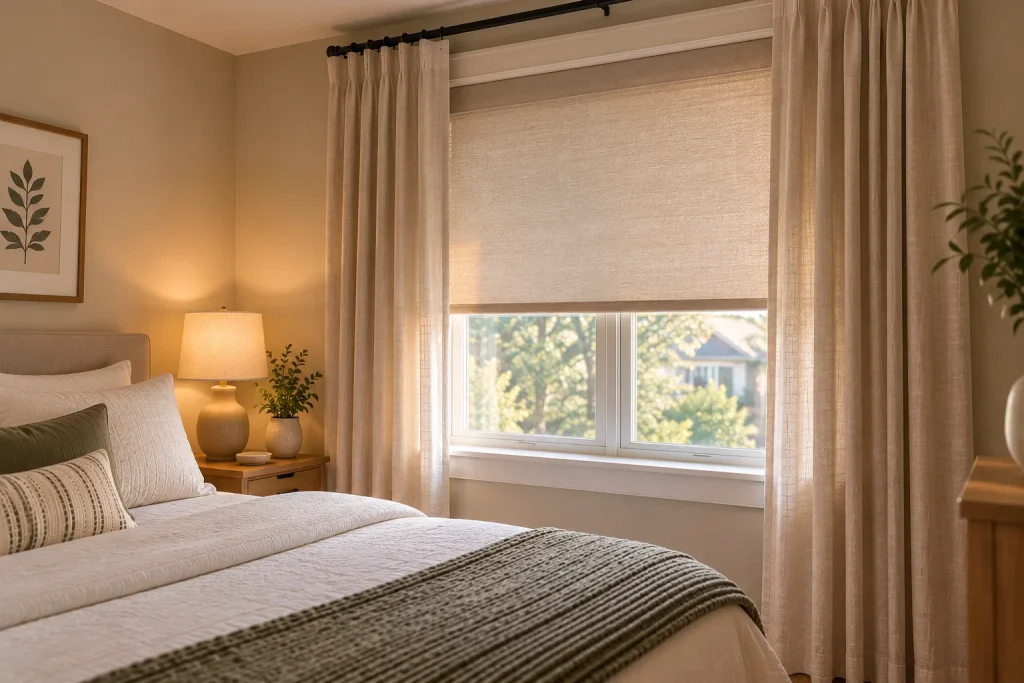
10. Make Window Privacy Easy to Manage
Privacy can matter just as much as appearance, especially when a guest bedroom faces a neighboring home, a shared walkway, or a street.
Check the curtains or blinds before guests arrive. Make sure they open and close without awkwardly moving furniture, and consider whether the window covering provides the privacy the room needs after dark.
If the room gets strong morning light, guests may also appreciate being able to darken it for sleep. The right solution depends on the existing window and the guest’s likely needs; not every room requires blackout curtains.
Avoid adding heavy layers that crowd the window or make it difficult to operate. The priority is a covering that is functional, easy to use, and appropriate for the room.
11. Keep the Nighttime Route Clear
A guest may need to get out of bed and find the door in low light. A suitcase, loose cable, basket, or decorative stool in the walking path can become an unnecessary obstacle.
Walk through the room as if you were unfamiliar with it. Check the route from the bed to the door, and pay attention to corners, furniture edges, and anything that protrudes into the path.
If you can rearrange a small table or move a basket elsewhere, do so before guests arrive. You do not need a completely empty room; you need a route that is easy to recognize and use.
For more detailed guidance on furniture placement and circulation, see these small bedroom layout ideas. In a guest room, the final test is whether a visitor can move around without having to learn a complicated path.
12. Make the Room’s Temperature Controls Easy to Understand
A room may feel comfortable to one person and too warm or cool to another. You cannot predict every guest’s preference, but you can make the available options easy to find.
If the room has a fan, provide a stable place for it where it will not block movement. If the home has a thermostat or other temperature control guests are allowed to use, explain how it works. If the controls are shared with the rest of the home, let visitors know what adjustments are reasonable.
An extra blanket can help guests who feel cold, while a clear explanation of the available fan or ventilation options can be useful in warmer weather.
Do not add bulky equipment simply to make the room look prepared. Start with what the room already has, and make the available options clear.
13. Make Shared Storage Clearly Available
If guests are staying for more than a night or two, a small amount of accessible storage can help them settle in. That does not mean emptying the entire closet or buying a new dresser.
Clear one drawer, a shelf, or a small section of hanging space if it is available. Make sure it is genuinely usable—not filled with miscellaneous items that the guest must move first.
If the bedroom doubles as an office or storage room, decide in advance which area can be cleared for visitors. Keep private documents, work equipment, and fragile belongings elsewhere rather than expecting guests to work around them.
The key is to make the available space obvious. A small, empty shelf is more welcoming than a large cabinet that looks available but is full of someone else’s belongings.
14. Store Extra Bedding Where It Can Be Found
An extra blanket or pillow is useful only if guests can find it without searching through closets and boxes.
Choose one accessible place for spare bedding, such as a designated shelf, an available drawer, or a clean storage container. Keep bedding dry and ready to use, and separate it from items that are not intended for guests.
If you offer different pillow options, make the choice straightforward. There is no need to display every spare pillow on the bed; that can leave guests with the task of finding somewhere to put them.
For a compact room, a simple, consistent location is often enough. Once guests know where extra bedding is kept, they can adjust their sleeping setup without needing to ask.
15. Make a Multipurpose Room Easy to Convert
Many small guest bedrooms are not used exclusively for guests. The room may also contain a desk, exercise equipment, craft supplies, or household storage. That is perfectly reasonable, but the transition should not depend on a last-minute scramble.
Decide which items need to move before a visit and where they will go. Clear the bed, make the personal surface available, open the luggage area, and remove anything that blocks the walking route.
If the room is also a home office, put away private papers and secure work devices. If it is used for hobbies, contain supplies in their normal storage area instead of shifting them onto the guest bed.
The goal is not to erase the room’s other purpose. It is to make the guest setup feel intentional and ready when it is needed.

16. Add a Welcome Touch That Is Actually Useful
A welcoming room does not need a tray of decorative objects, elaborate signs, or a collection of gifts. One or two practical touches are often enough.
Depending on the room, you might provide a glass or bottle of water, a small box of tissues, or a place where guests can see the home’s Wi-Fi details. Keep anything offered clean, easy to use, and out of the way.
Avoid placing food or drinks where spills could damage bedding or electronics. If you leave water beside the bed, use a stable surface and keep it away from devices and charging cables.
Think about what would save a visitor a small amount of effort. Useful hospitality is usually more memorable than adding decorations that occupy the little space available.
17. Do a Final Guest-Ready Walk-Through
Before guests arrive, step into the room and check it from their point of view. Do not just look at the bed and decide that the room appears tidy.
Ask yourself:
- Can I place a suitcase somewhere practical?
- Is there a clear surface for personal belongings?
- Can I reach a light and charge a phone safely?
- Are fresh towels and extra bedding easy to find?
- Is there somewhere to hang a few clothes?
- Can I close the curtains and maintain privacy?
- Is the route to the door clear?
- Have private or fragile items been put away?
Fix the problems that would make the room difficult to use. You do not need to buy something for every item on the list. Sometimes the best improvement is simply clearing a surface or moving an object out of the way.
How to Prepare a Small Guest Bedroom Without Overfilling It
Start with the essentials: comfortable bedding, a clear personal surface, a practical luggage spot, accessible lighting, and a safe route through the room. Then add the conveniences that suit the length of the stay, such as hanging space, spare bedding, or a designated place for towels.
If your guest room is also used for work or hobbies, create a short reset routine before each visit. Put away private materials, clear the bed and surfaces, check the lighting, and make sure the guest can find the items you have provided.
You can still make the room feel warm and inviting. If you want to add a few finishing touches, these cozy bedroom ideas can help you think about comfort without turning the guest room into a display space.
The goal is not to fit every possible amenity into a small room. It is to make the available space easy for another person to understand and use.
Final Thoughts
A small guest bedroom can feel welcoming when the basics are considered from the visitor’s point of view. A comfortable bed, a place for luggage, accessible lighting, privacy, and clearly available essentials often matter more than extra furniture or decorative accessories.
Prepare for the kind of stay you usually host, make the available space obvious, and remove the small obstacles that could make the room awkward to use. That way, your guest bedroom can stay compact, serve its other purposes when needed, and still feel ready when someone comes to stay.