In this article
- 1. Start With Warm, Layered Lighting
- 2. Layer Your Bedding Instead of Buying More Decor
- 3. Bring in Natural Texture
- 4. Use a Warm Neutral Color Palette
- 5. Add One Darker Element for Contrast
- 6. Make the Bed the Visual Anchor
- 7. Use Curtains to Soften the Room
- 8. Put a Rug Where Your Feet Actually Land
- 9. Create a Calm Bedside Setup
- 10. Add a Small Natural Element
- 11. Choose Artwork That Makes the Room Feel Personal
- 12. Create a Soft Reading Corner
- 13. Warm Up a Bare Wall With Texture
- 14. Use Mirrors Without Making the Room Feel Cold
- 15. Let Wood Add Visual Warmth
- 16. Keep Storage Beautiful and Accessible
- 17. Add One Statement Piece
- 18. Use Symmetry Where You Want the Room to Feel Calm
- 19. Make a Small Bedroom Feel Cozy, Not Crowded
- 20. Soften the Room With Rounded Shapes
- 21. Hide Visual Clutter Before Adding More Decor
- 22. Mix Old and New Pieces
- 23. Use Warm Minimalism Instead of Traditional Minimalism
- 24. Give the Room One Repeating Color
- 25. Finish With Something That Feels Like You
- What Actually Makes a Bedroom Feel Cozy?
- 5 Cozy Bedroom Mistakes to Avoid
- 1. Relying Only on Overhead Lighting
- 2. Adding Too Much Decorative Clutter
- 3. Making Everything the Exact Same Beige
- 4. Using the Wrong-Size Rug
- 5. Ignoring Furniture Scale and Layout
- Frequently Asked Questions
- How can I make my bedroom cozy without buying new furniture?
- What colors make a bedroom feel cozy?
- How can I make a small bedroom feel cozy without making it feel cramped?
- What type of lighting is best for a cozy bedroom?
- How many decorative pillows should I use?
- Final Thoughts
25 Cozy Bedroom Ideas That Feel Warm, Calm & Inviting
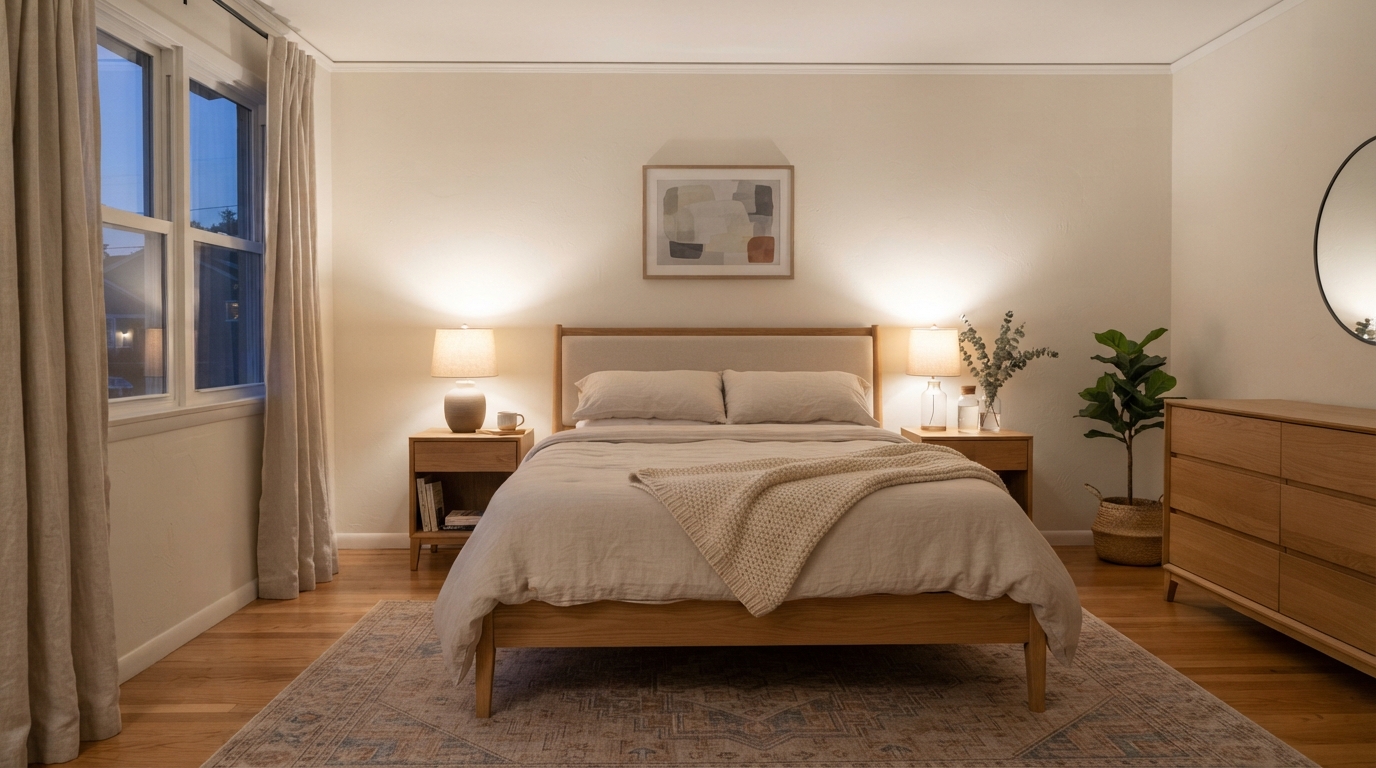
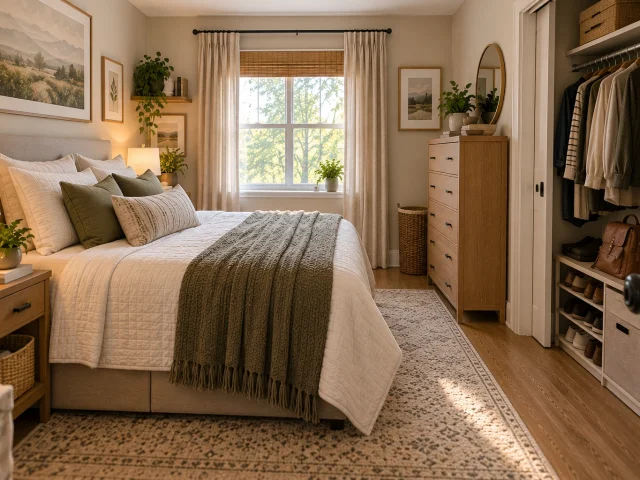
A cozy bedroom does not need to be packed with pillows, blankets, candles, and decorations. In fact, too many additions can make a room feel busy rather than restful. The most inviting bedrooms usually rely on a thoughtful mix of warm lighting, soft textures, comfortable bedding, calming colors, practical layout, and a few personal details.
The good news is that you do not need a large bedroom or a major renovation to create that feeling. A better bedside lamp, layered bedding, fuller curtains, or even a small change to the furniture arrangement can make a noticeable difference. Below are 25 cozy bedroom ideas designed for real homes, apartments, rentals, small rooms, and reasonable budgets.

1. Start With Warm, Layered Lighting
One ceiling fixture rarely creates the most comfortable bedroom atmosphere. Instead, give the room several useful light sources: overhead lighting for general visibility, bedside lamps for reading, and a smaller lamp elsewhere if the room needs another gentle pool of light.
Choose bulbs with a warm-white appearance if you prefer a softer evening atmosphere, and put each light where it serves a purpose. Bedside lamps should illuminate the area around the bed without shining directly into your eyes. If space is tight, a wall-mounted or compact lamp can provide the same layered effect without taking up nightstand space.
The point is flexibility. A bedroom should be able to feel bright when you are getting dressed and softer when you are winding down.
2. Layer Your Bedding Instead of Buying More Decor
Bedding has a major visual presence, so it is one of the simplest places to add warmth without filling the room with accessories.
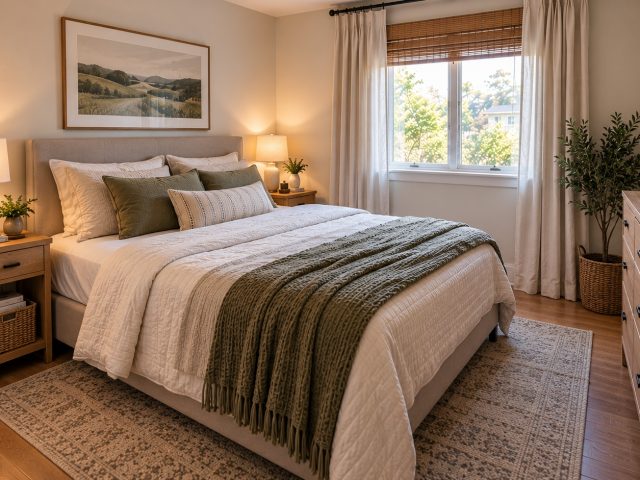
Start with your everyday sheets and duvet or comforter, then add one quilt, coverlet, or textured throw. Fold the extra layer near the foot of the bed rather than piling several blankets on top. A restrained number of pillows keeps the bed inviting without making it difficult to use.
Mixing textures is more useful than simply adding more pieces. Smooth cotton alongside a quilted cover or loosely woven throw creates depth while keeping the color palette calm.
If you are working with a limited budget, improving the layers you use every night can be more worthwhile than buying decorative objects that have little practical purpose.
3. Bring in Natural Texture
A bedroom can feel visually flat when most surfaces are smooth and similar. Natural-looking materials add variation without requiring stronger colors.
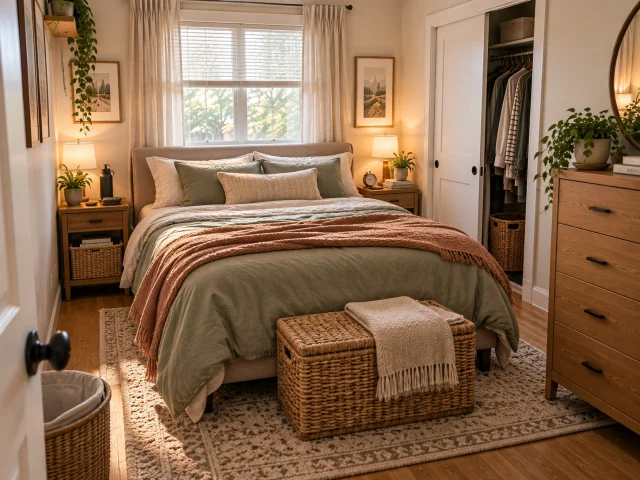
Think about where texture is currently missing. A woven basket can soften a hard storage area, linen-look curtains can break up a plain window, and a wooden nightstand can add warmth beside an upholstered bed.
You do not need several different materials in every corner. Pick two or three that complement what you already own, then let those materials repeat naturally.
In a small room, favor textures that are useful as well as attractive, such as a woven storage basket or wooden furniture.
4. Use a Warm Neutral Color Palette
Warm neutrals can create a calm foundation without making a bedroom feel stark. Consider creamy white, warm beige, oatmeal, taupe, soft brown, muted terracotta, or gentle greige rather than relying on a single shade of bright white.
Use different tones instead of matching every surface. For example, cream walls can work with oatmeal bedding, a slightly darker rug, and medium-toned wood.
If your existing room contains cool flooring or furniture, you do not have to replace it. Introduce warmth through smaller, flexible elements such as bedding, curtains, artwork, or a throw.
5. Add One Darker Element for Contrast
Warm rooms still need contrast. Otherwise, a neutral palette can become visually flat.
Choose one or two darker elements and give them room to stand out. A dark wood nightstand, charcoal throw, black lamp, or deep-toned frame can anchor an otherwise pale bedroom.
Keep the darker color relatively contained. If you repeat it too heavily, the room can start to feel more dramatic than soft. The useful takeaway is simple: use contrast as an accent, not as another dominant palette.
6. Make the Bed the Visual Anchor
The bed is usually the largest object in the bedroom, so its position affects almost everything around it.
Before adding decor, look at the layout. Center the bed on the most practical wall when possible, while considering the location of doors, closets, windows, outlets, and walking paths. Avoid placing furniture where it forces you to squeeze around the bed.
Once the bed is positioned well, keep the surrounding wall relatively controlled. A headboard, artwork, or one other focal element may be enough. You do not need to decorate every inch around the bed.
7. Use Curtains to Soften the Room
Curtains can make a bedroom feel more finished because they soften one of the room’s largest hard-edged areas: the window.
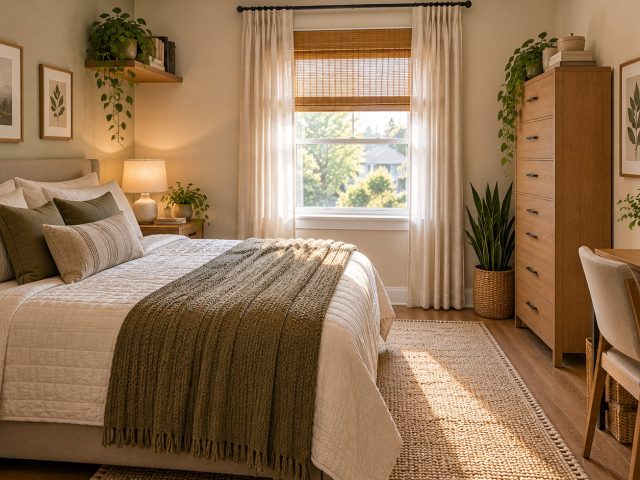
For a relaxed look, choose a fabric with some visual texture and a color that relates to the walls or bedding. If privacy allows, lighter curtains can preserve daylight while adding softness. If you need more light control, use a practical shade or heavier curtain behind the decorative layer.
Measure the window and surrounding wall before buying. Curtains that are too narrow can look skimpy, while excessively bulky fabric can overwhelm a small bedroom.
8. Put a Rug Where Your Feet Actually Land
A bedroom rug should improve comfort and help define the sleeping area, not simply occupy unused floor.
In a larger bedroom, a properly scaled rug can extend beyond the sides and lower portion of the bed, visually grouping the bed and nearby furniture. In a smaller bedroom, a runner or pair of smaller rugs beside the bed may be more practical.
Measure the available floor before choosing a size, and check door swings and walking paths. If the rug prevents a door from opening properly or leaves only a narrow passage, it is not solving the right problem.
9. Create a Calm Bedside Setup
Treat the nightstand as a working surface rather than a miniature display shelf.
Keep the items you reach for regularly within easy access, then move everything else into drawers, baskets, or another storage area. A lamp, book, water glass, and one small object can be enough.
If you have two nightstands, matching pieces can create a sense of order. If you have only one, do not force symmetry. A well-planned single bedside setup is better than squeezing furniture into a space that cannot accommodate it.
10. Add a Small Natural Element
A small natural element can bring variation to a bedroom without introducing another major decorative layer.
If the room gets suitable daylight, a modest houseplant can work well. A branch in a simple vase or another natural material can be an alternative when plant care is not practical.
Think about placement as much as the object itself. A small plant on a dresser may be useful; a large plant blocking a walkway is not. Keep the scale appropriate to the room.
11. Choose Artwork That Makes the Room Feel Personal
Artwork gives a bedroom personality without requiring lots of small decorative pieces.
Choose something you genuinely enjoy looking at, whether that is a quiet landscape, muted abstract work, photography, a vintage print, or a meaningful personal piece. Let the artwork influence the accent colors elsewhere rather than trying to coordinate every item perfectly.
Pay attention to scale. A tiny frame can disappear above a large bed, while an oversized piece can dominate a narrow room. The wall and furniture beneath it should be considered together.
12. Create a Soft Reading Corner
An unused bedroom corner can become more useful when it has a clear purpose.
If space allows, pair a comfortable chair with a compact side table and a reading lamp. Keep the chair far enough from the bed and other furniture to preserve a comfortable walking path.
For a small bedroom, do not sacrifice circulation just to create a reading corner. A window seat, compact stool, or simply a comfortable reading setup at the bedside may work better.
The goal is to give the room one additional place to relax without turning an empty corner into a collection of objects.
13. Warm Up a Bare Wall With Texture
If a bedroom has a large blank wall that feels cold, consider adding texture rather than a collection of small decorations.
A fabric headboard, woven wall hanging, wood treatment, textured paint finish, or substantial textile artwork can give the wall more depth. Choose one approach rather than layering several.
Renters can look for removable solutions, but the method should always suit the particular wall surface. A textured wall should add warmth without creating another maintenance problem.
14. Use Mirrors Without Making the Room Feel Cold
A mirror can be useful for checking an outfit, reflecting daylight, or making a small room feel more open. Its placement matters more than simply having one.
Position it where the reflection is useful or attractive. A mirror facing a cluttered storage area will emphasize that clutter rather than improve the room.
For a warmer look, consider a wood or softly finished frame rather than assuming a frameless mirror is the best option. Choose the size according to the wall and furniture around it.
15. Let Wood Add Visual Warmth
Wood introduces a natural variation in color and texture that can keep neutral bedrooms from feeling sterile.
Use it where the room needs visual weight: a bed frame, dresser, nightstand, bench, or even a substantial picture frame. You do not have to match every wood surface exactly, but repeating one or two related tones can make the room feel more intentional.
If your existing furniture is mostly upholstered or painted, a smaller wooden piece can introduce warmth without requiring a complete furniture change.
16. Keep Storage Beautiful and Accessible
Good storage should make the bedroom easier to live in, not simply give you somewhere to hide things.
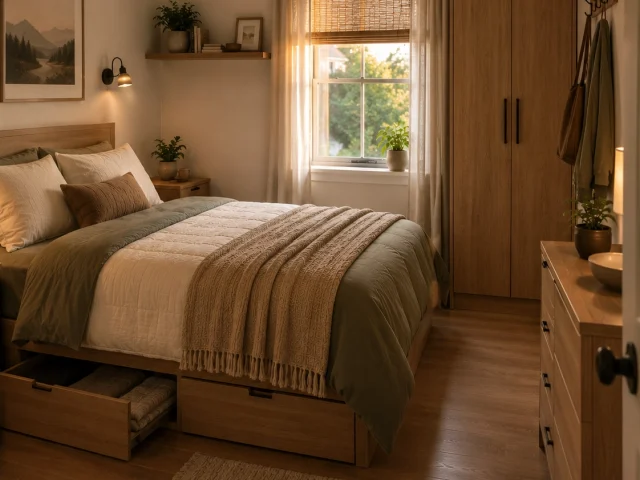
Start by deciding what needs to be stored and how often you use it. Everyday clothing should be easy to reach, while seasonal items can occupy less accessible areas such as under-bed storage.
Use baskets or containers only where they fit the space and the items they need to hold. Measuring first prevents the common problem of buying attractive storage that does not actually fit.
17. Add One Statement Piece
Instead of giving every part of the bedroom something attention-grabbing, choose one piece to carry the visual interest.
A distinctive headboard, vintage dresser, large artwork, textured bench, or unusual lamp can become that focal point. Keep neighboring pieces quieter so the statement item remains easy to appreciate.
This is particularly useful in small bedrooms. One memorable element can provide personality without requiring a shelf full of accessories.
18. Use Symmetry Where You Want the Room to Feel Calm
Symmetry can make the area around the bed feel orderly because repeated shapes and objects create a clear visual rhythm.
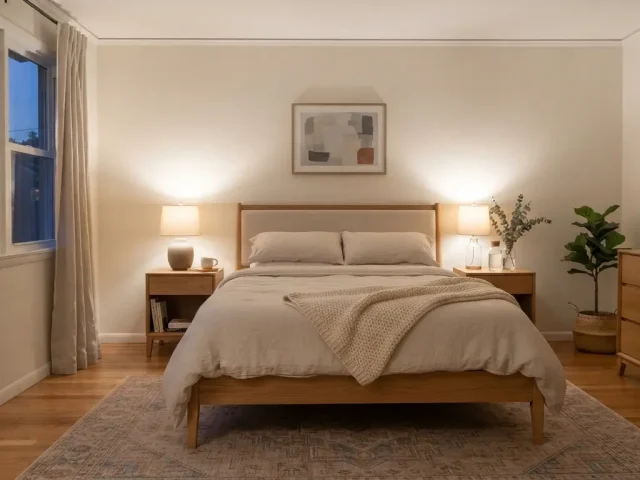
Matching nightstands and lamps are an obvious option, but you can also create partial symmetry. Similar-height lamps, balanced artwork, or comparable visual weight can produce order without identical furniture.
Do not sacrifice function for symmetry. If one side of the room needs a larger storage piece, let it be different. A bedroom should be balanced enough to feel calm while still working for the people who use it.
19. Make a Small Bedroom Feel Cozy, Not Crowded
Small bedrooms benefit from editing more than decorating.
Start with furniture scale. A bed that leaves barely any room for movement can make even beautiful styling feel cramped. Measure the room and prioritize clear routes between the bed, door, closet, and other frequently used areas.
Use vertical space when appropriate, choose furniture with useful storage, and let textiles provide most of the softness. You do not need a large number of accessories to make a small bedroom feel finished.
20. Soften the Room With Rounded Shapes
Not every cozy element has to come from fabric. The shapes of the furniture can affect how a room feels visually.
If your bedroom contains lots of straight lines and hard corners, introduce one or two softer forms: a rounded bedside table, curved lamp, arched mirror, upholstered bench with softened edges, or gently shaped headboard.
There is no need to replace existing furniture. Even one curved element can break up a room dominated by rectangles and create a more relaxed composition.
The key is moderation. Too many unrelated shapes can make the room feel less cohesive, so choose curves that complement the furniture you already have.
21. Hide Visual Clutter Before Adding More Decor
Before buying another pillow, basket, print, or decorative object, look at what is already visible.
Clothing on a chair, tangled charging cables, open storage, packaging, and miscellaneous items can compete with the elements that are supposed to make the room feel calm. Put away anything that does not need to remain visible.
Then reassess the room. You may discover that the bedroom already has enough decoration and simply needed a little editing.
22. Mix Old and New Pieces
A bedroom often feels more personal when its furniture and accessories do not all look as though they came from the same collection.
Try combining contemporary bedding with an older wooden table, a newer lamp with a vintage frame, or simple modern furniture with an inherited accessory. The pieces do not need to match perfectly.
To keep the combination cohesive, look for a shared thread such as color, material, shape, or scale. A few differences can make the room feel collected rather than overly coordinated.
23. Use Warm Minimalism Instead of Traditional Minimalism
A simple bedroom does not have to mean an empty bedroom.
Warm minimalism keeps the visual restraint of a minimalist space while allowing more natural materials, warmer colors, soft textiles, and meaningful objects. Instead of asking what else you can add, ask which pieces are actually contributing to comfort or character.
This approach works particularly well for people who want a tidy room but find stark interiors too cold.
24. Give the Room One Repeating Color
A repeating accent color can connect separate parts of the bedroom without making everything match.
Choose one muted color from an existing piece of artwork, bedding, or rug and echo it in two or three smaller areas. For example, a soft olive tone might appear in artwork, a cushion, and a small accessory.
Keep the repetitions subtle. The color should help the room feel connected, not turn into a theme.
25. Finish With Something That Feels Like You
Once the practical and visual elements are working, leave room for something personal.
A favorite photograph, books you actually read, a meaningful piece of furniture, or artwork you chose simply because you love it can make the bedroom feel lived-in.
This is also where restraint matters. One meaningful object can say more about the person using the room than a dozen generic decorations.
A bedroom does not need to look perfectly styled to feel finished. It needs to feel comfortable and recognizable as yours.

What Actually Makes a Bedroom Feel Cozy?
A cozy bedroom is less about following a particular decorating style and more about getting several elements to work together.
1. Warmth: Warm colors, wood, soft lighting, and comfortable textiles keep the room from feeling stark.
2. Texture: Different materials give the room visual depth without requiring lots of decoration.
3. Softness: Bedding, curtains, rugs, upholstered furniture, and comfortable seating make the room feel more inviting.
4. Balance: Furniture scale, walking space, contrast, and visual weight determine whether a room feels restful or crowded.
5. Personality: Artwork, books, meaningful objects, and favorite colors keep the space from feeling generic.
The important distinction is that these ingredients do not need to be maximized. A bedroom can have plenty of warmth and texture while still leaving empty surfaces, clear floor space, and room to breathe.
5 Cozy Bedroom Mistakes to Avoid
1. Relying Only on Overhead Lighting
A single ceiling fixture can make evening lighting feel flat or overly bright. Add practical secondary lights near the areas where you read, relax, or get ready.
2. Adding Too Much Decorative Clutter
Decorating every empty surface can work against the calm atmosphere you are trying to create. Remove unnecessary objects before deciding what else the room needs.
3. Making Everything the Exact Same Beige
Warm neutrals need variation. Combine slightly different tones, textures, and materials so the room has depth instead of looking one-dimensional.
4. Using the Wrong-Size Rug
A rug that is too small can make the bed and surrounding furniture look disconnected. Measure the room, consider the furniture placement, and protect door swings and walking paths.
5. Ignoring Furniture Scale and Layout
Beautiful furniture can still make a bedroom uncomfortable if it blocks movement or overwhelms the available floor space. Measure first and prioritize the way you move through the room.
Frequently Asked Questions
How can I make my bedroom cozy without buying new furniture?
Start with what you already have. Improve the lighting, rearrange furniture to create clearer paths, remove visible clutter, change how the bedding is layered, and introduce texture through items you already own. Sometimes editing the room creates more impact than adding anything.
What colors make a bedroom feel cozy?
Warm neutrals such as cream, beige, taupe, warm greige, muted brown, and soft terracotta are useful starting points. You can also use deeper colors as accents. The key is to create some variation rather than covering every surface in exactly the same shade.
How can I make a small bedroom feel cozy without making it feel cramped?
Focus on furniture scale and circulation first. Keep pathways clear, use storage efficiently, and avoid filling every available surface. Bedding, curtains, lighting, and a few carefully chosen textures can add warmth without consuming much floor space.
What type of lighting is best for a cozy bedroom?
Layered lighting gives you more control than a single overhead fixture. Use general lighting for practical tasks and lower-level lamps for reading or relaxing. A warm-white light source can also create a softer evening atmosphere.
How many decorative pillows should I use?
There is no ideal number. Use enough to create the amount of layering you like while keeping the bed easy to use. If removing several pillows every night becomes annoying, you probably have more than you need.
Final Thoughts
Making a bedroom cozier does not require a complete makeover. Start by improving the things you notice every day: the quality and placement of the lighting, the comfort of the bed, the way you move through the room, and the amount of visible clutter.
Then add warmth selectively through texture, color, wood, curtains, or one personal piece.
Most importantly, resist the temptation to fill every empty space. Cozy is created through comfort, softness, warmth, and balance, not through quantity. A bedroom with a few well-chosen elements and plenty of breathing room can feel far more inviting than one crowded with decorations.
2 comments