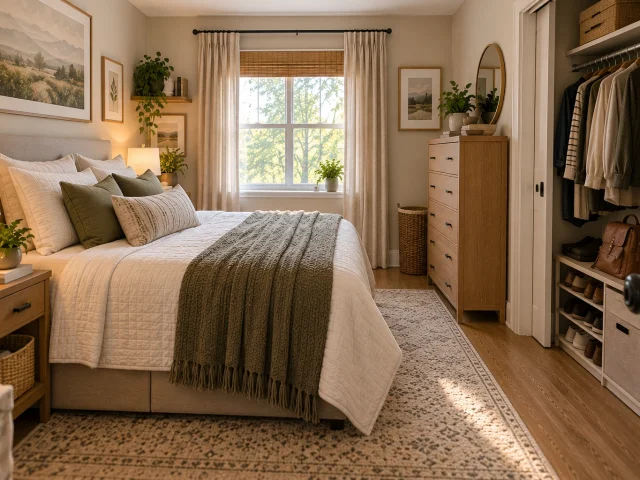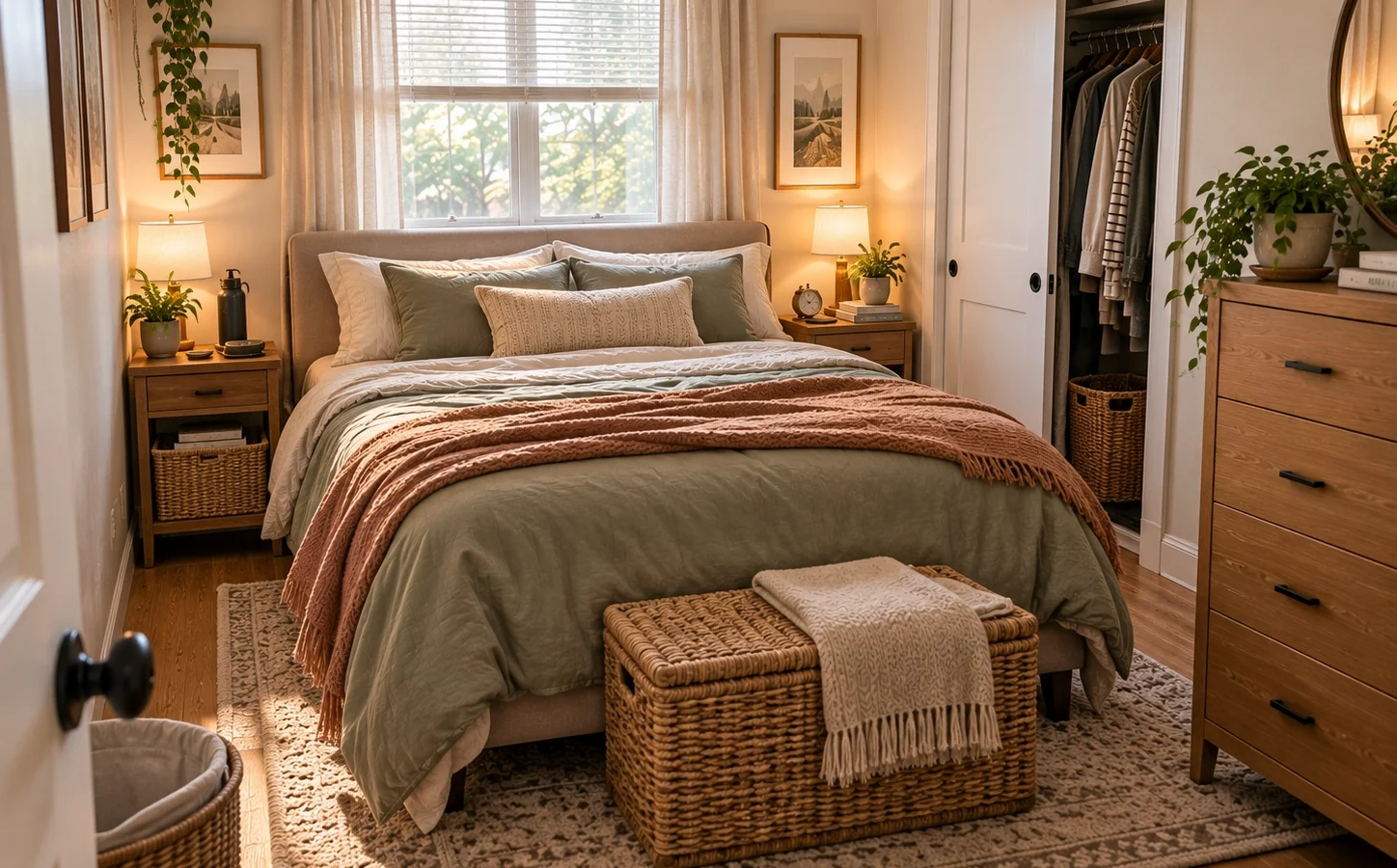
In this article
- 17 Small Bedroom Ideas for Couples That Make the Space Work Better
- 1. Give Each Person a Defined Side of the Room
- 2. Use Matching but Compact Bedside Storage
- 3. Replace Bulky Nightstands With Narrow Alternatives
- 4. Create a Shared Clothing System
- 5. Use the Space Under the Bed for Less-Frequently Used Items
- 6. Give Each Person a Small Personal Drop Zone
- 7. Choose a Bed That Fits Without Overwhelming the Room
- 8. Keep the Center of the Room as Open as Possible
- 9. Use Vertical Wall Space Instead of More Floor Furniture
- 10. Create a Shared Laundry Routine
- 11. Use One Slim Dresser Instead of Multiple Bulky Pieces
- 12. Give Each Person a Small Closet Section
- 13. Use Lighting That Works for Two Different Routines
- 14. Keep Frequently Used Items Within Easy Reach
- 15. Create a No-Clutter Bedside Rule
- 16. Make One Small Area Flexible
- 17. Build a 5-Minute Shared Bedroom Reset
- How to Make a Shared Small Bedroom Easier to Maintain
- Final Thoughts
Sharing a small bedroom with one other person changes the way every inch of the room gets used. A nightstand isn’t just a nightstand anymore. Closet space has to accommodate two wardrobes, bedside lighting may need to suit different schedules, and even a little pile of clothes can make the room feel noticeably more crowded.
The challenge isn’t simply having limited square footage. It’s making that limited space work for two people with potentially different routines, belongings, and preferences.
The most useful small bedroom ideas for couples focus on reducing everyday friction. Each person needs some territory of their own, while shared areas need to stay simple enough for both people to use. The bed, storage, lighting, laundry, and open floor space all have to work together rather than compete for room.
The following ideas focus on creating that balance—without turning the bedroom into a collection of storage furniture or making it feel like every inch has been optimized.
17 Small Bedroom Ideas for Couples That Make the Space Work Better
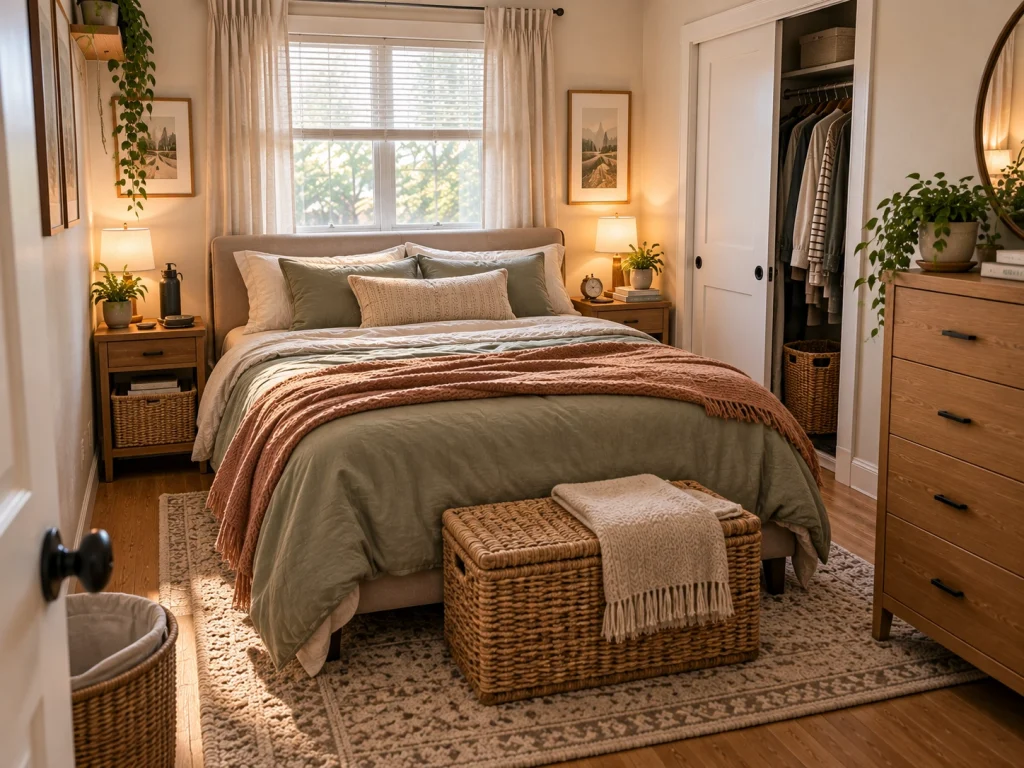
1. Give Each Person a Defined Side of the Room
One of the simplest ways to make a shared bedroom feel more balanced is to give each person a clear side.
That doesn’t mean dividing the room down the middle. It simply means each person knows which bedside surface, closet section, drawers, hooks, or small area is primarily theirs.
For example, one person might have the left side of the dresser while the other uses the right. Each person can also have a dedicated bedside surface for glasses, books, chargers, or other personal items.
This arrangement reduces the feeling that everything belongs to everyone, which can become frustrating in a tight room.
It also makes tidying easier. Each person can be responsible for maintaining their own small zone rather than constantly deciding where another person’s belongings should go.
If the room is extremely narrow, the two sides don’t need to be identical. The important thing is that both people have some clearly defined personal territory.
2. Use Matching but Compact Bedside Storage
Two people sharing a bedroom often means two sets of bedside essentials. Trying to squeeze one oversized nightstand between them isn’t always the best solution.
If the room allows, two compact bedside pieces can provide a better sense of balance. They don’t have to be identical, but similar heights and visual weight can keep the bed area from looking lopsided.
Look for pieces that provide just enough surface area for the essentials. A small drawer or shelf can be more useful than a wide tabletop that eventually becomes a catch-all.
If two nightstands simply don’t fit, use the same principle with alternatives: give each person a defined place for the things they use at night, even if one side relies on a narrow shelf or another compact solution.
The goal is equal access, not perfectly symmetrical furniture.
3. Replace Bulky Nightstands With Narrow Alternatives
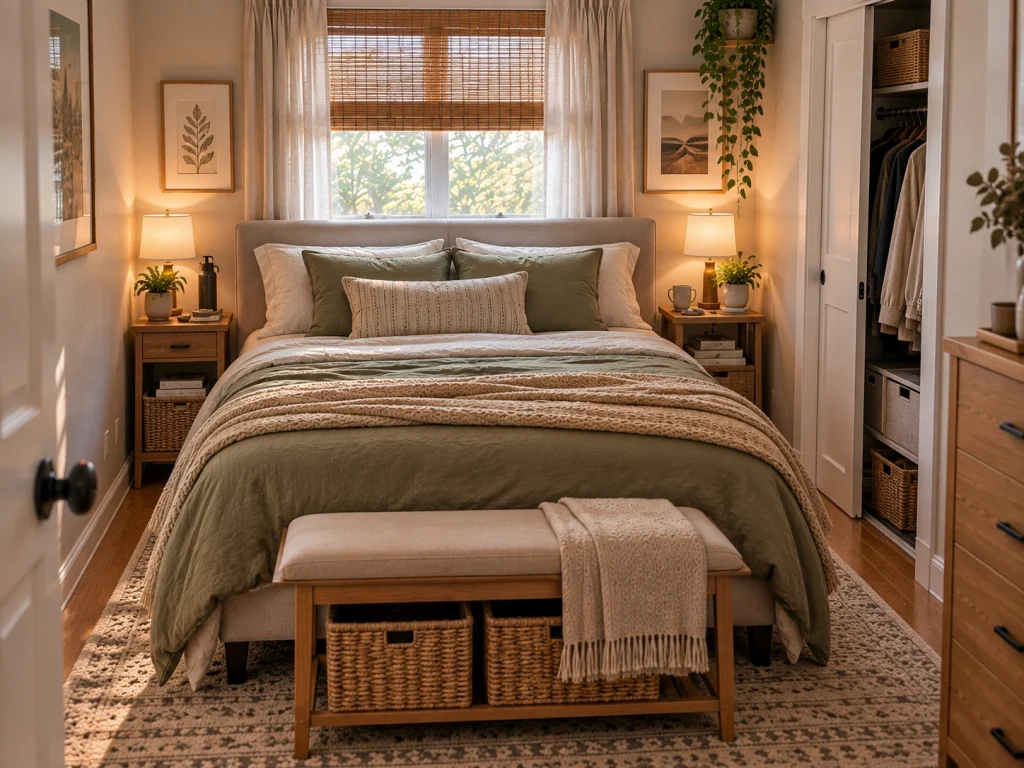
When floor space is tight, traditional nightstands can consume more room than their function justifies.
A narrow bedside table, slim chest, floating shelf, or small pedestal can provide enough space for a lamp, phone, book, and other essentials without creating a large obstacle beside the bed.
For renters, a freestanding narrow piece may be preferable to a wall-mounted option. Where wall installation is allowed, a properly installed shelf can free up valuable floor space.
There is a trade-off: smaller furniture means less storage. That’s usually fine if you keep only genuinely useful bedside items nearby.
If each person needs significantly more storage at the bed, it may be better to reconsider the overall furniture arrangement rather than simply replacing one large nightstand with two small ones.
For more ideas focused specifically on furniture placement, see our guide to small bedroom layout ideas.
4. Create a Shared Clothing System
Two wardrobes can make a small bedroom feel crowded quickly, especially when closet space is limited.
Instead of treating the closet as one undifferentiated space, divide it into clear sections. Each person should know which area belongs to them, while shared items such as spare bedding can have their own section.
The division doesn’t need to be exactly 50/50. If one person owns substantially more clothing, equal physical space may not be the most practical arrangement.
You can also organize each person’s section according to use. Frequently worn clothing should be easy to reach, while formalwear or seasonal pieces can occupy less convenient areas.
This is where the distinction between storage and shared living matters. The goal isn’t simply to fit more clothes into the closet. It’s to prevent two people’s wardrobes from becoming one difficult-to-navigate pile.
For additional ideas about the capacity side of the problem, see these small bedroom storage ideas.
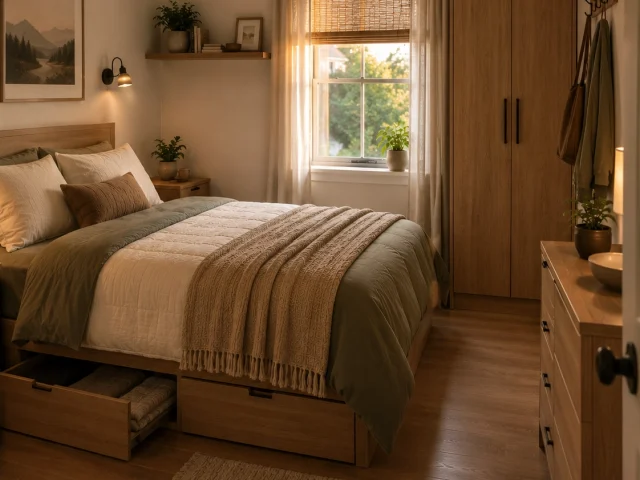
5. Use the Space Under the Bed for Less-Frequently Used Items
Under-bed space can be particularly valuable in a shared bedroom because it allows you to keep occasional belongings out of the main living area.
Use it for things neither person needs every day—seasonal clothing, spare bedding, luggage accessories, or other infrequently used belongings.
Keep the categories clear. One container might hold cold-weather clothing while another holds extra bedding. If both people use the space, agree on where categories live so one person doesn’t have to unpack everything to find something.
There is a practical limit, too. Under-bed storage is awkward for things you use constantly. If you need to pull out a container several times a week, its location may be creating unnecessary work.
The area should function as secondary storage, not as a place to hide unresolved clutter.
6. Give Each Person a Small Personal Drop Zone
A small shared bedroom needs somewhere for the things that come off your body or out of your bag when you come home.
Without a designated place, those items tend to land on the dresser, floor, bed, or nearest chair.
Give each person a small personal drop zone for everyday essentials. Depending on the room, this might be a hook, drawer, basket, shelf, or small section of a dresser.
One person might keep a wallet and keys there while the other keeps headphones, a watch, or a work badge.
Keeping these zones separate can prevent a surprisingly common source of friction: two people’s small belongings becoming one miscellaneous pile.
For renters, removable hooks or freestanding furniture can provide alternatives where permanent installation isn’t appropriate.
7. Choose a Bed That Fits Without Overwhelming the Room
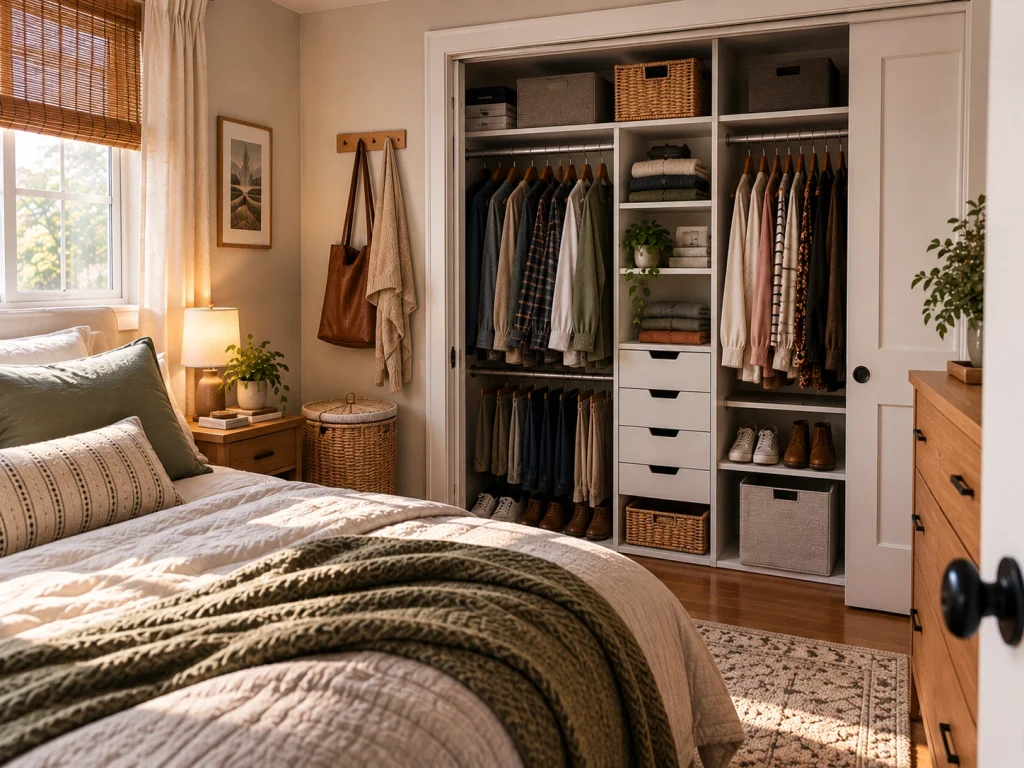
The bed is the largest piece of furniture in most bedrooms, so its size has an outsized effect on how the room functions.
For couples, a comfortable sleeping surface matters, but so does the space left around it.
A larger bed can provide more sleeping comfort while reducing walking space, bedside clearance, and room for other furniture. A smaller bed creates more usable floor area but may not provide the sleeping space both people prefer.
There isn’t one universally correct size.
Instead, consider how the room is actually used. If both people need comfortable access to each side of the bed, a slightly different furniture arrangement may matter more than squeezing in a larger frame.
Also consider the bed frame itself. A bulky frame with a large footboard can visually and physically consume more room than a simpler design.
8. Keep the Center of the Room as Open as Possible
A small shared bedroom benefits from having a clear central path.
This matters more for couples because two people are moving around the room, getting dressed, making the bed, putting away laundry, and using storage at different times.
Try to keep the main walking route free of baskets, chairs, shoe piles, and small pieces of furniture.
If you have to walk around furniture to reach the closet or squeeze sideways to get to the bed, the room will feel more difficult to use regardless of how well everything is organized.
This is where small bedroom layout ideas can be useful, particularly when the current furniture arrangement leaves awkward dead ends or narrow passages.
The objective isn’t to create an empty room. It’s to protect the paths both people use most.
9. Use Vertical Wall Space Instead of More Floor Furniture
When two people share a small bedroom, adding another floor-standing cabinet isn’t always the answer.
Walls can sometimes handle smaller organizational tasks without taking up walking space. Depending on the room and rental restrictions, consider hooks, a narrow shelf, or an over-the-door organizer for appropriate belongings.
Vertical space works especially well for things that need to be accessible: frequently used bags, accessories, lightweight clothing items, or small personal essentials.
But open wall storage has a downside. Everything remains visible, so too many items can make the room feel visually busy.
Use it selectively. A small number of useful items on the wall can be more effective than turning every available surface into storage.
10. Create a Shared Laundry Routine
Laundry becomes more complicated when two people have different habits.
One person may put clothes in the hamper immediately while the other leaves them on a chair. One might do laundry twice a week while the other prefers larger loads less often.
The solution isn’t necessarily to create a complicated laundry system. Start by agreeing on a clear place for dirty clothes and a basic routine that works for both people.
A hamper should be convenient enough that neither person has to cross the room just to use it.
It can also help to establish what happens to clothing that is still wearable. Without a defined place for those pieces, the bed or chair often becomes the unofficial “not dirty yet” zone.
The details are personal. The important part is that both people understand the system.
11. Use One Slim Dresser Instead of Multiple Bulky Pieces
Two people may naturally want separate dressers, but a small room may not have enough floor space for both.
A single slim dresser with clearly divided drawers can sometimes provide a better compromise.
For example, each person could have designated drawers, with one additional drawer reserved for shared items such as linens.
If one person needs more drawer space, the division doesn’t have to be perfectly equal. What matters is that the arrangement feels practical and predictable.
Before adding another dresser, look at the entire room. A second large piece might provide more storage but leave so little walking space that everyday use becomes frustrating.
A smaller shared piece can sometimes be the better overall choice.
12. Give Each Person a Small Closet Section
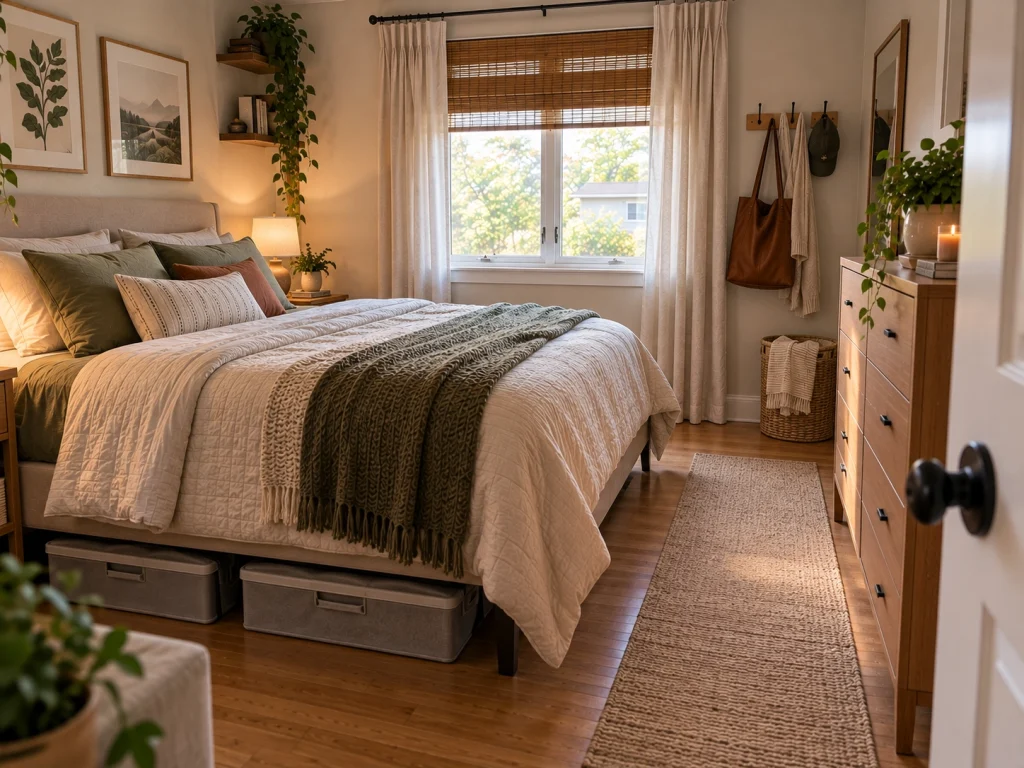
Even when a couple shares one closet, personal boundaries can make it much easier to keep organized.
Assign each person a specific section rather than allowing clothing to mix randomly.
You can divide the space by hanging area, shelves, drawers, or simply by sides.
Then organize within those personal sections according to actual use.
This approach also makes it easier to spot when one person’s belongings are taking over shared space. If the room is becoming crowded, you can address the specific category causing the problem instead of repeatedly rearranging the entire closet.
For a couple with very different wardrobes, the sections may look quite different—and that’s perfectly fine.
13. Use Lighting That Works for Two Different Routines
Bedside lighting becomes surprisingly important when two people don’t follow exactly the same schedule.
If one person reads late while the other wants to sleep, a bright overhead light may not be a comfortable solution.
Individual bedside lighting gives each person more control over their immediate area.
A compact reading lamp, adjustable wall light, or small directional fixture can work depending on the room. If permanent electrical work isn’t practical, a suitable plug-in option may be simpler.
The same principle applies to morning routines. If one person wakes earlier, having useful light on their side of the room can reduce the need to illuminate the entire bedroom.
Lighting isn’t just decoration here. It’s part of making the room work for two different routines.

14. Keep Frequently Used Items Within Easy Reach
Shared rooms become frustrating when everyday belongings are stored according to available space rather than frequency of use.
Think about what each person reaches for every morning and evening.
If someone wears the same few work outfits throughout the week, those clothes should be easy to access. If another person uses a particular skincare product every night, burying it behind occasional items isn’t helpful.
This doesn’t mean everything needs to remain visible.
It means the most frequently used belongings should get the most convenient locations.
The principle can be applied throughout the room: everyday shoes should be easier to reach than formal shoes, daily chargers shouldn’t live behind rarely used electronics, and frequently used bags shouldn’t be hidden underneath occasional belongings.
15. Create a No-Clutter Bedside Rule
The space immediately around the bed is where personal habits become most visible.
A simple shared rule can prevent both sides from gradually filling with cups, packaging, clothing, receipts, cables, and miscellaneous items.
For example, each person might agree to keep only current essentials at the bedside and return everything else to its proper place during the evening reset.
The rule doesn’t need to be strict or identical for both people. One person may need a book and reading glasses while the other needs skincare products and a charging dock.
What matters is keeping the bedside area functional rather than allowing it to become permanent storage.
If you want more help with the day-to-day side of this, our guide to small bedroom organization ideas covers practical systems for belongings and surfaces.
16. Make One Small Area Flexible
Not every part of the bedroom needs a permanent assignment.
Keeping one small area flexible can make a shared room much easier to adapt.
A narrow section of a dresser, an empty shelf, or a small basket might temporarily hold something one person needs that week—a work project, travel items, a seasonal accessory, or another short-term category.
This prevents temporary belongings from spreading across the entire room.
The key is to keep the flexible area genuinely limited. If the entire dresser becomes “temporary,” it stops being useful.
A defined flexible zone gives the room somewhere to absorb changes without requiring a complete reorganization.
17. Build a 5-Minute Shared Bedroom Reset
A small bedroom can look significantly different after a short reset because there isn’t much space for clutter to spread before it becomes noticeable.
A shared five-minute reset can be simple:
- Return each person’s belongings to their designated zones.
- Put dirty clothes in the hamper.
- Return shoes and bags to their usual places.
- Clear the bedside surfaces.
- Remove anything that belongs elsewhere.
The routine doesn’t have to happen at exactly the same time every night. What matters is that both people understand the basic expectations.
It can also help to divide the reset naturally rather than treating it as one person’s responsibility.
A system that takes only a few minutes is much easier to sustain than waiting until the bedroom requires a major weekend cleanup.
How to Make a Shared Small Bedroom Easier to Maintain
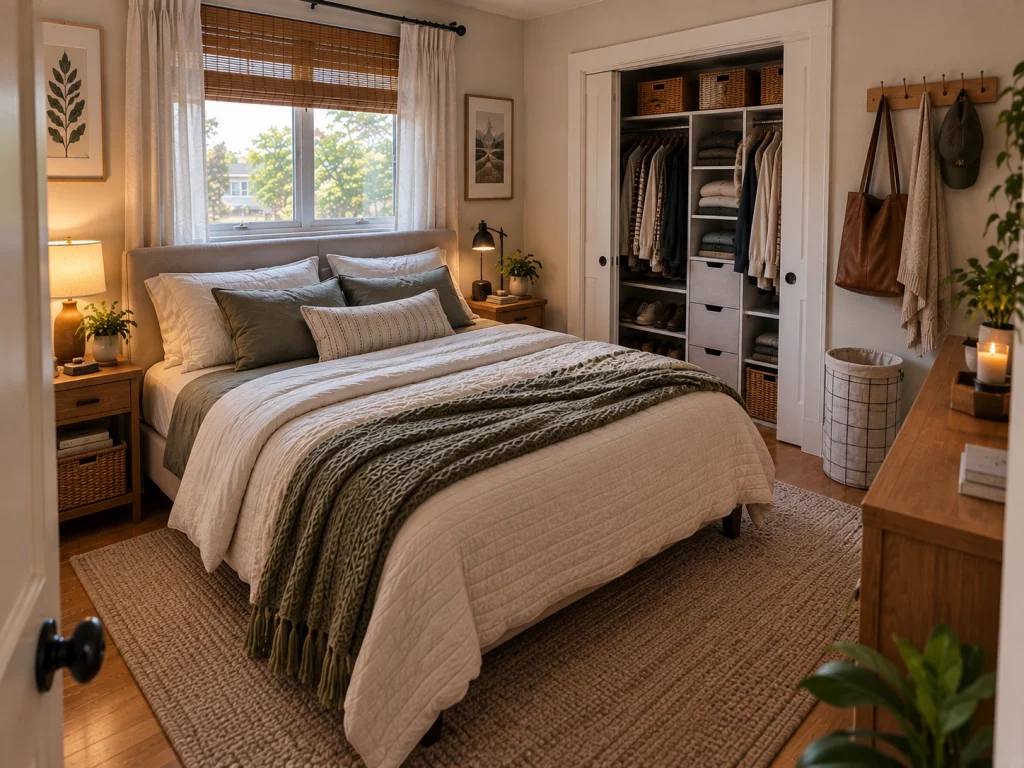
Once the individual ideas are in place, the room works best when they form one simple system.
Think of the bedroom as five practical zones:
Sleeping zone:
Keep the bed comfortable and protect enough clearance for both people to get in and out easily.
Individual bedside zones:
Each person gets a small, defined place for nighttime essentials and personal belongings.
Shared clothing zone:
Divide closet and dresser space clearly instead of mixing everything together.
Laundry zone:
Give dirty and lightly worn clothes predictable destinations.
Flexible zone:
Keep one small area available for temporary needs rather than letting them spread through the room.
The final piece is the shared reset. Five minutes is enough to return belongings to their zones, clear surfaces, and restore the main walking path.
This approach is different from simply adding more storage. The room isn’t organized around maximizing how many possessions can fit inside it. It’s organized around making two people’s everyday routines coexist with less friction.
For broader ideas about creating a room that feels visually spacious as well as functional, see our guide to small bedroom ideas.
Final Thoughts
A small bedroom doesn’t have to feel like two people competing for the same limited space.
The most successful shared bedrooms usually give each person a little territory while keeping the genuinely shared parts of the room simple. Clothing has defined sections, bedside essentials have somewhere to go, the main walking path stays open, and daily routines don’t depend on one person constantly clearing up after the other.
You don’t need identical furniture, a perfectly symmetrical room, or an elaborate organizational system.
Start with the points that create the most friction in your own bedroom. Give those problems a clear solution, then make that solution easy enough for both people to keep using.
That is what makes a small bedroom work better—not squeezing more into it, but making the space easier for two people to live in.