In this article
- 1. Use the Space Under Your Bed
- 2. Take Closet Storage Up to the Ceiling
- 3. Add a Second Hanging Rail
- 4. Use the Back of the Door
- 5. Install Floating Shelves
- 6. Choose a Nightstand With Storage That Matches Your Routine
- 7. Replace a Wide Dresser With a Taller, Narrower One
- 8. Use a Narrow Gap Beside the Bed
- 9. Add Storage to the Headboard
- 10. Use a Storage Bench at the Foot of the Bed
- 11. Choose Furniture That Does More Than One Job
- 12. Use Baskets to Contain Open Storage
- 13. Create a Dedicated Zone for Accessories
- 14. Use Wall-Mounted Hooks for Everyday Items
- 15. Put a Slim Rolling Cart in an Awkward Gap
- 16. Store Seasonal Items Somewhere Else
- 17. Declutter Before Buying More Storage
- How to Add Storage to a Small Bedroom Without Making It Feel Crowded
- Step 1 — Measure the unused spaces
- Step 2 — Separate daily-use and occasional items
- Step 3 — Use hidden storage first
- Step 4 — Go vertical
- Step 5 — Add multifunctional furniture where it genuinely helps
- Step 6 — Keep the most-used items easiest to reach
- Before You Buy Any Storage
- 7 Small Bedroom Storage Mistakes to Avoid
- 1. Buying Storage Before Measuring
- 2. Blocking Walking Paths
- 3. Using Too Many Open Shelves
- 4. Filling Every Empty Wall
- 5. Storing Everyday Items in Inconvenient Places
- 6. Ignoring Closet Height
- 7. Using Storage to Hide Things You Do Not Actually Need
- Frequently Asked Questions
- How can I add storage to a small bedroom?
- What is the best storage for a very small bedroom?
- How do I store clothes in a small bedroom?
- How can I maximize closet space in a small bedroom?
- How do I add storage without making my bedroom feel cluttered?
- Final Thoughts
17 Small Bedroom Storage Ideas That Actually Save Space
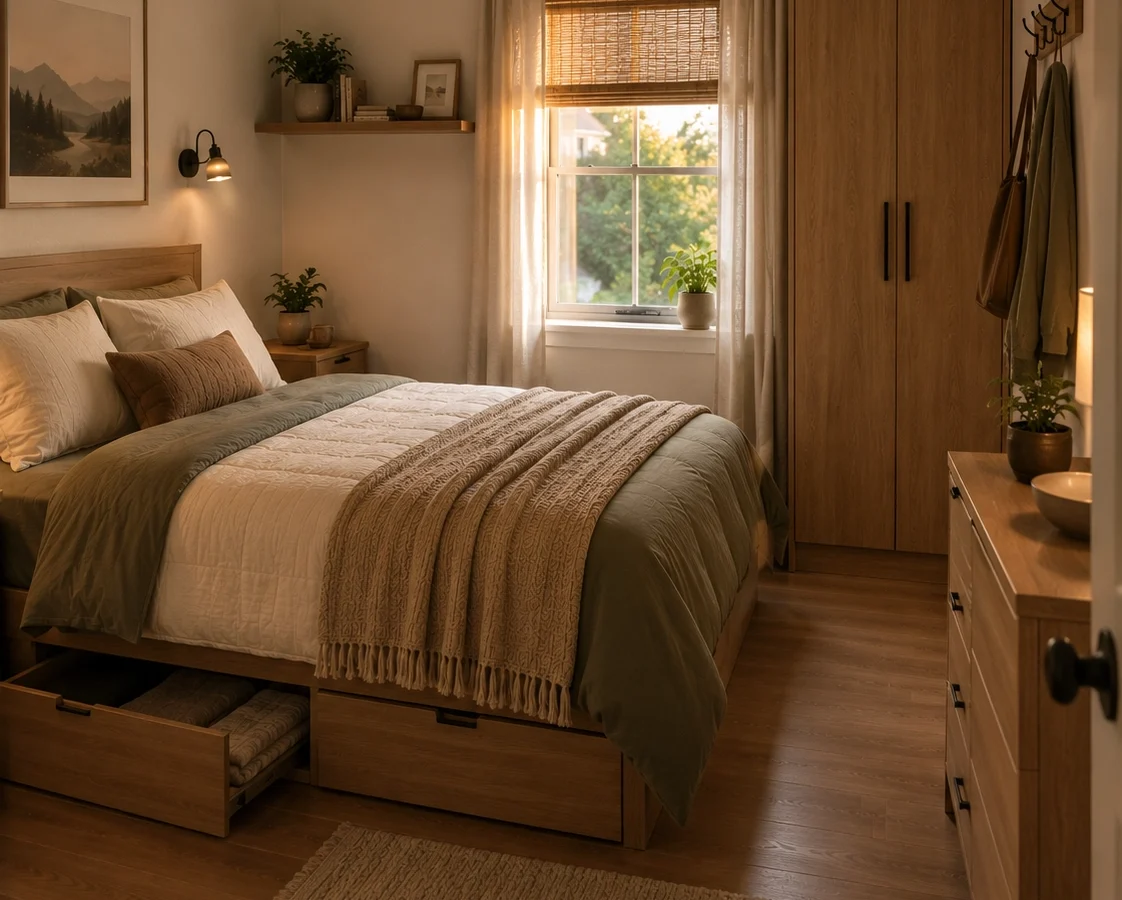
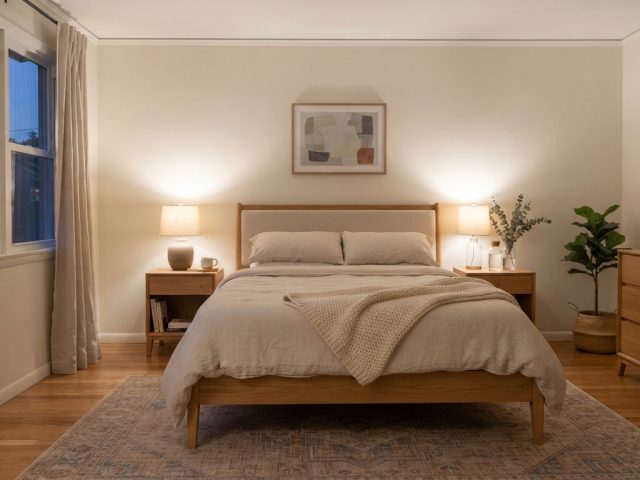
A small bedroom can become crowded quickly. A limited closet leaves clothes on chairs, a dresser fills with things that do not have a proper home, and everyday items gradually take over the nightstand and other open surfaces. Adding another cabinet may solve one problem while creating another by taking away the floor space you still need.
Before buying more furniture, look at the space you are already not using.
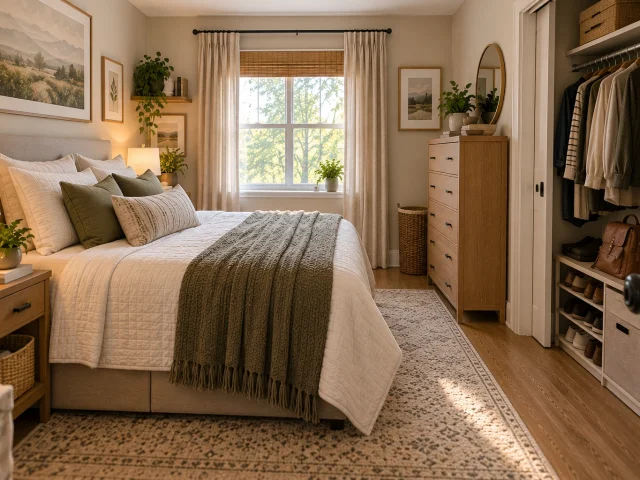
The most useful storage in a small bedroom often comes from hidden space, vertical space, smaller furniture footprints, and better placement. Under the bed, above the closet rod, behind a door, or inside a multifunctional piece can all become useful storage areas without turning the room into a collection of cabinets and containers.
The goal is not to store every possible possession inside the bedroom. It is to make the storage you do have easier to use, easier to maintain, and less visually overwhelming. Good storage should make a bedroom feel more organized, not more crowded.
1. Use the Space Under Your Bed
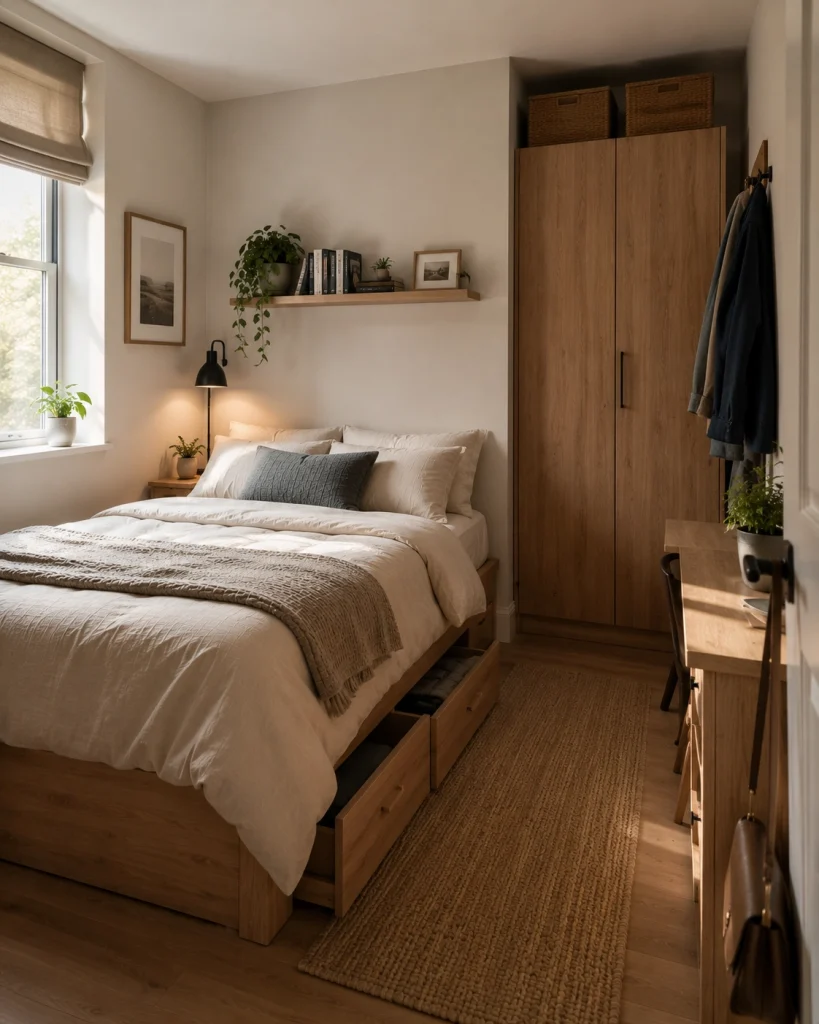
The area underneath the bed is one of the easiest places to overlook because it is already occupied by furniture.
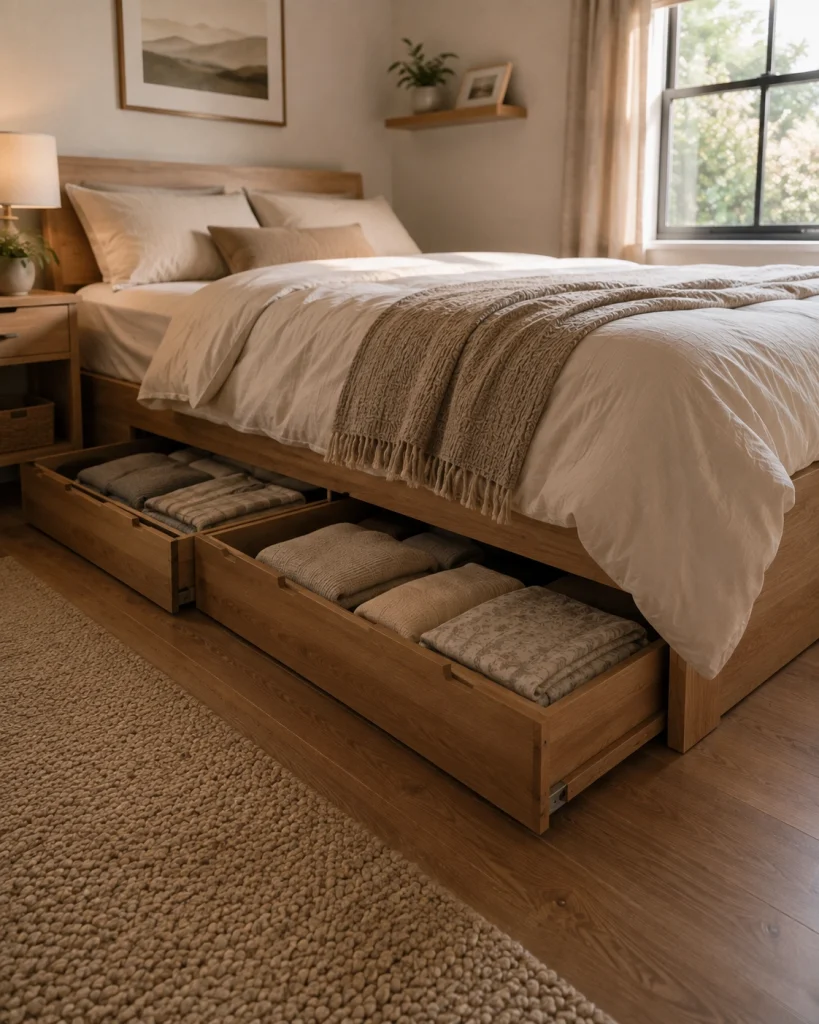
If there is enough clearance, use low drawers, shallow containers, zippered storage bags, or purpose-built under-bed compartments. A bed with lift-up storage can provide another option when you need access to a larger area rather than several small containers.
Reserve this space for things you do not need every morning. Seasonal clothing, spare bedding, shoes, and luggage are better candidates than everyday clothes.
Accessibility matters. If reaching the storage requires moving several boxes or lifting heavy items, it may quickly become a place where things disappear rather than a useful part of the bedroom’s organization. Group similar belongings together and label containers if the contents are not immediately obvious.
2. Take Closet Storage Up to the Ceiling
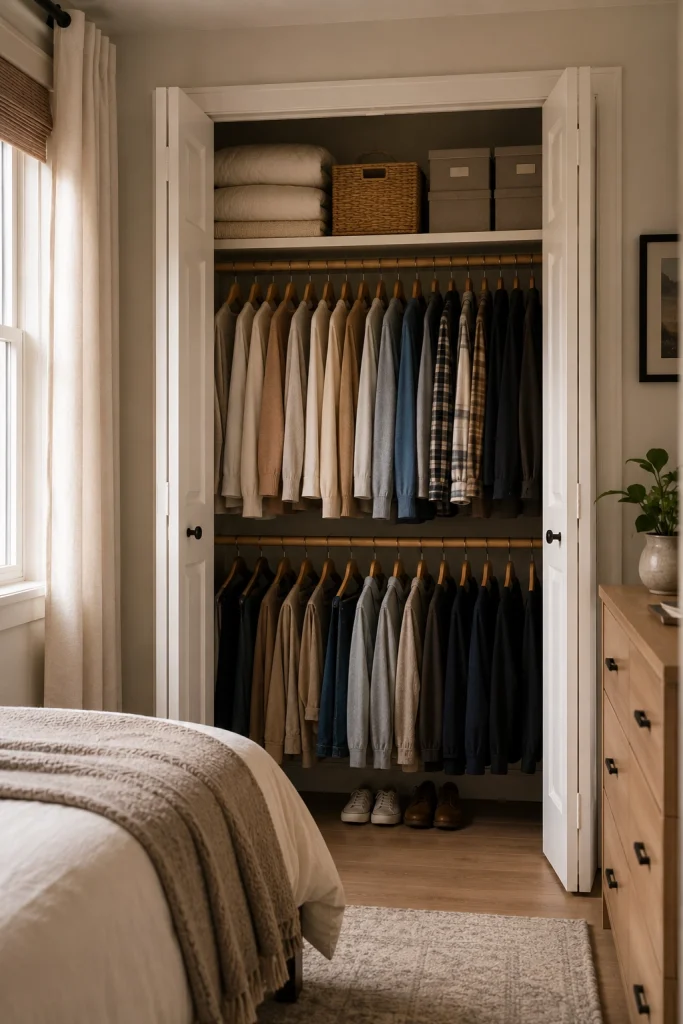
Many closets have valuable space above the area used for everyday clothing.
Instead of allowing that upper section to remain empty, use it for belongings that need to stay in the bedroom but do not need daily access. Spare bedding, seasonal clothing, luggage, and rarely used accessories can all work well there.
Keep frequently worn clothing between comfortable reach heights so getting dressed remains easy. The highest shelves should be treated as secondary storage, not the place for something you need every day.
If you add shelving, measure the closet’s actual width, depth, and ceiling height first. A storage solution that fits on paper can still be awkward if it prevents the closet door from opening fully or makes the hanging area difficult to use.
3. Add a Second Hanging Rail
If your closet has unused vertical space above or below the existing clothing rod, a second hanging rail can make that space more useful.
This works particularly well when much of your wardrobe consists of shorter garments. Shirts, blouses, folded trousers, and other shorter pieces can occupy a lower rail while longer clothing remains on the original one.
Measure before installing anything. Check the length of your clothes, the available vertical space, and where shelves or drawers already sit inside the closet.
The important distinction is that a second rail should improve the closet’s usable capacity, not simply make it harder to reach your clothes. Leave enough room to see and remove garments without having to fight through an overcrowded rod.
4. Use the Back of the Door
The back of a bedroom or closet door can provide useful storage without taking up floor area.
Over-door organizers, slim hanging pockets, and simple hooks can hold accessories, shoes, bags, or other lightweight items. A closet door can be particularly useful for smaller belongings that tend to disappear into drawers.
Before installing anything, close the door and check the surrounding clearance. An organizer that makes the door hit a wall, dresser, or shelving unit is not saving space in practice.
Keep the door storage relatively edited as well. A crowded organizer is still visual clutter, even when it is technically hidden behind a door.
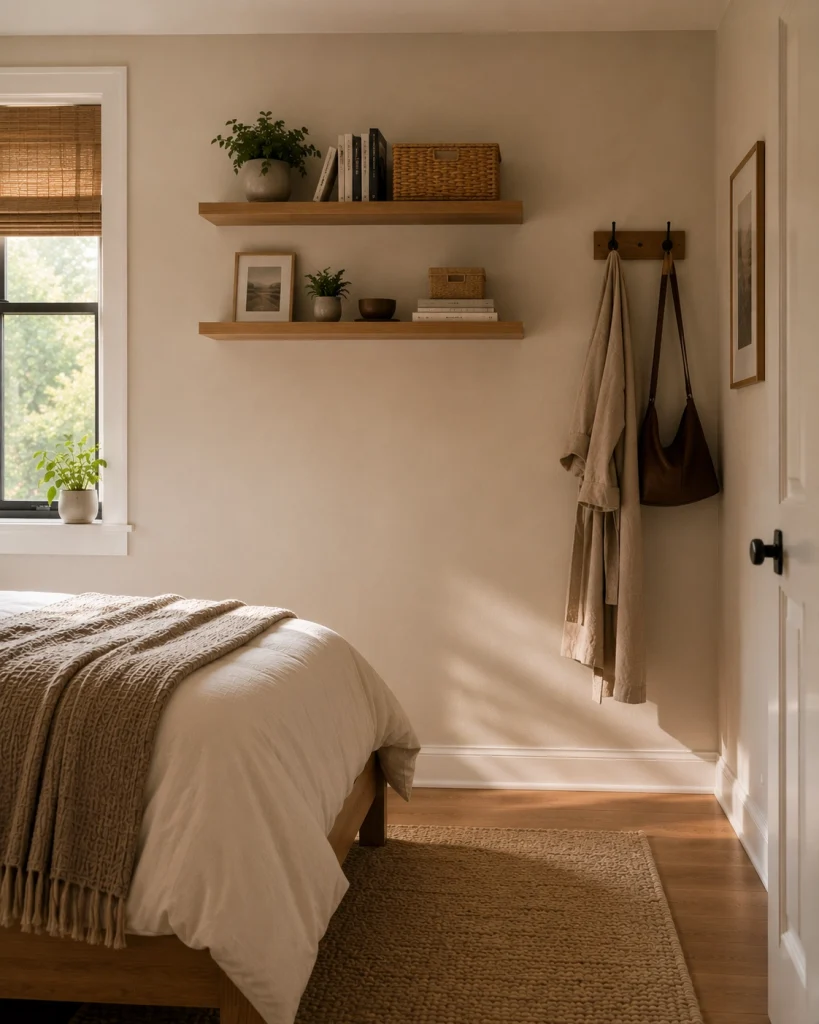
5. Install Floating Shelves
Floating shelves can turn an unused section of wall into useful storage without adding another piece of furniture to the floor.
They can hold books, small baskets, everyday accessories, or a limited number of decorative objects. In a bedroom, a shelf near the dresser or beside the bed can also keep frequently used items within reach.
The mistake is treating every shelf as an invitation to display more things.
Use containers for small loose belongings and leave some shelf space open. This makes the storage easier to maintain and keeps the wall from becoming visually heavy.
For renters, check the installation rules before drilling. If permanent mounting is not possible, prioritize freestanding or removable solutions rather than forcing a wall-mounted system where it is not appropriate.
6. Choose a Nightstand With Storage That Matches Your Routine
A nightstand should solve a bedside storage problem, not become another place to accumulate miscellaneous objects.
Think about what actually needs to stay beside the bed. If you keep books, charging cables, glasses, or medication nearby, a drawer may be more useful than an open shelf. If you mostly need a surface for a lamp and phone, a simpler design may be enough.
A cabinet can hide visual clutter, while an open shelf makes frequently used items easier to reach.
You also do not necessarily need matching nightstands on both sides of the bed. In a very small bedroom, one useful storage piece may be preferable to two pieces that leave little room for movement.
The best bedside storage is the amount you can realistically keep organized.
7. Replace a Wide Dresser With a Taller, Narrower One
A wide, low dresser spreads storage across a large section of wall. In some bedrooms, a taller and narrower piece can make better use of the available vertical space.
This is especially worth considering when the room has a suitable wall but limited floor width. Before replacing the dresser, compare its footprint with the alternative rather than looking only at the number of drawers.
Check the depth as carefully as the width. A tall cabinet that sticks far into the room can create a new circulation problem.
This is not a rule that every small bedroom needs tall furniture. If a tall piece blocks a window, makes a drawer difficult to open, or overwhelms the room, the extra vertical storage may not be worth it.
8. Use a Narrow Gap Beside the Bed
Small gaps are easy to dismiss because they may not seem wide enough for conventional furniture.
Measure the space between the bed and wall, wardrobe, or another fixed piece. Depending on the available width, a slim shelving unit, narrow cabinet, or rolling cart may fit there.
This is a good place for items that need to be accessible but do not deserve a full-size storage unit.
Measure the complete opening, including the space needed to pull drawers or move the cart. A storage piece that technically fits but blocks the path around the bed is not a successful solution.
Sometimes the best choice is leaving the gap empty. Saving space is not the same as filling every available inch.
9. Add Storage to the Headboard
A headboard can sometimes perform more than one job.
Shelves, cubbies, or built-in compartments can provide a place for books, reading glasses, or other small bedside items while keeping them close to the bed.
This can be useful when there is little room for traditional nightstands. It also allows some storage to be integrated into a piece that already occupies that part of the room.
Pay attention to depth. A headboard with large compartments may take up considerably more floor space than a simple headboard, especially in a narrow room.
Keep the compartments edited too. A headboard full of visible objects can make the sleeping area feel busy rather than organized.
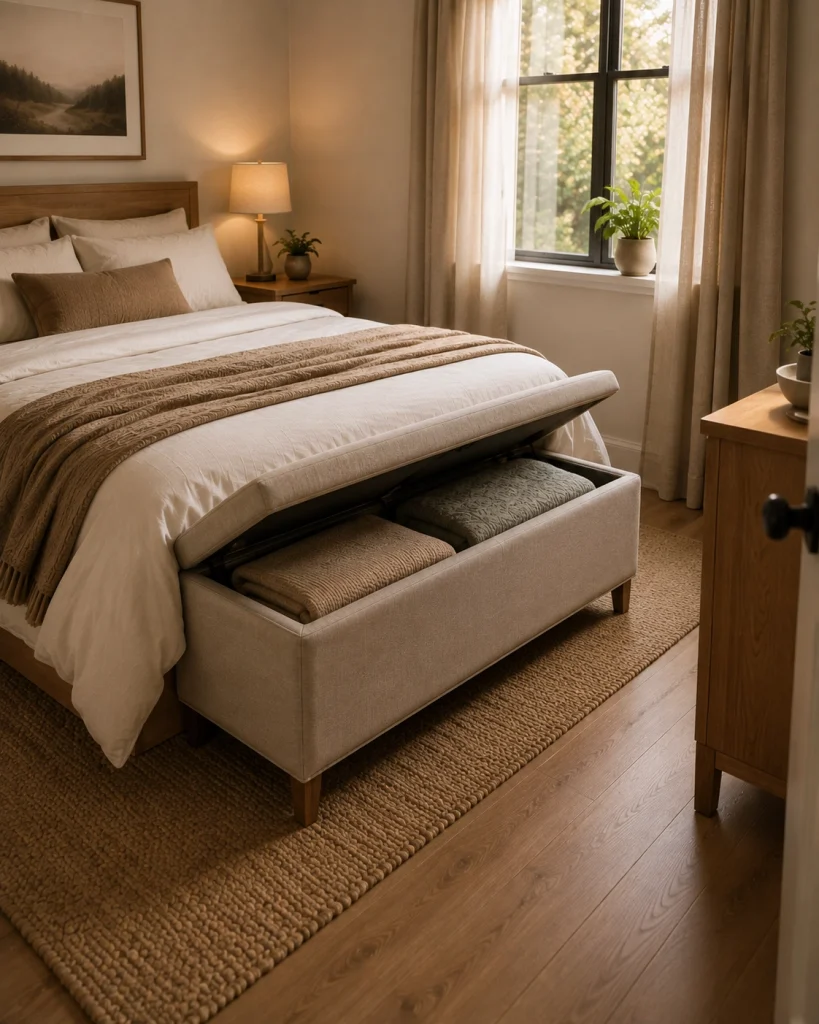
10. Use a Storage Bench at the Foot of the Bed
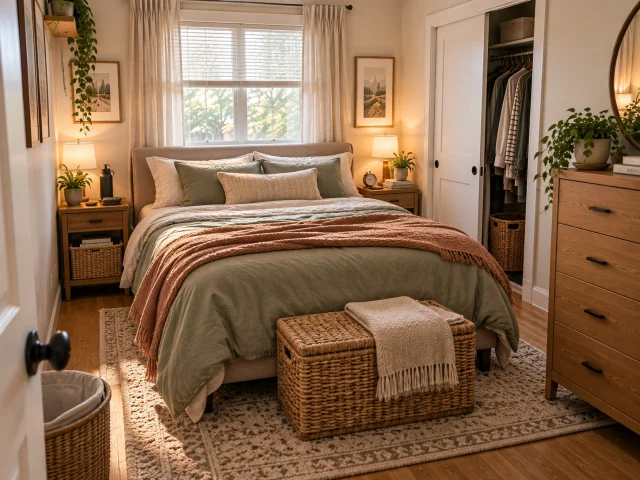
A storage bench can combine seating with a place to keep blankets, extra pillows, or seasonal items.
It works best when the bedroom already has enough clearance at the foot of the bed. Measure the distance from the mattress edge to the opposite wall or furniture before adding one.
Choose the storage capacity according to what you actually need to put away. A bench that becomes a permanent pile of clothing is not solving the storage problem.
If the room is too narrow for comfortable movement around the bench, skip it. A clear walkway is more valuable than an extra storage compartment.
This is a good example of the broader rule: one footprint, two functions, but only when both functions remain practical.
11. Choose Furniture That Does More Than One Job
Multifunctional furniture can be especially useful when floor space is limited because one footprint can handle two needs.
A storage ottoman can provide seating and concealed storage. A bench can hold blankets while providing a place to sit. A bed with drawers can combine sleeping space with clothing or linen storage. A compact desk with drawers can provide both a work surface and additional organization.
But multifunctionality should not become a goal in itself.
If a storage bench is uncomfortable to use, a desk drawer is too shallow for what you own, or a complicated bed mechanism makes everyday access frustrating, the extra function has little value.
Choose multifunctional pieces when the two uses naturally belong together.
12. Use Baskets to Contain Open Storage
Baskets do not create storage. They make existing storage easier to use.
A shelf filled with loose blankets, accessories, or small belongings can quickly become difficult to maintain. Grouping those items inside a few appropriately sized baskets gives each category a defined place.
Use one basket for extra blankets, another for accessories, or a smaller container for miscellaneous items that need to remain accessible.
Avoid buying baskets simply because they look attractive. First decide what they will contain and where they will live.
A container that is too deep can encourage random dumping, while one that is too small will overflow. The right size should match both the shelf and the category of belongings it holds.
13. Create a Dedicated Zone for Accessories
Small accessories often create disproportionate amounts of clutter because they are easy to leave on the dresser, chair, or floor.
Give bags, hats, scarves, jewelry, and other everyday accessories a defined storage zone. Depending on the room, this might be a small wall organizer, a few hooks, drawer dividers, or a compact pegboard.
Keep the items you use most often closest to where you get dressed.
For example, jewelry may make more sense in a divided drawer near the dresser, while bags or hats may be easier to grab from hooks near the bedroom entrance.
The principle is simple: store categories together and place them near the activity they support.
14. Use Wall-Mounted Hooks for Everyday Items
A few well-placed hooks can prevent everyday belongings from migrating onto chairs and floors.
Use them for a robe, jacket, bag, hat, or other item you reach for regularly. The wall beside a closet or near the bedroom entrance is often more useful than a random empty section of wall.
Keep the number of hooks appropriate for the amount you actually use. If ten hooks become ten permanently hanging garments, the wall can start to look like an open closet.
For a cleaner appearance, reserve hooks for items that genuinely need quick access and keep less frequently used clothing inside the closet.
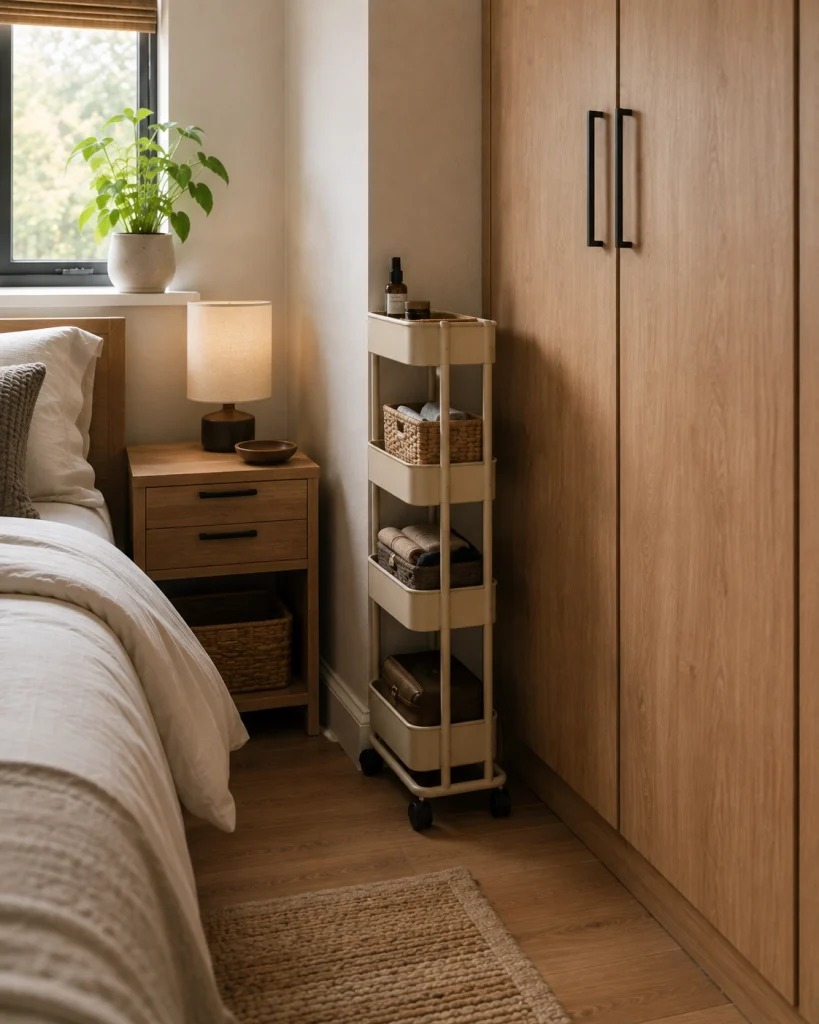
15. Put a Slim Rolling Cart in an Awkward Gap
Some bedrooms have narrow spaces beside a wardrobe, dresser, or wall that are too small for standard furniture but large enough for a slim rolling cart.
Measure the gap carefully, including the height and depth available. A cart can hold toiletries, accessories, books, craft supplies, or other small categories that need to remain accessible.
Its mobility is useful when you occasionally need to pull the storage out to reach something behind it.
But do not sacrifice circulation for a few extra shelves. If the cart protrudes into a walking route or makes a door difficult to open, the gap may be better left empty.
16. Store Seasonal Items Somewhere Else
Not everything you own needs to live in the bedroom.
Heavy winter bedding, coats, holiday items, rarely used luggage, or other seasonal belongings may be better stored in another appropriate area of the home if one is available.
The deciding factor should be frequency of use. Items you need every week belong in accessible storage. Things used only during a particular season can occupy less convenient space.
This can also reduce the pressure to make a small closet hold your entire wardrobe at once.
If another storage area is available, rotate seasonal belongings rather than continually adding more containers inside the bedroom.
17. Declutter Before Buying More Storage
Sometimes the most space-saving storage solution is owning less.
That does not mean turning the bedroom into a minimalist room or getting rid of anything that does not have immediate practical value. It means looking honestly at what your existing storage is being asked to hold.
Duplicate clothing, broken items, unused decorations, and belongings that have not been touched for a long time may deserve a separate decision before you buy another organizer.
Start with one category rather than emptying the entire bedroom. Sort through shoes, accessories, bedding, or one section of the closet and remove only what you genuinely no longer want or need. For more ways to create a warm and inviting bedroom without making it feel cluttered, see our guide to cozy bedroom ideas
Storage should organize things worth keeping, not permanently hide things you do not need.
And that is where the idea of a calm bedroom comes back into the picture. The best small bedroom ideas are not necessarily the ones that add the most. They are the ones that make the room easier to use while leaving enough visual breathing room around the things that matter.
How to Add Storage to a Small Bedroom Without Making It Feel Crowded
Adding storage works best when you treat it as a space-planning exercise rather than a shopping exercise.
Step 1 — Measure the unused spaces
Before buying anything, measure the areas that could realistically become storage:
- the clearance underneath the bed
- unused closet height
- available wall width
- the back of doors
- narrow gaps beside furniture
- unused corners
Write down the measurements. This makes it much easier to reject pieces that are too deep or too wide.
Step 2 — Separate daily-use and occasional items
Make two simple groups.
Daily-use items should be easy to reach without moving other belongings.
Seasonal or rarely used items can go higher in the closet, under the bed, or into another suitable storage area.
This small distinction can make an organization system much easier to live with.
Step 3 — Use hidden storage first
Before adding visible shelving, look at places where storage can disappear into the room:
- under the bed
- inside drawers
- inside cabinets
- in a storage bench
- behind a door
Hidden storage can help keep necessary belongings from becoming visual clutter.
Step 4 — Go vertical
Once the hidden areas are being used sensibly, look upward.
Shelves, hooks, tall storage, and wall-mounted solutions can provide additional capacity without spreading furniture across the floor.
Keep the most frequently used items at comfortable heights and reserve higher areas for things you rarely need.
Step 5 — Add multifunctional furniture where it genuinely helps
Ask whether an existing piece can perform another useful function.
A bench that stores bedding is more efficient than a bench that only sits there. A bed with useful drawers can reduce the need for another cabinet.
But do not force two functions into every piece. Convenience still matters.
Step 6 — Keep the most-used items easiest to reach
An organization system is successful only if you can maintain it.
If something is used every morning, do not put it in a high box behind three other containers simply because that area is available. Put it where your routine naturally takes you.
The easier storage is to access, the easier it is to put things away consistently. If you’re working with a particularly tight room, our guide to small bedroom ideas also covers practical ways to make limited space feel more open and functional.
Before You Buy Any Storage
Ask yourself:
- Do I already have unused space?
- Will this storage reduce useful floor space?
- Do I need daily access to what I am storing?
- Can one existing piece serve two purposes?
- Have I measured the exact space?
- Am I organizing clutter, or simply hiding it?
These questions can prevent a common small-bedroom mistake: buying storage first and figuring out where it belongs afterward.
7 Small Bedroom Storage Mistakes to Avoid
1. Buying Storage Before Measuring
A cabinet that is only slightly too deep can interfere with a walkway or door. Measure the available space and the furniture around it before making the purchase.
2. Blocking Walking Paths
Storage should make the bedroom easier to use. If a new shelf, bench, or cart forces you to squeeze between furniture, the extra capacity may not be worth it.
3. Using Too Many Open Shelves
Open shelving works best when the contents are edited and organized. Too many visible categories can make a small room feel busy even when everything is technically tidy.
4. Filling Every Empty Wall
An empty wall is not automatically a storage problem. Leave some areas quiet so the room does not start to feel like a collection of storage systems.
5. Storing Everyday Items in Inconvenient Places
If you use something every day, it should not require a ladder, a full closet rearrangement, or several containers being moved first. Match storage location to frequency of use.
6. Ignoring Closet Height
A closet may have more usable capacity above the existing rod or shelves than you realize. Look upward before adding another floor-standing piece.
7. Using Storage to Hide Things You Do Not Actually Need
Containers can make clutter disappear temporarily, but they do not solve the underlying problem. Before adding more storage, decide whether the item deserves the space it occupies.
Frequently Asked Questions
How can I add storage to a small bedroom?
Start with areas that do not require more floor furniture, such as under the bed, above the closet rod, behind doors, and on suitable wall sections. Then consider narrow or multifunctional furniture only where you still need additional capacity.
What is the best storage for a very small bedroom?
There is no single best solution for every room. Hidden and vertical storage are useful starting points because they can add capacity without spreading more furniture across the floor. Choose based on what you need to store and how often you need to access it.
How do I store clothes in a small bedroom?
Keep frequently worn clothes in the most accessible parts of the closet and use upper shelves or under-bed storage for seasonal clothing. If your closet has enough vertical height, a second hanging rail may also help organize shorter garments.
How can I maximize closet space in a small bedroom?
Use the full height of the closet, consider a second hanging rail where the dimensions allow it, and group clothing according to how often you wear it. Keep everyday pieces easy to reach and move seasonal items to higher or less convenient areas.
How do I add storage without making my bedroom feel cluttered?
Prioritize hidden storage, use walls selectively, and avoid filling every open surface. Choose storage that fits the room’s proportions and keep visible shelves and hooks edited. Cozy does not mean cluttered, and organized does not mean every inch needs to be occupied.
Final Thoughts
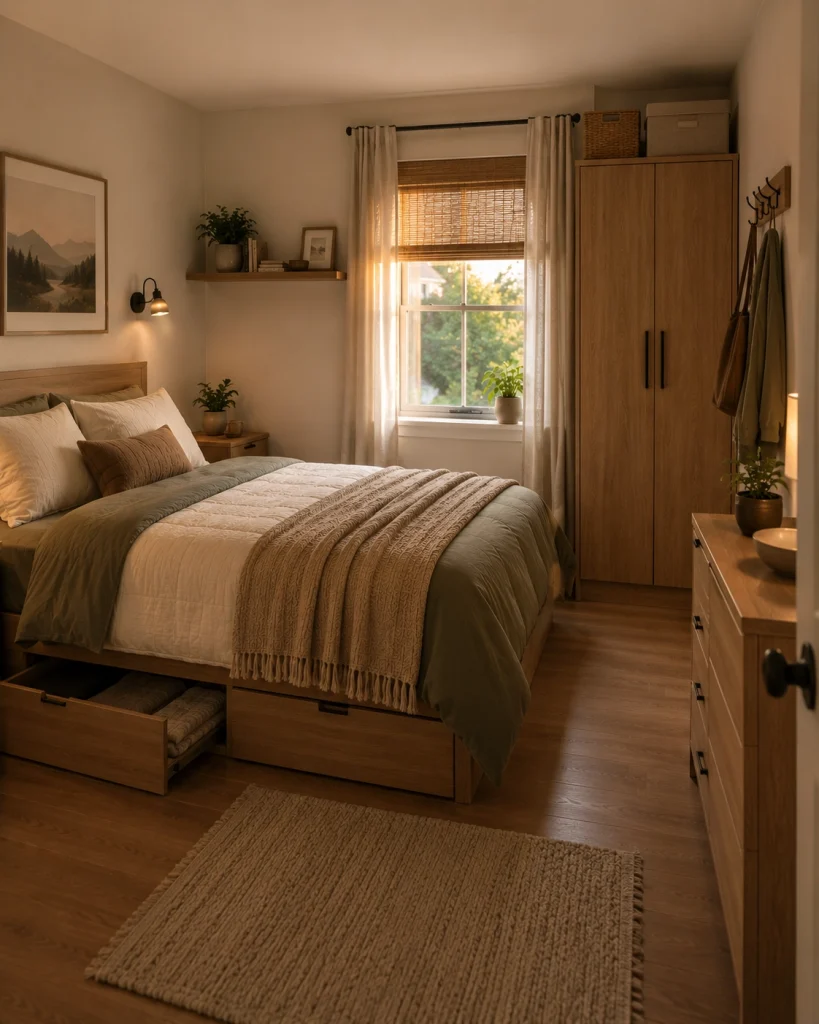
Good storage is not about filling every available space.
It is about using the areas you already have more intelligently, reducing unnecessary floor furniture, storing belongings where they make sense, and keeping the things you use most within easy reach.
A small bedroom can have plenty of storage without feeling like a storage room. The difference usually comes down to what you store, where you store it, and how much of it needs to remain visible.
The best organization system is not the one with the most compartments. It is the one that makes everyday life easier while leaving the bedroom calm enough to feel like a bedroom.
2 comments