In this article
- 1. Decide How You Want to Use the Room
- 2. Build a Warm Color Palette Around Existing Furniture
- 3. Layer Fabrics to Add Softness and Contrast
- 4. Make the Main Seating Comfortable
- 5. Keep a Throw Blanket Where You Will Use It
- 6. Choose Window Treatments for Light and Privacy
- 7. Choose a Rug That Suits Your Routine
- 8. Use Natural Materials With Intention
- 9. Display Personal Items That Matter to You
- 10. Choose Artwork That Fits the Wall
- 11. Make Reading Materials Easy to Enjoy
- 12. Choose Plants for the Available Light
- 13. Give Decorative Objects a Clear Arrangement
- 14. Make Small Seasonal Changes
- 15. Prioritize Finishes You Can Maintain
- 16. Repeat One Accent Color in a Few Places
- 17. Create a Welcoming Focal Point
- Frequently Asked Questions
- How can I make my living room cozy on a budget?
- What colors make a living room feel cozy?
- How can I make a cozy living room without creating clutter?
- Can a small living room still feel cozy?
- What is the difference between a cozy and a cluttered living room?
- Final Thoughts
17 Cozy Living Room Ideas That Make a Space Feel Warm and Inviting
A cozy living room is not necessarily a room filled with cushions, blankets, and decorations. It is a space that feels comfortable to use, reflects the people who live there, and works well for everyday routines. Sometimes, the difference comes from a thoughtful color combination, comfortable seating, or a few personal details that make the room feel like home.
You do not need to replace your furniture or follow a particular decorating style to create that feeling. Start by noticing what already works in your living room and what feels missing. Perhaps the seating is uncomfortable, the room feels visually cold, or the accessories do not seem to belong together.
These cozy living room ideas focus on practical improvements for different homes and budgets. Use the suggestions that suit your room rather than trying to implement all 17 at once.
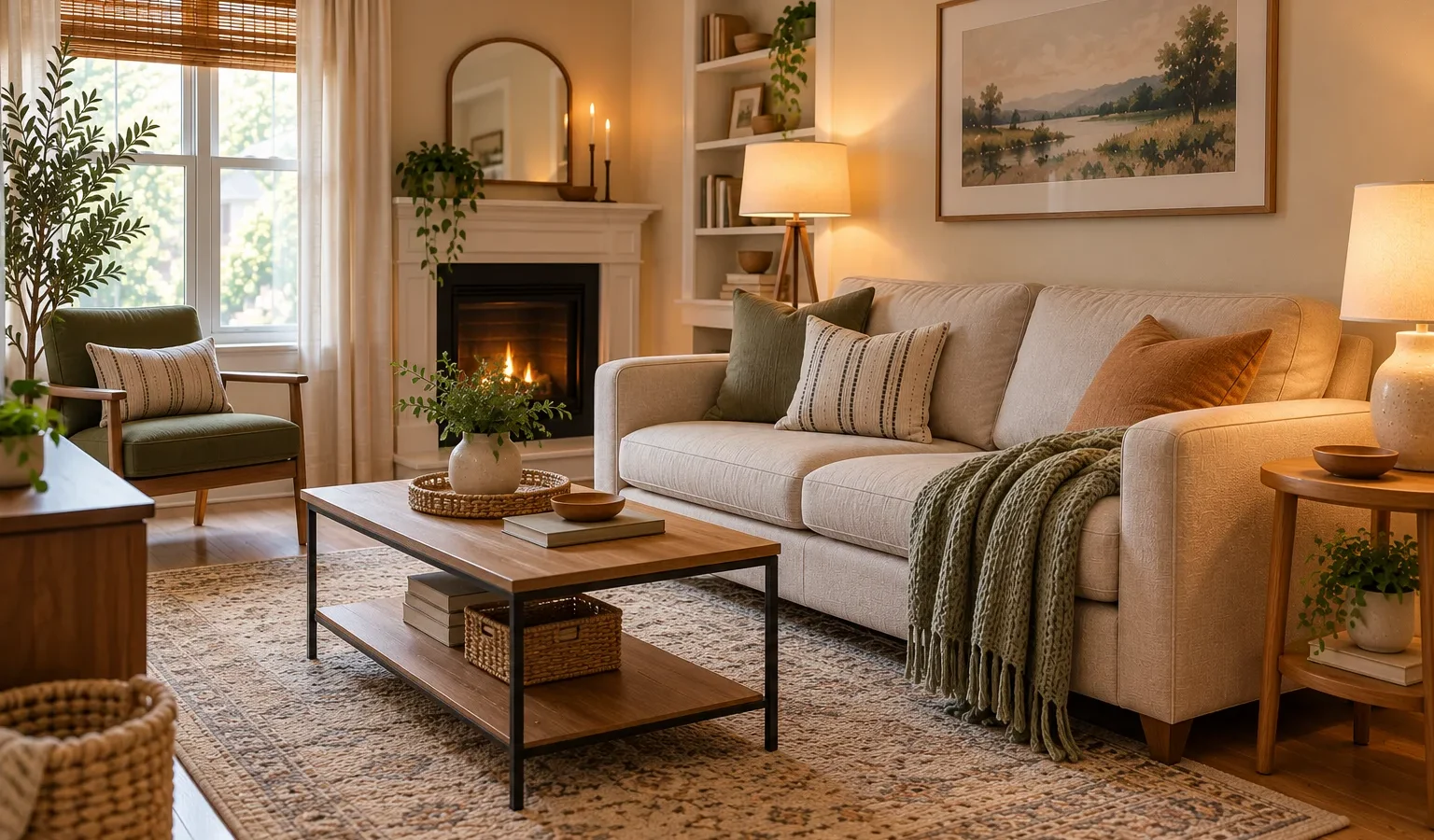
1. Decide How You Want to Use the Room
Before choosing colors or accessories, consider what a comfortable living room means to your household. A room used for quiet reading may need a different setup from one where several people watch movies, entertain guests, or spend time with children.
Think about a typical day. Where does everyone sit? Which activities happen in the evening? Are there things you regularly reach for but cannot easily find? Your answers can help you prioritize changes that improve daily life rather than simply making the room look styled.
Choose two or three priorities before shopping. For example, you might want more comfortable seating, a warmer appearance after dark, and a better place to keep the books you are reading. These priorities give the decorating process a clear direction.
2. Build a Warm Color Palette Around Existing Furniture
Warmth does not require painting every wall or buying a new sofa. Begin with the colors already present in your flooring, upholstery, curtains, and larger furniture pieces.
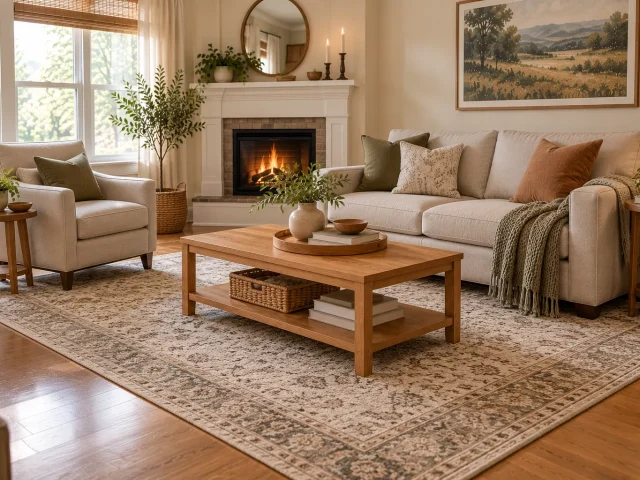
If you have a gray sofa, cream textiles and a muted terracotta accent might soften its appearance. A beige sofa could work with olive green, deeper brown, or muted blue, depending on the flooring and wall color. These are starting points rather than fixed rules; the room’s actual light can change how colors appear.
Choose a main neutral, a supporting color, and one optional accent. Test potential additions beside your existing furniture before buying several matching accessories. A small cushion or fabric sample can help you see whether a color feels right in daylight and under your evening lighting.
The aim is to create a palette that connects the room’s largest elements, not to make every item the same shade.
3. Layer Fabrics to Add Softness and Contrast
Textiles can make a living room feel more inviting because they introduce softness and visual variation. When every fabric has the same smooth finish, the seating area may look flat even if the colors coordinate well.
Try combining a smooth cotton cushion with a textured woven pillow, or place a soft throw over a sofa with firmer upholstery. If the sofa already has a noticeable pattern or weave, choose simpler textiles so the different surfaces do not compete.
Consider comfort as well as appearance. A fabric that feels pleasant against your skin may be a better choice for a frequently used seat than a delicate material selected only for its look. Removable cushion covers can also make routine cleaning easier.
You only need a few complementary textures. Adding more pillows and blankets will not necessarily make a room feel cozier if they take up useful seating space.
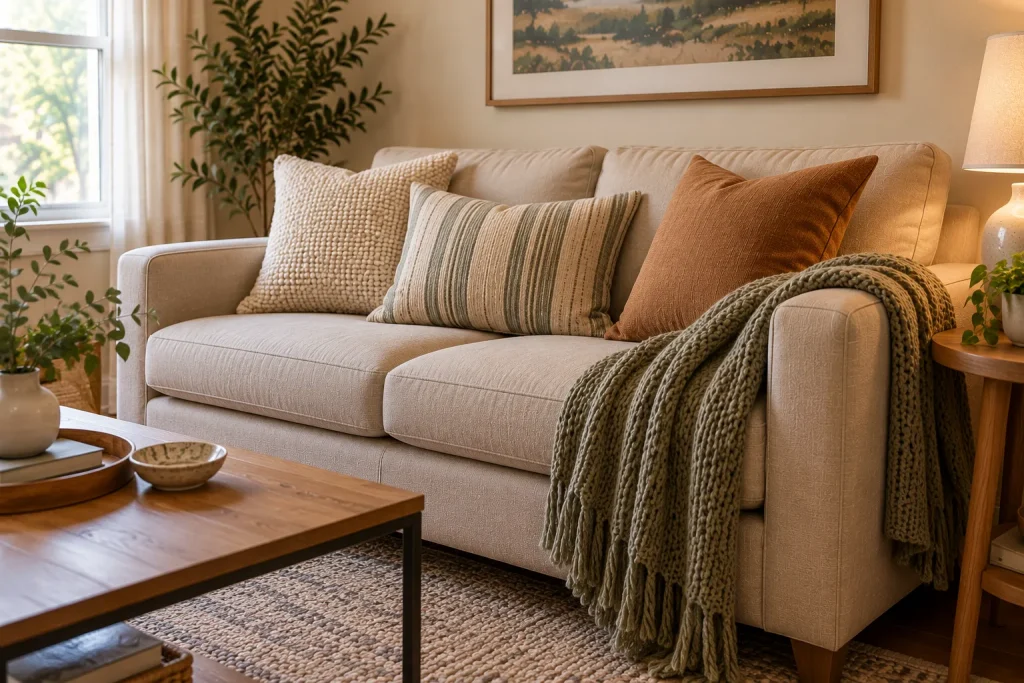
4. Make the Main Seating Comfortable
A welcoming living room should feel good to sit in, not just look attractive in a photograph. Consider how you use your main seat before trying to improve it with accessories.
If you usually sit upright to read or talk, check whether your feet rest comfortably on the floor and whether the back provides enough support. If you prefer stretching out to watch a film, a deeper seat or chaise may suit you better. Cushion firmness and backrest height can also affect comfort.
If your current sofa is serviceable, a supportive cushion or washable throw may improve the experience. If you are buying a replacement, try the seat in person whenever possible and check the full dimensions before ordering.
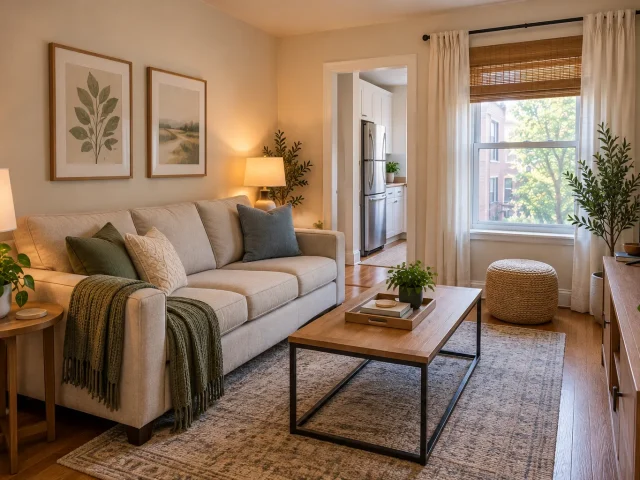
For a compact home, remember that a sofa must fit the room without making everyday movement awkward. Our guide to small apartment living room ideas explores furniture proportions and practical circulation in more detail.
5. Keep a Throw Blanket Where You Will Use It
A throw blanket is most useful when it is easy to reach. Instead of folding it away purely for display, place it over the end of the sofa or in a nearby basket if you regularly use it while reading or relaxing.
Choose a material suited to your climate and routine. Breathable cotton may be comfortable in a warmer home, while fleece or a thicker knit can provide more warmth in cooler weather. Check the care instructions before buying, especially if the blanket will be used by children or pets.
A color that complements your existing upholstery can help the throw fit naturally into the room. It does not need to match every cushion.
One practical blanket is often enough. If the sofa becomes crowded with decorative throws, keep only the ones that are comfortable and useful.
6. Choose Window Treatments for Light and Privacy
Window treatments affect how daylight enters a room, how private it feels, and how much maintenance it requires. The best choice depends on the window’s position and what happens in the room throughout the day.
Light-filtering curtains can soften direct daylight while allowing some brightness through. Heavier panels may offer greater privacy and a fuller appearance, which can be useful when a window faces a busy street or nearby homes.
Measure the window before buying curtains. Check the available space for the rod, the desired panel length, and whether nearby furniture or a radiator could interfere. In a rental, confirm which installation methods are allowed before drilling.
Also think about cleaning. Curtains exposed to dust, pets, or cooking smells may need regular care, so choose a fabric that fits the amount of maintenance you are willing to do.
7. Choose a Rug That Suits Your Routine
A rug can make a living room more comfortable underfoot and introduce another texture or pattern. However, the best rug is one that suits your household rather than one chosen only for its appearance.
A low-pile rug may be easier to vacuum in a busy room. A thicker pile can feel softer but may require more effort to clean, particularly where crumbs, pet hair, or frequent foot traffic are concerns. If spills are common, look for a material with care instructions you can realistically follow.
Use the pattern to balance the rest of the room. A subtle rug may work well when the sofa and curtains already have strong patterns. In a room with mostly plain surfaces, a restrained geometric or organic pattern can introduce interest.
Before ordering, mark the proposed rug dimensions on the floor with painter’s tape. Check how it relates to the sofa and chairs and whether it leaves comfortable walking routes. This simple test can help prevent an expensive sizing mistake.
8. Use Natural Materials With Intention
Natural materials can give a living room a grounded, relaxed appearance. Wood, ceramic, stone, and woven fibers each bring a different finish, but adding too many unrelated materials can make the room feel disconnected.
Start with the finishes you already have. If your floor has a warm oak tone, a small frame or side table in a compatible wood shade may feel natural beside it. A ceramic vase can add a different surface without introducing another wood finish, while a woven basket may be useful for storing a few everyday items.
Matching everything is unnecessary. The aim is to create a relationship between a few materials, not to make the room look like a furniture set.
Before buying a decorative piece, ask whether it contributes something your room needs. An accessory that complements existing finishes or serves a practical purpose is often more valuable than another item added simply to fill an empty spot.
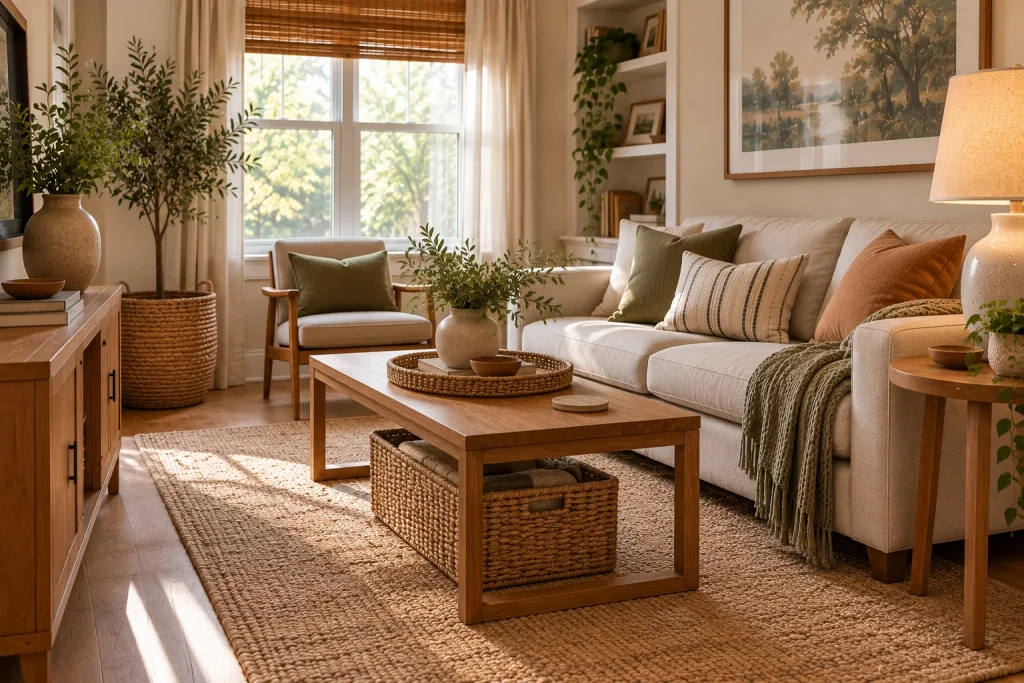
9. Display Personal Items That Matter to You
Personal objects can make a living room feel more distinctive than a collection of decorations selected only to follow a trend. Family photographs, handmade pieces, meaningful souvenirs, and inherited objects can reflect the people who use the space.
Choose a few items you genuinely enjoy seeing. A framed photograph might sit beside a meaningful keepsake, or a souvenir from a trip might have a place on a shelf where it can be noticed without being surrounded by dozens of unrelated objects.
If you have many things you want to display, rotate them occasionally. Keep your current favorites visible and store the rest safely. This lets the room change over time without requiring new purchases.
Personal decor can also help you stay within budget. Before buying accessories, look through the objects you already own and decide whether any would feel more at home in the living room.
10. Choose Artwork That Fits the Wall
Artwork can help a living room feel more complete, but scale and placement matter. A small frame placed far above a sofa may look disconnected, while an oversized piece can overwhelm a narrow wall.
Before hanging a picture, cut paper to approximately the same dimensions and temporarily attach it to the wall with removable tape. View the outline from the sofa and from the main entrance. This lets you test the placement before committing to holes or hardware.
The artwork does not have to match every cushion. It might repeat one color already present in the room, or introduce a restrained contrast that gives the eye somewhere to rest.
For renters, suitable adhesive strips or a picture ledge may be alternatives to drilling, depending on the wall surface and the frame’s weight. Follow the manufacturer’s limits and any requirements in your rental agreement.
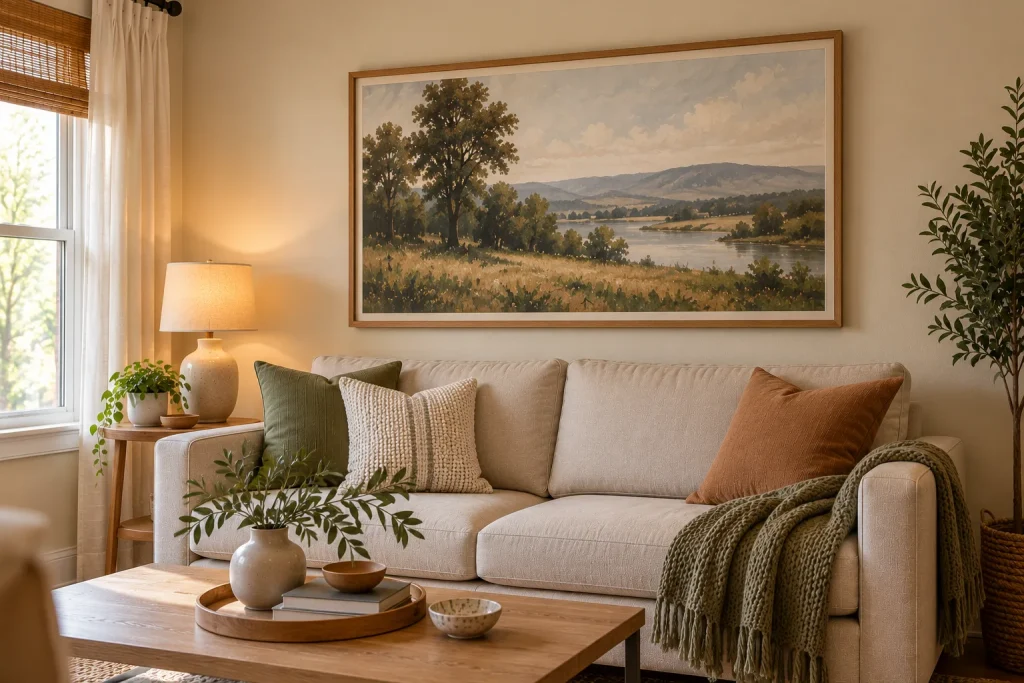
11. Make Reading Materials Easy to Enjoy
Books contribute to a cozy living room when they are connected to how you actually spend time there. Instead of arranging books solely for appearance, make your current reading material easy to find and return.
If you read for a few minutes in the evening, keep your current book on an accessible shelf or in a small basket near your usual seat. If several people share the room, a designated spot for magazines, children’s books, or reading material can prevent them from spreading across different surfaces.
You can arrange books by subject, size, or another method that helps you locate them. A small group of favorite titles can also add personality to a shelf without filling every available space.
Avoid placing heavy stacks where they can fall or block a walkway. The goal is to make reading easier and give books a natural place in the room, not to create a display that is difficult to use.
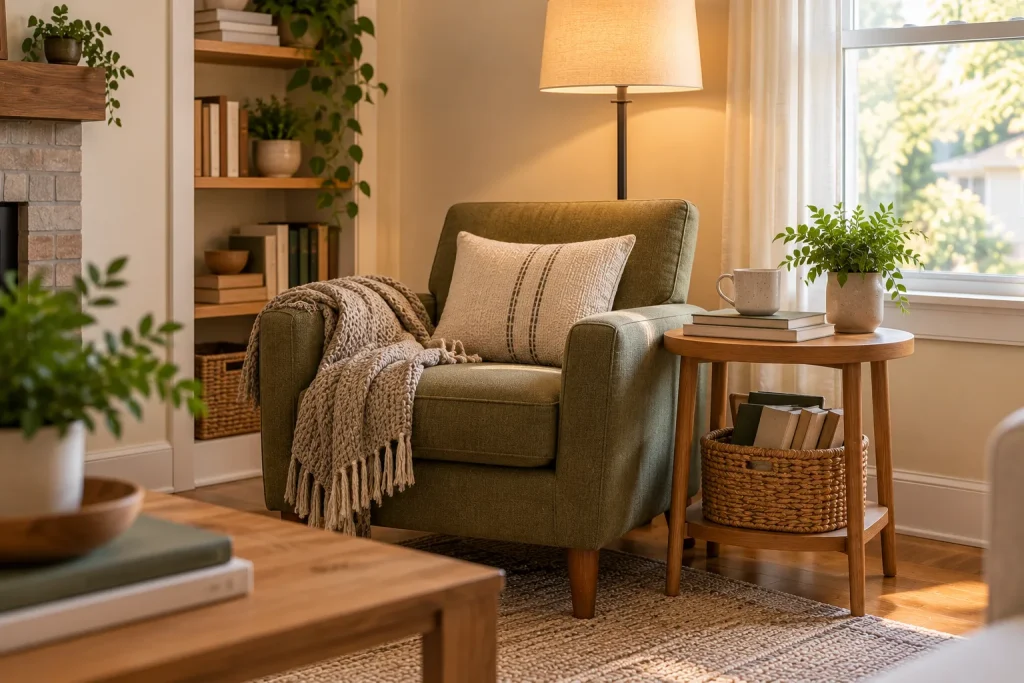
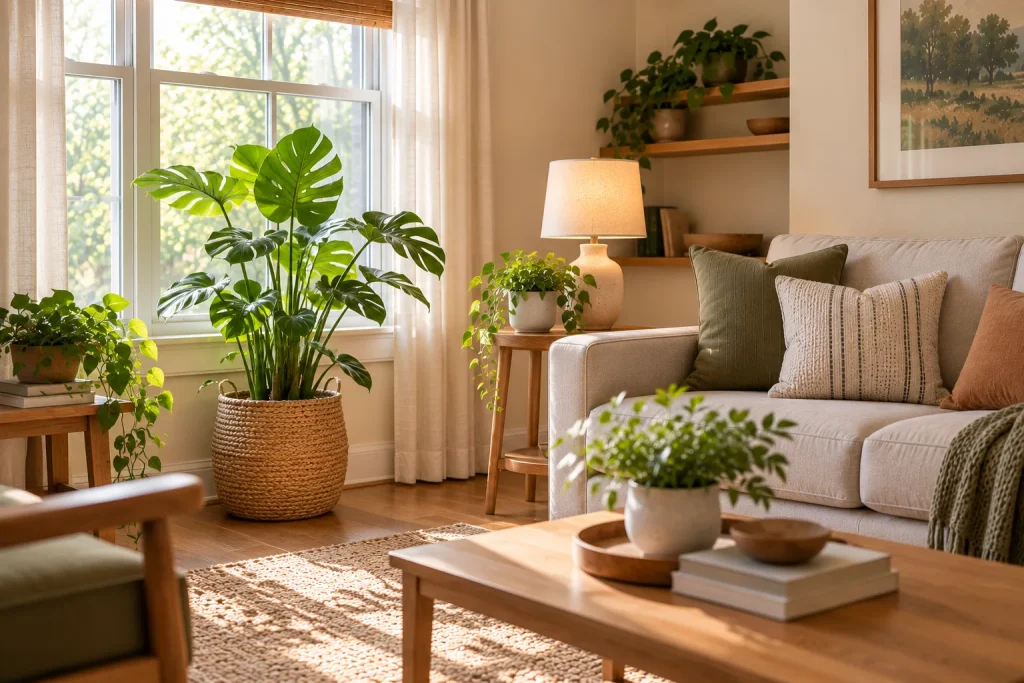
12. Choose Plants for the Available Light
Plants can introduce living color, but their placement should be based on their growing needs rather than appearance alone. A plant that needs bright indirect light may struggle in a dark corner even if the pot fits perfectly with your decor.
Observe the light in the proposed location and choose a plant suited to those conditions. Consider watering requirements, the amount of care you can provide, and whether the plant will fit as it grows.
Household safety matters, too. If you have pets or small children, check a plant’s toxicity before bringing it home and position the pot where it is unlikely to tip over. Use a suitable saucer or protective barrier to help prevent water damage to furniture and flooring.
One healthy plant in an appropriate location may work better than several plants that are difficult to maintain. If the room lacks suitable light, a non-living natural accent may be a more practical option.
13. Give Decorative Objects a Clear Arrangement
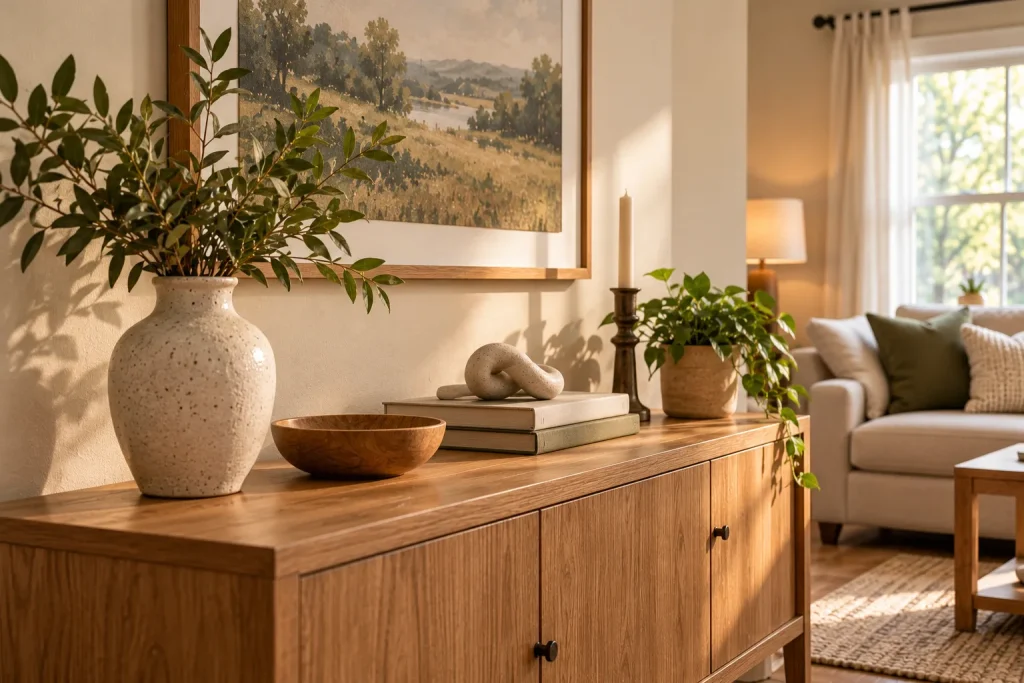
Small decorative objects can look scattered when each item is placed separately across a shelf or cabinet. Grouping a few related pieces can make the arrangement easier to read.
For example, place a medium-sized framed photograph beside a small ceramic object and a short stack of books. Vary their heights so the arrangement has some visual movement, but leave enough space for each item to remain visible.
The objects might be connected by material, personal meaning, subject, or shape. They do not need to match exactly; they simply need a reason to sit together.
After arranging them, step back and look at the entire shelf. If the display feels crowded, remove one object or move it to another location. A smaller arrangement that can be appreciated easily is often more effective than a surface filled from end to end.
14. Make Small Seasonal Changes
A living room can feel different throughout the year without replacing its main furniture. Changing a few removable accessories can introduce a seasonal mood while keeping the overall room familiar.
During cooler weather, you might use a thicker throw or bring out deeper accent colors. In warmer months, lighter cushion covers and breathable fabrics may feel more comfortable. The changes should suit your local climate and how you use the room.
Store off-season textiles cleanly and keep only what you have space to maintain. If seasonal decor creates clutter or requires frequent shopping, simplify the approach.
Choose a small number of changes that make a noticeable difference. Your sofa, larger furniture pieces, and overall color palette can remain consistent while a few details change over time.
15. Prioritize Finishes You Can Maintain
A living room should remain comfortable after everyday use, not just look good immediately after decorating. Fabric, wood, metal, and other finishes respond differently to spills, sunlight, dust, and frequent handling.
If your sofa gets heavy daily use, look for upholstery or cushion covers that can be cleaned according to the manufacturer’s instructions. If sunlight falls directly on a rug or upholstered surface, consider the material’s care requirements and potential for fading. In homes with children or pets, stable accessories and easy-to-clean surfaces may be more practical than delicate pieces.
Read the care instructions before buying an item. Some materials require special cleaning products or professional care, while others can be maintained with routine vacuuming or wiping.
Durability does not mean sacrificing appearance. Choose finishes that suit your style and the amount of maintenance you can realistically provide.
16. Repeat One Accent Color in a Few Places
A room can contain attractive individual pieces but still feel disconnected if every accessory introduces a new color. Repeating one existing accent color in a few places can help link different parts of the room.
First, look for a color that is already present in a cushion, artwork, or rug pattern. Then repeat it in two or three smaller details, such as a ceramic object, another cushion, or a piece of artwork.
The shades do not have to be identical. A muted green cushion and a slightly deeper green in a print can relate to one another without making the room look like a matching set.
This is different from choosing the whole palette: the purpose here is to connect details that already exist. If your room already has several strong colors, repeat one of them rather than adding another accent.
17. Create a Welcoming Focal Point
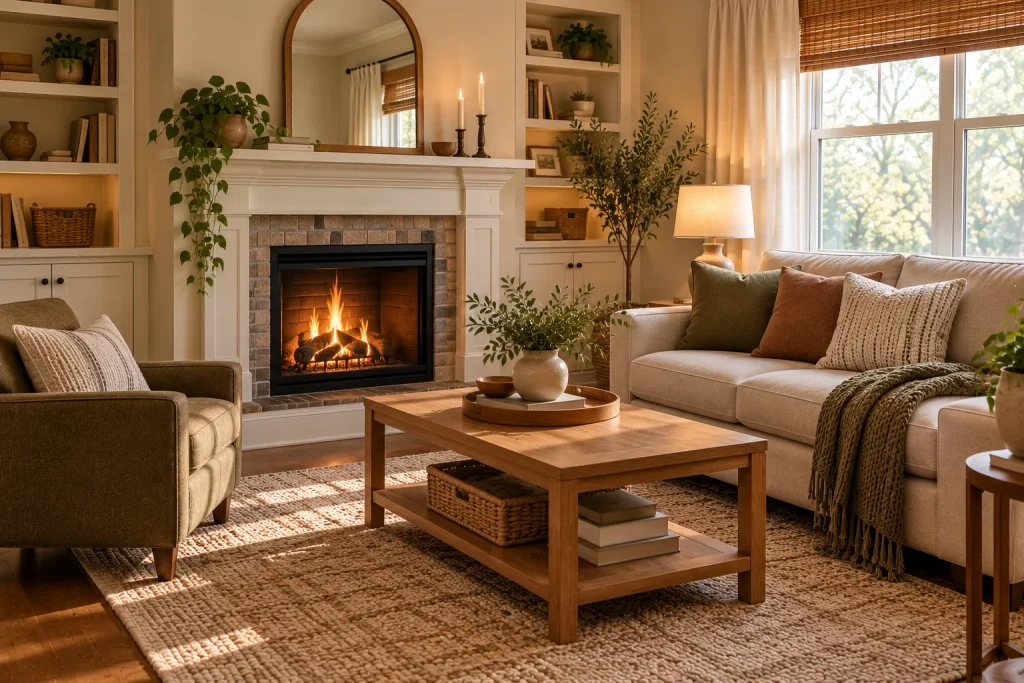
A cozy living room benefits from having one area that naturally draws the eye. Without a clear focal point, decorations and furniture can compete for attention, making the room feel visually unsettled.
Start by identifying a feature worth emphasizing. It might be a fireplace, a large window with an appealing view, a favorite artwork, or a distinctive piece of furniture. Arrange nearby decorative details to support that feature rather than competing with it.
If the room has no obvious architectural feature, choose one meaningful item to anchor the look. For example, a favorite artwork can become the main visual feature, supported by a few quieter accessories nearby. You do not need to buy a statement piece if something you already own can serve the purpose.
Keep the surrounding area relatively simple so the focal point remains noticeable. The goal is not to make every corner equally decorative, but to give the room a visual center that feels intentional and personal.
Frequently Asked Questions
How can I make my living room cozy on a budget?
Start with what you already own. Rearrange a few accessories, bring out a stored throw, display meaningful photographs, or change the position of an existing decorative piece. If you decide to buy something, prioritize the problem you most want to solve rather than purchasing several items at once.
What colors make a living room feel cozy?
Cream, warm beige, muted terracotta, olive green, and deeper brown are possible choices, but the right combination depends on your existing furniture, flooring, daylight, and personal taste. Test colors in the room before committing to a large purchase or repainting.
How can I make a cozy living room without creating clutter?
Keep decorative groupings limited, leave space around objects, and make sure frequently used surfaces remain practical. Choose a few complementary fabrics and repeat selected colors rather than adding a new finish or accessory to every corner.
Can a small living room still feel cozy?
Yes. Comfortable seating, a considered color palette, suitable textiles, and a few personal details can make a small room feel welcoming. Focus on what improves comfort and keep walking routes usable rather than trying to fill every empty area.
What is the difference between a cozy and a cluttered living room?
A cozy room supports the way its occupants live and includes items that are useful or meaningful to them. A cluttered room has more items than its surfaces, storage, or daily routines can comfortably accommodate. The goal is not to remove everything, but to keep what matters and give it a suitable place.
Final Thoughts
A cozy living room is shaped by the way it feels and functions in everyday life. Comfortable seating, a thoughtful color palette, varied textiles, personal objects, and manageable finishes can all contribute to a more welcoming space.
You do not need to change everything at once. Identify what feels least comfortable or least connected to the rest of the room, make one considered adjustment, and see how it works before spending more. The result should reflect your household and make the room more enjoyable to use—not simply add more things to look at.