In this article
- 1. Measure Your Seating Area First
- 2. Choose a Rug Size That Fits Your Furniture
- Smaller Rugs for Compact Seating Areas
- Medium Rugs for Defined Seating Groups
- Larger Rugs for Spacious Living Rooms
- 3. Decide How the Furniture Will Sit on the Rug
- Option 1: Front Legs on the Rug
- Option 2: All Seating Legs on the Rug
- Option 3: The Rug Sits Mainly Beneath the Central Area
- 4. Compare Rug Materials by Their Everyday Performance
- Wool
- Cotton
- Jute and Sisal
- Synthetic Fibers
- Washable Rugs
- 5. Choose a Pile Height That Suits Your Routine
- Low-Pile Rugs
- Medium-Pile Rugs
- High-Pile Rugs
- 6. Match the Rug to Your Household’s Needs
- 7. Choose a Color and Pattern That Work With Your Room
- Work With Existing Colors
- Consider the Amount of Pattern
- Check the Rug Against Your Flooring
- 8. Check Construction, Backing, and Edge Finishing
- 9. Decide Whether You Need a Rug Pad
- 10. Understand the Cleaning Requirements Before Buying
- 11. Set a Realistic Budget
- 12. Avoid These Common Rug-Buying Mistakes
- 13. Living Room Rug Buying Checklist
- Frequently Asked Questions
- What size rug is best for a living room?
- Should a living room rug go under the sofa?
- What is the best material for a living room rug?
- Is a low-pile rug better for a busy living room?
- Do I need a rug pad under my living room rug?
- How do I choose a rug color for my living room?
- Final Thoughts
How to Choose a Living Room Rug: Size, Material, and Style
A living room rug can help define a seating area, soften hard flooring, and bring furniture together. Choosing the right one, however, involves more than finding a color you like. A rug that looks beautiful in a product photo may be too small for your sofa, difficult to maintain, or unsuitable for the way your household uses the room.
The best living room rug balances size, material, comfort, appearance, and maintenance. You do not necessarily need the most expensive option. You need one that fits your furniture, works with your flooring, and suits your everyday routine.
This guide explains how to measure your space, compare rug materials, choose a practical pile height, coordinate colors and patterns, and evaluate the details that matter before buying.
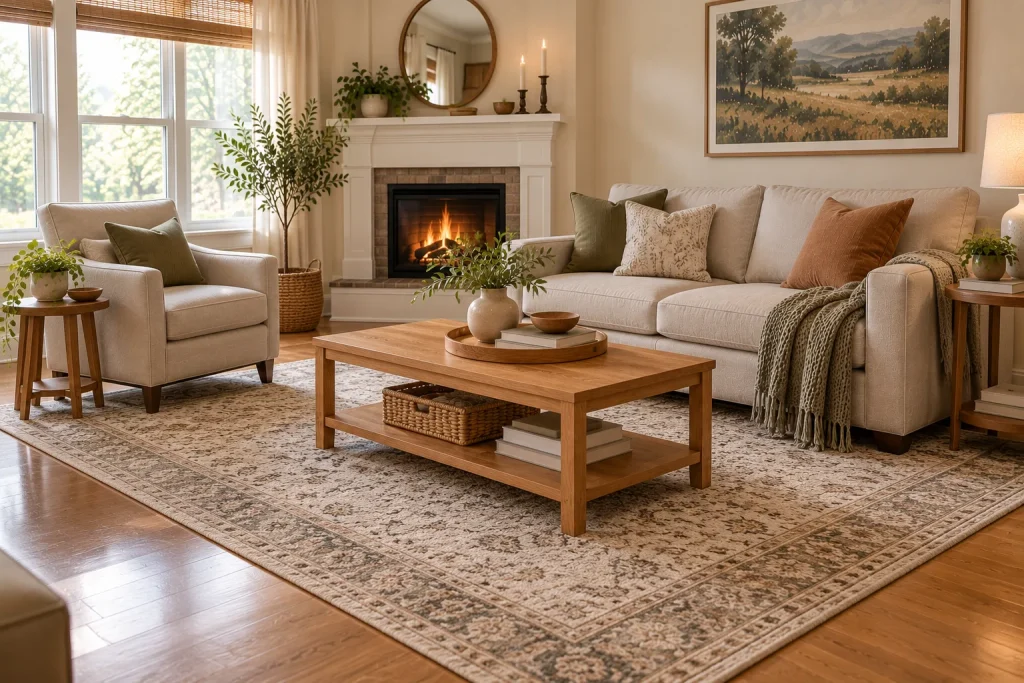
1. Measure Your Seating Area First
Before browsing rugs, measure the area you want to define. Measuring the entire room is a useful starting point, but the seating arrangement usually determines the rug size you need.
Record the width of your sofa, the position of your accent chairs, the coffee table dimensions, and the main walking routes. Check nearby doorways, cabinets, and other furniture that could interfere with the rug.
Next, sketch a simple floor plan. Mark the furniture footprints and outline a few possible rug dimensions. Painter’s tape can also help you visualize the rug’s edges directly on the floor.
Pay attention to three things:
- Furniture coverage: Decide whether the rug should sit beneath the front legs of your seating or accommodate the entire seating group.
- Visible flooring: Leave enough exposed floor around the rug for the arrangement to feel balanced.
- Clearance: Make sure doors can open and people can move around the furniture comfortably.
These measurements will help you eliminate unsuitable sizes before shopping. They also make it easier to compare products when their photographs use different room layouts.
2. Choose a Rug Size That Fits Your Furniture
Rug dimensions are not universal decorating rules. A size that works in one living room may look too small or too large in another because furniture proportions and room layouts differ.
Use common sizes as starting points, then check the actual dimensions against your floor plan.
Smaller Rugs for Compact Seating Areas
A smaller rug can work in a compact living room when the sofa and chairs sit close together. The important thing is to connect the rug visually with the seating rather than leaving it looking like an isolated mat beneath the coffee table.
Measure the distance between the sofa, chairs, and table before choosing this option. If the rug barely extends beyond the coffee table, the seating arrangement may feel disconnected.
Medium Rugs for Defined Seating Groups
A medium-sized rug may suit a sofa with one or two chairs arranged around a coffee table. It can create a shared visual base without covering most of the room’s flooring.
Compare the rug’s width with the sofa and check whether the front legs of the seating can rest on it comfortably. If you prefer every seat to sit entirely on the rug, measure the complete arrangement rather than relying on the sofa width alone.
Larger Rugs for Spacious Living Rooms
A larger rug can help unify a sofa, accent chairs, and coffee table in a more spacious room. It is especially useful when the furniture is spread out and a smaller rug would leave the seating pieces visually separated.
Before choosing a large size, check the distance to walls, built-ins, doorways, and adjoining spaces. The rug should define the seating area without making the room difficult to navigate.
A useful rule: Choose the rug according to the furniture arrangement you want, not simply the size of the room. If you are deciding between two dimensions, mark both outlines on the floor before ordering.
3. Decide How the Furniture Will Sit on the Rug
Once you have narrowed down the dimensions, decide how the rug should relate to the sofa and chairs. Three common arrangements are worth considering.
Option 1: Front Legs on the Rug
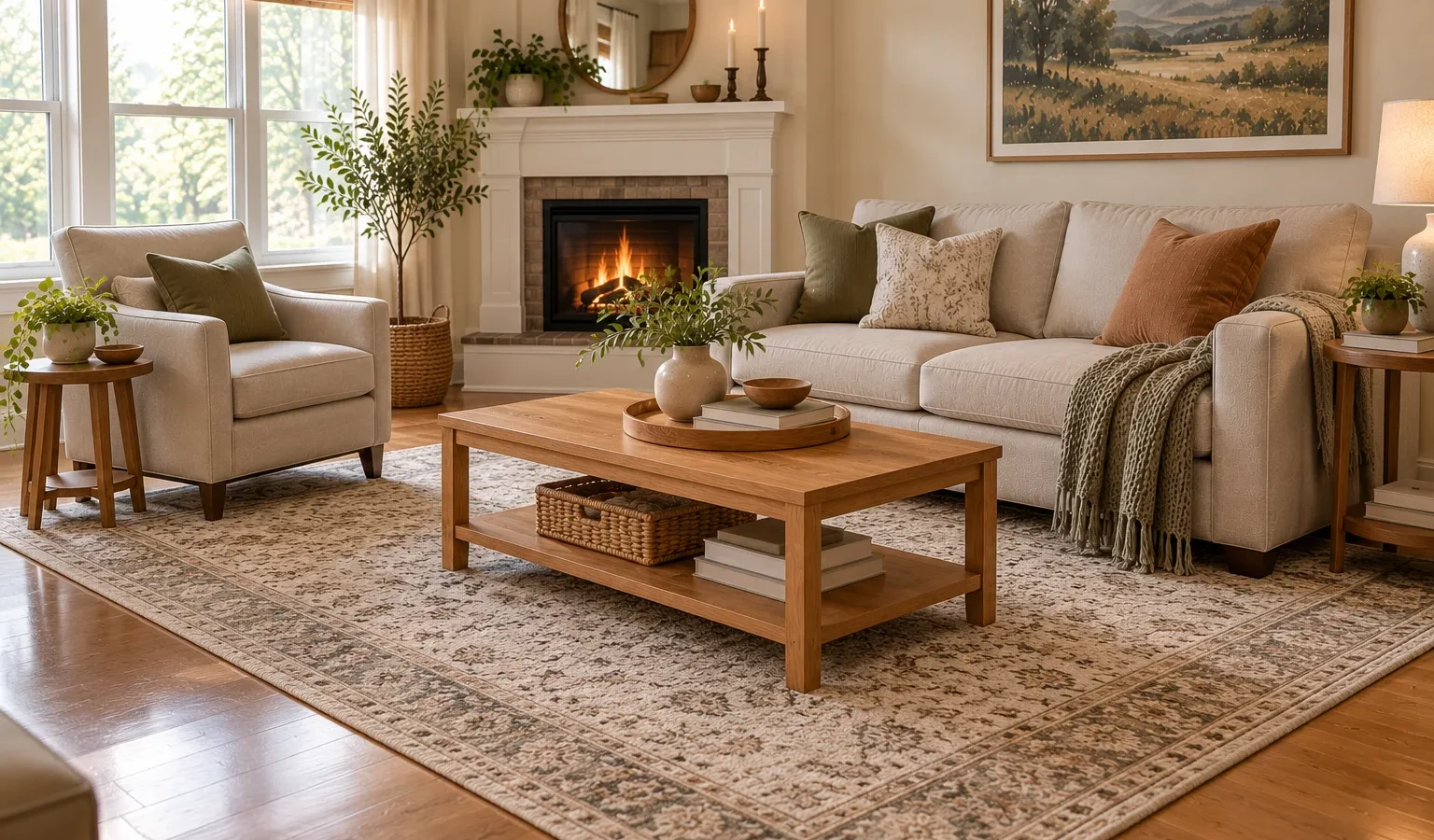
The front legs of the sofa and accent chairs rest on the rug, while their back legs remain on the floor. This approach visually connects the seating pieces without requiring a rug large enough to fit every leg.
It can be a practical choice for many modest-sized living rooms.
Option 2: All Seating Legs on the Rug
The sofa and chairs sit entirely on the rug. This arrangement can create a clearly defined seating zone, particularly when the room has enough space for a larger rug.
Measure the complete furniture group, including the outer edges of the chairs. Do not assume that a rug wide enough for the sofa will also accommodate the entire arrangement.
Option 3: The Rug Sits Mainly Beneath the Central Area
In a very compact layout, a rug may sit primarily beneath the coffee table and central seating area. This can work, but the proportions need careful attention.
Check the rug from the main entrance to the room and from the sofa. If it appears disconnected from the surrounding furniture, a different size or placement may work better.
Whichever arrangement you choose, prioritize stable furniture placement and clear walking routes. Avoid placing an edge where it creates an awkward obstacle.
For more guidance on arranging furniture in limited space, see our guide to small apartment living room ideas.
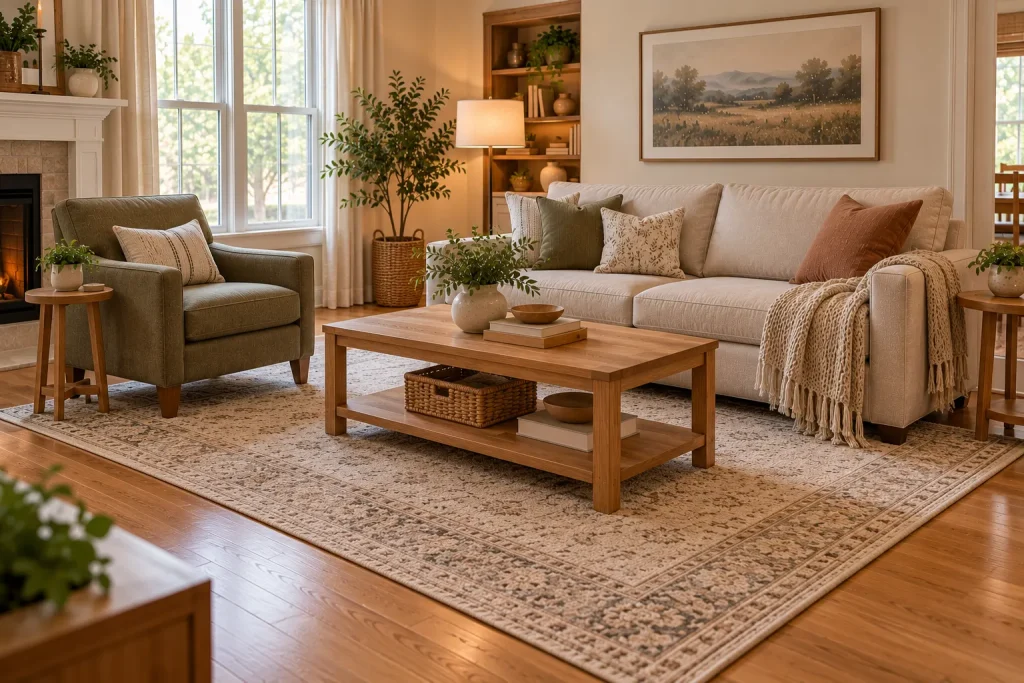
4. Compare Rug Materials by Their Everyday Performance
Material affects how a rug feels, how it looks over time, and what kind of care it needs. There is no single best material for every living room, so compare the trade-offs before deciding.
Wool
Wool rugs are valued for their soft feel and natural resilience. They can be a good option for a frequently used seating area when the budget allows.
However, wool rugs can cost more than many alternatives and may shed, especially when new. Cleaning requirements vary by construction, so check the manufacturer’s care instructions before buying.
Consider wool if: Comfort, texture, and a natural fiber are priorities and the price and care requirements suit your household.
Cotton
Cotton rugs can have a casual, lightweight feel. Some smaller designs are easier to handle than heavy rugs, and certain products can be machine-washed.
However, not every cotton rug is washable, and construction can affect how it handles wear and cleaning. Check the washing instructions, shrinkage guidance, and whether the rug requires a separate pad.
Consider cotton if: You prefer a relaxed look and find a product whose size and care instructions fit your routine.
Jute and Sisal
Jute and sisal provide natural woven texture that can complement simple, earthy interiors. Their appearance can be appealing when you want a rug that adds texture without a deep, plush surface.
Plant-fiber rugs may be less comfortable for people who prefer a soft feel underfoot, and some constructions are sensitive to moisture. Spills and cleaning need particular attention, so follow the specific product instructions.
Consider jute or sisal if: Texture and appearance matter more than plushness and the rug will be used in a suitable environment.
Synthetic Fibers
Polypropylene, polyester, and other synthetic fibers are widely used in living room rugs. They are available in many colors, patterns, and price ranges.
Their performance varies by fiber, pile, backing, and construction. A synthetic rug is not automatically stain-resistant or equally durable across all products, so look for specific care and performance information rather than relying on the fiber name alone.
Consider synthetic fibers if: You want a broad choice of styles and prices and can find a product suited to your expected use.
Washable Rugs
Washable rugs may be convenient in households where spills and frequent cleaning are concerns. However, the term can refer to different designs: some have removable covers, while others are designed to be washed as a complete rug.
Before purchasing, confirm the permitted washing method, size restrictions, drying instructions, and whether a particular washer capacity is required. Also check whether the rug needs a separate pad.
Consider a washable rug if: The cleaning method is genuinely practical for your space and equipment—not just because the product listing uses the word “washable.”
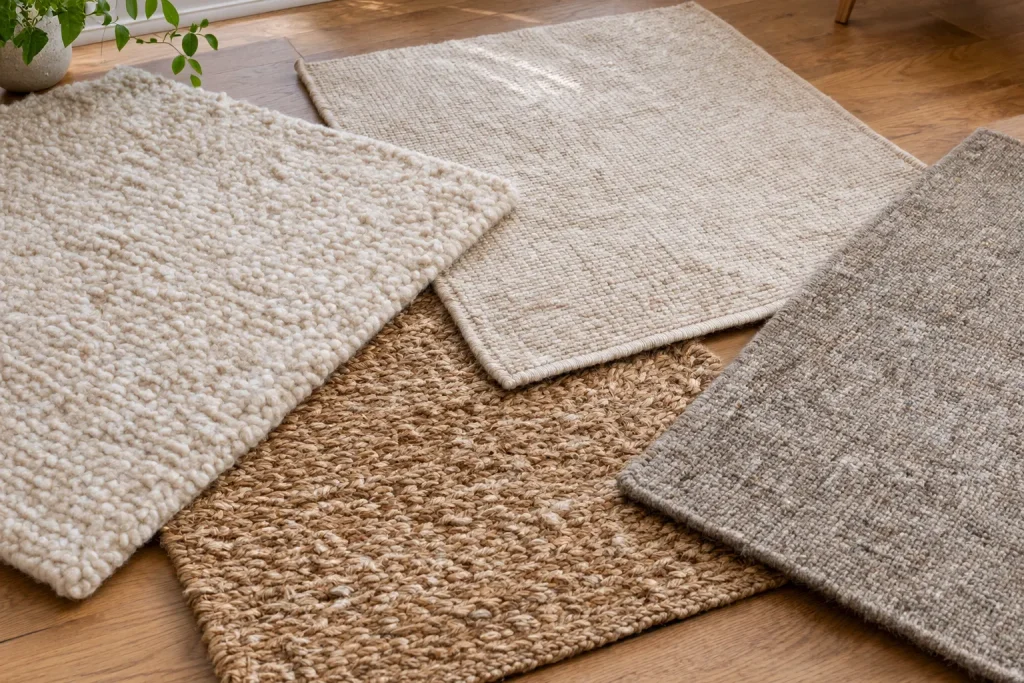
5. Choose a Pile Height That Suits Your Routine
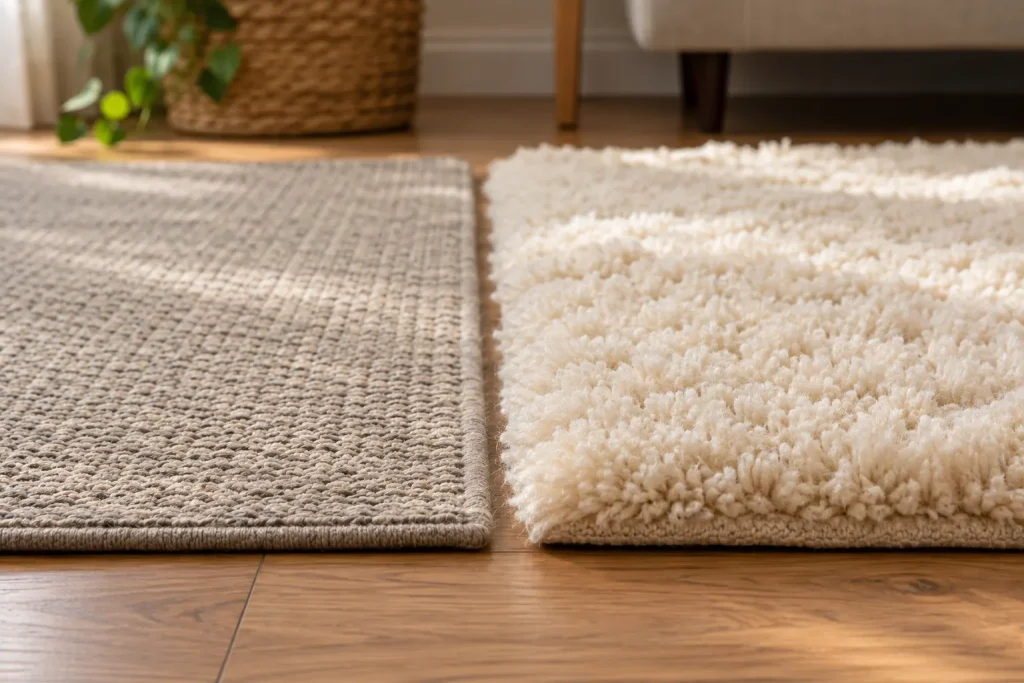
Pile height describes the height of the rug fibers above the backing. It influences the feel underfoot and can affect vacuuming, furniture movement, and spill cleanup.
Low-Pile Rugs
Low-pile rugs have shorter fibers and a relatively flat surface. They can be convenient in busy seating areas and beneath chairs that move regularly.
The trade-off is that they may feel less cushioned than thicker rugs. If softness matters to you, compare the actual feel and construction rather than choosing by pile height alone.
Medium-Pile Rugs
Medium-pile rugs can offer a balance between softness and day-to-day practicality. They may suit a living room where people relax regularly but the rug also receives routine foot traffic.
The feel and maintenance requirements still depend on the material and construction.
High-Pile Rugs
High-pile rugs have deeper fibers and can feel plush underfoot. They may be appealing in a room designed primarily for relaxing.
However, deeper fibers can be harder to vacuum thoroughly and may make spill cleanup more challenging. They can also be less convenient beneath chairs that need to slide frequently.
Before choosing a pile height, ask yourself: Do I prioritize a flatter, easier-to-maintain surface or a softer, deeper feel? Your answer can help narrow the options.
6. Match the Rug to Your Household’s Needs
A rug that works well in a rarely used sitting room may not be the best choice for a busy family living room.
Think about how the space is used throughout the week.
- Frequent foot traffic: Look for a construction and care routine suited to regular use.
- Children and pets: Consider how you will handle spills, dirt, fur, and routine cleaning.
- Frequent entertaining: A pattern with some visual variation may make minor everyday marks less noticeable, although it does not replace proper cleaning.
- Quiet lounging: Comfort and texture may deserve greater priority if the room is used mainly for relaxing.
- Limited time for maintenance: Avoid products whose care instructions require more effort than you can realistically provide.
If your household has allergies or sensitivities, review the materials and care information and consider your own needs. Do not assume that one fiber is automatically suitable for everyone.
The goal is to choose a rug that fits the way you actually live, rather than the way a staged room looks in a photograph.
7. Choose a Color and Pattern That Work With Your Room
Once the practical requirements are clear, narrow your choices by appearance. A rug can complement the existing room or introduce a controlled contrast.
Work With Existing Colors
Look at the sofa, flooring, curtains, cushions, and other large furnishings. If the room already contains several strong colors, a neutral rug may help the arrangement feel more balanced.
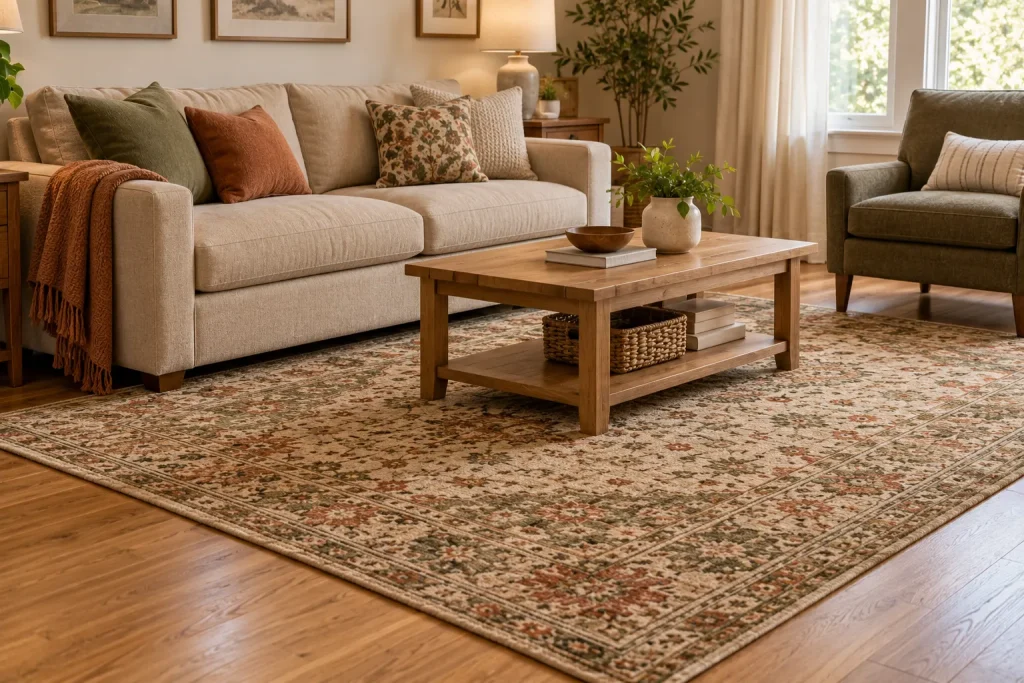
If the furniture is mostly neutral, a rug in muted green, blue, rust, or another accent color can introduce interest without requiring a complete room makeover.
You do not need to match every item exactly. Repeating one or two colors already present in the room is often enough to create a coordinated look.
Consider the Amount of Pattern
A patterned rug can introduce visual interest and connect colors from different parts of the room. A solid or subtly textured rug may be easier to coordinate when the sofa, curtains, cushions, or artwork already feature prominent patterns.
Consider the scale of the design as well. A small repeating pattern can appear busy across a large area, while a large motif may become the dominant feature in a compact room.
Check the Rug Against Your Flooring
The rug should be distinguishable from the floor without feeling unrelated to it. Differences in color, texture, or pattern can help define the seating area.
If possible, examine a sample in your room under both daylight and evening lighting. Online product photographs and screen settings may not reproduce the exact color you will see at home.
For more ideas about combining texture and color, see our cozy living room ideas guide.
8. Check Construction, Backing, and Edge Finishing
Two rugs made from the same material can feel and perform differently because of how they are constructed.
Before purchasing, look for information about the weave, backing, pile, edge finishing, and recommended care. If the product listing does not explain these details, check the manufacturer’s specifications or ask the seller.
Also consider the rug’s weight and flexibility. A lightweight rug may be easier to move and clean, but it may need a suitable pad to help it stay in place. A heavier rug can be more difficult to lift or transport when cleaning is necessary.
Product photographs rarely show every construction detail, so use the specifications and care information alongside the visual appearance when comparing options.
9. Decide Whether You Need a Rug Pad
A suitable rug pad can help reduce slipping, add cushioning, and protect some flooring surfaces. It can also help a rug remain in place during everyday use.
Choose a pad compatible with both the rug backing and the type of floor beneath it. Some pad materials may not be suitable for particular floor finishes, so follow the recommendations from the flooring and pad manufacturers.
Trim the pad so it does not extend beyond the rug’s edges. Check the arrangement periodically for movement, bunching, or curled corners.
A pad does not remove every trip hazard. If the rug continues to slide or its edges curl, address the problem before using it in a busy walkway.
Include the pad in your budget if one is needed, rather than treating it as an unexpected extra after the rug arrives.
10. Understand the Cleaning Requirements Before Buying
A rug’s appearance matters, but so does the effort required to keep it presentable.
Read the care label and check whether the rug can be vacuumed normally, how spills should be treated, and whether professional cleaning is recommended. If the rug is washable, confirm the exact washing and drying instructions.
Size and weight also matter. A large rug may be difficult to lift, transport, or wash even if its material is relatively easy to clean.
Think about the cleaning tasks you can maintain regularly. A rug that looks perfect but requires an impractical care routine may not be the right choice for your home.
Do not rely solely on broad product descriptions such as “easy care.” Look for specific instructions that explain what cleaning methods are permitted.
11. Set a Realistic Budget
Compare rugs within a budget that reflects your priorities, but do not judge value by the initial price alone.
Include possible additional costs such as:
- A compatible rug pad.
- Delivery or shipping.
- Return shipping or other return fees.
- Cleaning products or professional care, where required.
- Any additional accessories needed for the intended placement.
A lower-priced rug may be a sensible choice for a temporary home or a room used occasionally. A more expensive option may be worth considering if its construction, comfort, and care requirements better suit your needs.
Price alone does not establish quality or durability. Compare the specifications, dimensions, materials, and return terms before deciding.
When shopping online, review customer photographs where available, but remember that individual experiences may not represent every product. Confirm the exact color description, dimensions, material composition, and return window before placing an order.
12. Avoid These Common Rug-Buying Mistakes
A few checks can prevent unnecessary disappointment.
Choosing by appearance alone: A rug may look attractive but be unsuitable for your traffic level, preferred feel, or cleaning routine.
Skipping measurements: Product photographs can make a rug appear larger or smaller than it will in your room.
Ignoring door clearance: A thick rug may interfere with a door that swings over the floor.
Forgetting the rug pad: Some rugs need extra grip or cushioning to work well on the intended surface.
Assuming every washable rug is machine-washable: Verify the instructions for the exact product and size.
Overlooking return terms: Returning a large rug can be inconvenient or expensive.
Choosing a color from a screen alone: Lighting and display settings can affect how a color appears.
If you are uncertain between two sizes or colors, compare the options using a floor plan or samples before ordering. Taking a little extra time at this stage can help you avoid a poor fit.
13. Living Room Rug Buying Checklist
Before placing your order, review this checklist:
- Have I measured the seating area and furniture?
- Does the rug fit the furniture arrangement I want?
- Will the rug leave comfortable walking space and clear nearby doors?
- Does the material suit my household’s everyday routine?
- Is the pile height practical for my furniture and cleaning needs?
- Do the color and pattern work with the existing decor?
- Have I checked the construction, backing, and care instructions?
- Do I need a compatible rug pad?
- Does the total cost fit my budget?
- Have I checked the exact dimensions, delivery details, and return policy?
If you can answer these questions confidently, you are better prepared to choose a rug that works in your actual living room rather than simply looking attractive in a product photo.
Frequently Asked Questions
What size rug is best for a living room?
The best size depends on the room dimensions and the arrangement of the sofa and chairs. Measure the seating area, then compare layouts that place the front legs of the furniture on the rug or accommodate the entire seating group. Common dimensions are starting points, not universal rules.
Should a living room rug go under the sofa?
Placing at least the front legs of the sofa on the rug can help connect the seating arrangement visually. In a larger room, a rug may accommodate the entire sofa and chairs. The right choice depends on available space and the furniture layout.
What is the best material for a living room rug?
There is no single best material for every household. Wool is valued for its feel and resilience, cotton can be lightweight, jute and sisal offer natural texture, and synthetic fibers provide a wide range of options. Compare maintenance, comfort, construction, and cost before deciding.
Is a low-pile rug better for a busy living room?
A low-pile rug can be easier to vacuum and may be convenient in a frequently used area. However, performance also depends on the fiber, construction, and care instructions. Compare the complete product rather than relying on pile height alone.
Do I need a rug pad under my living room rug?
A suitable rug pad can help reduce slipping and add cushioning. Choose one designed for your rug backing and flooring type, and follow the manufacturer’s recommendations.
How do I choose a rug color for my living room?
Start with the colors of your sofa, flooring, curtains, and other large furnishings. Choose a rug that complements the existing palette or introduces a controlled accent. If possible, check a sample under your room’s lighting before purchasing.
Final Thoughts
Choosing a living room rug becomes easier when you work through the practical decisions first. Measure the seating area, decide how the furniture should sit on the rug, compare materials and pile heights, and consider the cleaning routine you can maintain.
Then narrow your choices by color, pattern, construction, and budget. A rug does not need to be the most expensive item in the room to work well. It needs to fit the space, suit your routine, and complement the furniture you already own.
Taking these steps before shopping can help you choose a living room rug that looks cohesive, feels comfortable, and makes sense for everyday life.